




Video Game Localisation Services 2026: How to Deliver Native Player Experiences Worldwide
A game doesn’t succeed globally because it’s available—it succeeds because it feels local. Players don’t think in terms of translation quality; they feel immersion, clarity, and cultural connection....

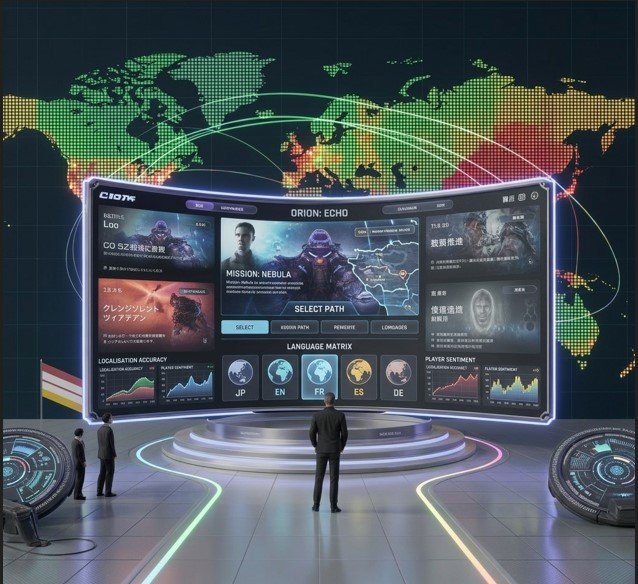
A game doesn’t succeed globally because it’s available—it succeeds because it feels local. Players don’t think in terms of translation quality; they feel immersion, clarity, and cultural connection. When those elements break, retention drops.
Table Of Content
- What Are Video Game Localisation Services?
- Why Video Game Localisation Services Matter
- Translation vs Video Game Localisation Services
- Core Components of Video Game Localisation Services
- The Video Game Localisation Services Workflow
- 3 Industry Case Studies
- Technical Foundations of Video Game Localisation Services
- Technology in Video Game Localisation Services
- Challenges in Video Game Localisation Services
- 2026 Trends in Video Game Localisation Services
- Strategic Importance
- Frequently Asked Questions
- Ready to Reach Global Players?
In 2026, video game localisation services are no longer a post-production step. They are a structured, technical, and creative system embedded into development. The numbers reflect this shift: the global games market is projected to reach $221 billion by 2026 (Newzoo), while effective localization can drive up to 28% revenue uplift (Nimdzi Insights). At the same time, 16.11% of Steam reviews mention localization quality, and failures in LQA for games can reduce retention by 20–40% (GameDeveloper.com).
This guide explains how video game localisation services work, what they include, and how they directly impact global success.
What Are Video Game Localisation Services?
Video game localisation services refer to the complete process of adapting a game for different languages, regions, and cultural expectations. This goes far beyond translation and includes:
- Linguistic adaptation
- Transcreation for cultural relevance
- UI/UX localisation
- Voice-over and audio adaptation
- Culturalisation
- Technical adjustments
- LQA testing
A structured approach follows the GILT framework:
- Globalization: Planning for global reach
- Internationalization (i18n): Preparing systems for multilingual support
- Localization: Adapting content
- Translation: Converting language
This ensures video game localisation services are integrated early in development.
Why Video Game Localisation Services Matter
Global Market Access
Without video game localisation services, games remain limited to a single language audience. Localization unlocks international markets and enables global launches.
Player Engagement
Players engage more deeply when games feel native. Localization ensures intuitive navigation, natural dialogue, and cultural familiarity.
Revenue Growth
Localized games achieve higher conversion rates, retention, and monetization performance.
Brand Reputation
High-quality localization builds trust and credibility with global audiences.
Translation vs Video Game Localisation Services
| Aspect | Translation | Video Game Localisation Services |
| Scope | Text | Full game experience |
| Focus | Language accuracy | Cultural + technical adaptation |
| Output | Literal | Immersive |
| Goal | Understanding | Engagement |
Translation explains a game. Video game localisation services deliver the experience.
Core Components of Video Game Localisation Services
1. Narrative and Dialogue Adaptation
Story-driven games require transcreation to preserve tone, humor, and character identity across languages.
2. UI and UX Localisation
A critical technical layer:
- Flexible UI design for text expansion
- Unicode support for global languages
- Layout adjustments for readability
3. Audio Localisation
- Voice-over translation
- Native casting
- Lip-sync alignment
- Emotional tone adaptation
4. Cultural Adaptation
Localization ensures:
- Humor resonates
- References are relevant
- Content avoids cultural issues
5. Technical Localisation
Includes adapting:
- Currency formats
- Date/time systems
- Measurement units
- Legal compliance
6. LQA for Games (LQA Testing)
LQA testing validates:
- Translation accuracy in context
- UI functionality
- Cultural alignment
- Overall player experience
The Video Game Localisation Services Workflow
Step 1: Content Analysis
Understanding the game structure and audience.
Step 2: Internationalization (i18n)
Preparing systems for multilingual scalability.
Step 3: Localization Kit Creation
Providing translators with context (screenshots, character profiles, UI constraints).
Step 4: Translation and Transcreation
Adapting content while preserving meaning and tone.
Step 5: Integration
Implementing localized assets into the game.
Step 6: LQA Testing
Ensuring quality within gameplay.
Step 7: Continuous Localisation
Supporting updates, events, and live-service content.
3 Industry Case Studies
Cyberpunk 2077
A large-scale video game localisation services effort across 15 languages faced voice synchronization issues, reducing immersion by 22%. Improved LQA testing helped restore quality.
Genshin Impact
Through strong transcreation and cultural adaptation, the game achieved 35% higher retention in localized markets.
Pokémon GO
Localization inconsistencies caused confusion and backlash, demonstrating the importance of consistency.
Technical Foundations of Video Game Localisation Services
Internationalization (i18n)
Strong localisation begins with:
- Externalized text systems
- Locale-aware formatting
- Scalable UI frameworks
Unicode Support
Ensures compatibility across global languages.
Flexible UI Systems
Dynamic layouts prevent issues caused by text expansion.
Technology in Video Game Localisation Services
Translation Management Systems
Centralize workflows and improve efficiency.
Translation Memory
Ensures consistency across content.
AI-Assisted Localisation
AI speeds up processes but requires human oversight.
Game Engine Integration
Modern engines support real-time localization updates.
Challenges in Video Game Localisation Services
- Context loss in text strings
- UI limitations
- Cultural sensitivity
- Humor adaptation
- Continuous updates
Best Practices
- Start localisation early
- Build strong internationalization (i18n)
- Use detailed localization kits
- Prioritize transcreation
- Conduct thorough LQA testing
- Design flexible UI systems
2026 Trends in Video Game Localisation Services
Real-Time Localisation
Live translation in multiplayer environments.
AI + Human Collaboration
Combining speed with cultural accuracy.
Continuous Localisation
Ongoing updates for live-service games.
Voice AI
Scalable dubbing solutions.
Regional Personalization
Dynamic content tailored to player regions.
Strategic Importance
In 2026, video game localisation services directly influence:
- Global expansion
- Player engagement
- Revenue growth
- Brand perception
They are no longer optional—they are essential for success.
Frequently Asked Questions
What are video game localisation services?
They adapt games for different languages and cultures.
Why are they important?
They improve engagement, retention, and revenue.
What is LQA testing?
It ensures localisation quality within the game.
Can AI replace localisation?
No, human expertise is required.
When should localisation start?
During development.
Ready to Reach Global Players?
If your goal is to create immersive experiences for players worldwide, investing in professional video game localisation services is essential. The difference between a translated game and a localized one is the difference between accessibility—and true connection.
About the Author
Orion Translations is the trusted language partner for global corporations and digital entertainment companies. We specialize in professional video game localisation services, delivering accurate, culturally adapted, and technically precise solutions for game developers and publishers worldwide. By combining linguistic expertise with interactive media understanding, Orion ensures your games resonate with players across languages and cultures. Visit www.oriontranslations.com to learn more about our services.


No Comment! Be the first one.