



We tend to think of massive concrete buildings, high-rises, and bridges as permanent fixtures. They think they are invincible. But beneath that solid grey shell, a slow and deadly process might be eating away at the structure from within. In the building trade they call it concrete cancer.
Table Of Content
If you’ve seen a concrete pillar cracking, flaking or leaking rusty brown streaks, you’ve seen concrete cancer at work. You can’t just patch the concrete and be done with it. To fix this problem and prevent it from happening again, you need to have a deep understanding of metallurgy, structural engineering and modern structural steel fabrication.
What is Concrete Cancer ?
To see how we might fix it, we have to look at how modern concrete is made. Concrete is good under compression (when weight is applied pushing down) but it is brittle under tension (when it is stretched or pulled). Builders get around this problem by embedding steel reinforcing bars, or rebar, inside the concrete.
Concrete cancer (more technically known as concrete spalling) occurs when the steel inside begins to rust.
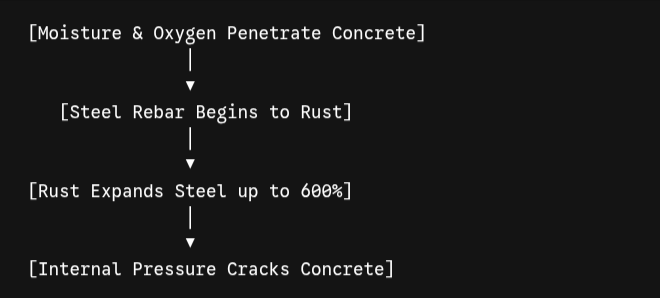
When steel oxidises it expands tremendously ( sometimes as much as 6 times the original size ) . This great internal expansion puts great pressure on the surrounding concrete. Eventually the concrete cracks and fractures and breaks away in chunks. This creates a vicious circle: the new cracks allow even more water and oxygen to enter, accelerating the rust and threatening the stability of the whole building.
How Structural Steel Fabrication Gets In
Fixing a building with concrete cancer isn’t a DIY job. It takes a tremendous amount of support and that is where custom structural steel fabrication comes in. These structures have their emergency responders and preventative medicine in the fabricators.
1. Emergency Shoring and Retrofit
If a load bearing beam or column is affected by concrete cancer the building is at risk of partial collapse. Structural steel fabricators construct custom shoring towers, steel jackets and heavy-duty brackets even before repairs can begin.The heavy steel pieces are built to exact millimetre specifications and bolted around the crumbling concrete. That temporarily transfers the building’s massive weight to the steel framework, keeping it safe while workers chip away the cancerous concrete and replace the rusted internal steel.
2. High-Tech Prevention in Modern Manufacturing
The best cure for concrete cancer is the prevention of it in the first place. Today’s structural steel fabricators use advanced techniques to treat steel before it is ever poured into a concrete mould:Hot-Dip Galvanising: Structural steel is dipped in a bath of molten zinc. This gives a very durable, scratch resistant coating which prevents moisture from reaching the iron.Stainless and Alloy Steel: In high-risk zones, such as coastal properties exposed to salty sea air or industrial chemical plants, fabricators turn to specific grades of stainless steel that are naturally immune to chloride-induced rusting.Advanced Epoxy Coatings The application of protective polymer barriers on fabricated steel elements adds a further barrier to chemical reactions.
Solutions comparison: Old Concrete Vs. Modern Fabricated Steel Defenders
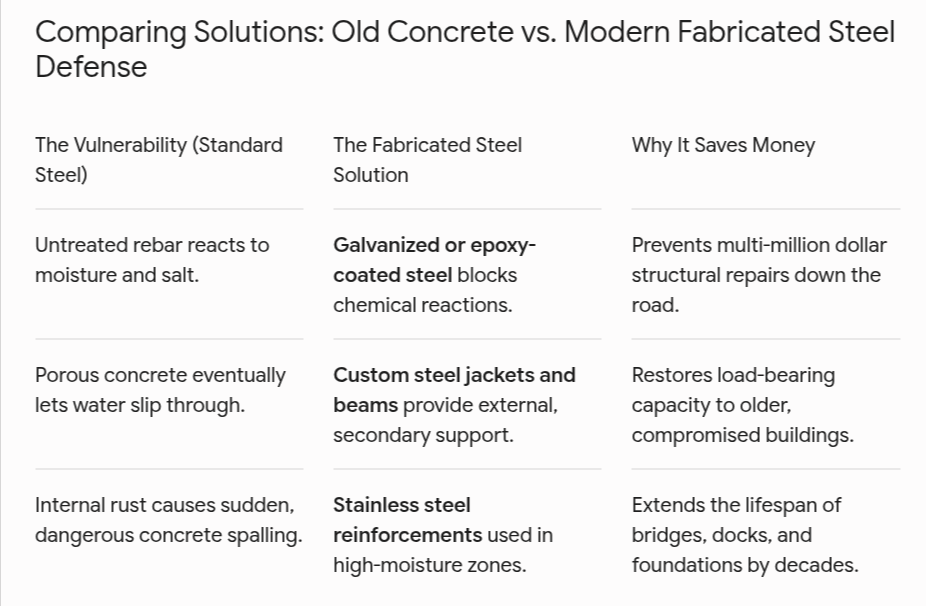
What it means:
Concrete cancer is a frustrating reminder that even our strongest materials are vulnerable to time and the elements. Building to last But if we take the compressive strength of concrete, and blend it with the precision, the engineering, and the advanced coatings of modern structural steel fabrication, we can build structures that will stand the test of time.Whether you’re in the middle of a remediation project on an old asset or breaking ground on a brand new commercial build, the quality of your fabricated steel is what determines whether your building will stand for generations or crumble from within.






No Comment! Be the first one.