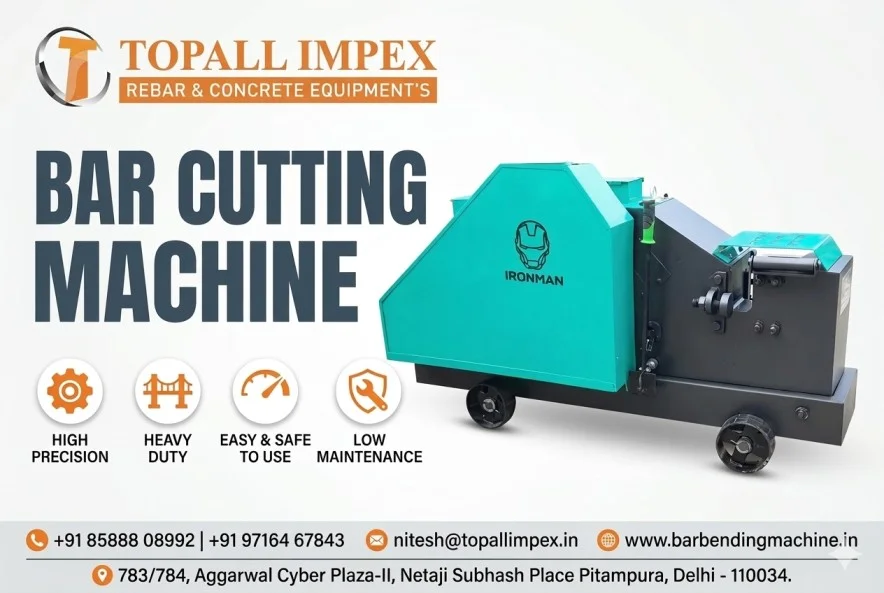
Learn the key components of a bar cutting machine, their functions, and how they impact performance, accuracy, and durability in construction projects.
In today’s fast-paced construction industry, precision, speed, and efficiency are non-negotiable. One machine that plays a crucial role in achieving all three is the bar cutting machine. Whether it’s for cutting steel reinforcement bars (rebars) used in buildings, bridges, or infrastructure projects, this machine ensures clean, accurate cuts that directly impact structural integrity.
However, to fully utilize its capabilities, it’s important to understand what makes a bar cutting machine work. Knowing its key components not only helps in better operation but also improves maintenance, safety, and machine lifespan.
Let’s break down the essential components of a bar cutting machine and understand their functions in detail.
1. Electric Motor – The Power Source
The electric motor is the heart of the bar cutting machine. It provides the necessary power to drive all the moving parts.
Key Functions:
- Converts electrical energy into mechanical energy
- Drives the flywheel and cutting mechanism
- Determines machine efficiency and performance
Why It Matters:
A powerful motor ensures smooth cutting of thick steel bars without overheating or slowing down. Machines with higher motor capacity are ideal for heavy-duty industrial applications.
2. Flywheel – Energy Storage and Transfer
The flywheel is a rotating mechanical device that stores energy and releases it when needed.
Key Functions:
- Maintains consistent rotational speed
- Reduces load on the motor
- Provides extra force during cutting
Why It Matters:
Without a flywheel, the motor would have to handle sudden load spikes during cutting, leading to wear and tear. The flywheel ensures smooth and efficient operation.
3. Cutting Blade – The Core Cutting Tool
The cutting blade is the most critical component responsible for actually cutting the steel bars.
Key Functions:
- Performs precise and clean cuts
- Handles different bar diameters
- Works under high pressure
Types of Blades:
- Single-edge blades
- Double-edge blades (longer lifespan)
Why It Matters:
A high-quality blade ensures accuracy, safety, and minimal material wastage. Regular sharpening or replacement is necessary to maintain performance.
4. Gear System – Power Transmission
The gear system transfers power from the motor to the cutting blade.
Key Functions:
- Controls speed and torque
- Ensures synchronized movement
- Enhances cutting efficiency
Why It Matters:
A well-designed gear system ensures that the machine operates smoothly without jerks. It also helps in handling different bar sizes effectively.
5. Clutch System – Control Mechanism
The clutch system allows the operator to control the engagement and disengagement of the cutting process.
Key Functions:
- Engages the cutting cycle
- Provides control over machine operation
- Prevents sudden jerks
Why It Matters:
It enhances operator safety and ensures controlled cutting operations, especially in semi-automatic machines.
6. Cutting Table – Work Surface
The cutting table is where the steel bars are placed for cutting.
Key Functions:
- Provides a stable surface
- Ensures proper alignment of bars
- Supports accurate cutting
Why It Matters:
A well-designed cutting table improves productivity by allowing easy positioning and handling of materials.
7. Guide Rollers – Alignment Support
Guide rollers help in positioning the steel bars correctly before cutting.
Key Functions:
- Align bars for precise cutting
- Reduce manual effort
- Prevent misalignment
Why It Matters:
Proper alignment is crucial for achieving uniform cuts, especially in bulk operations.
8. Control Panel – User Interface
The control panel is the interface through which operators manage the machine.
Key Functions:
- Start/stop operations
- Control speed and settings
- Monitor machine performance
Why It Matters:
Modern machines come with advanced control panels that improve ease of use, efficiency, and safety.
9. Safety Guards – Operator Protection
Safety guards are protective covers installed around moving parts.
Key Functions:
- Prevent accidental contact
- Reduce risk of injury
- Ensure safe operation
Why It Matters:
Safety is critical in construction environments. Proper guards help comply with safety standards and protect workers.
10. Frame Structure – Machine Foundation
The frame is the base structure that holds all components together.
Key Functions:
- Provides stability
- Supports heavy loads
- Absorbs vibrations
Why It Matters:
A मजबूत (strong) frame ensures durability and long-term performance, especially in heavy-duty applications.
11. Lubrication System – Smooth Operation
The lubrication system ensures that all moving parts function smoothly.
Key Functions:
- Reduces friction
- Prevents wear and tear
- Enhances machine lifespan
Why It Matters:
Proper lubrication minimizes maintenance costs and prevents unexpected breakdowns.
How These Components Work Together
A bar cutting machine operates through a coordinated system of components:
- The motor generates power
- The flywheel stores and stabilizes energy
- The gear system transfers power
- The clutch engages the cutting action
- The blade cuts the bar precisely
Each component plays a vital role in ensuring efficiency, accuracy, and safety.
Tips for Maintaining Key Components
To ensure optimal performance, follow these maintenance tips:
- Regularly inspect and sharpen cutting blades
- Lubricate moving parts frequently
- Check motor performance and wiring
- Inspect gears for wear and damage
- Ensure safety guards are properly installed
Proper maintenance not only extends machine life but also improves productivity.
Conclusion
Understanding the key components of a bar cutting machine is essential for anyone involved in construction or steel fabrication. Each part—from the motor to the cutting blade—plays a critical role in delivering precise and efficient results.
By gaining knowledge about these components, operators and business owners can:
- Improve machine performance
- Reduce downtime
- Enhance safety
- Maximize return on investment
In a competitive construction environment, the right knowledge combined with the right machine can make all the difference.


Leave a Comment