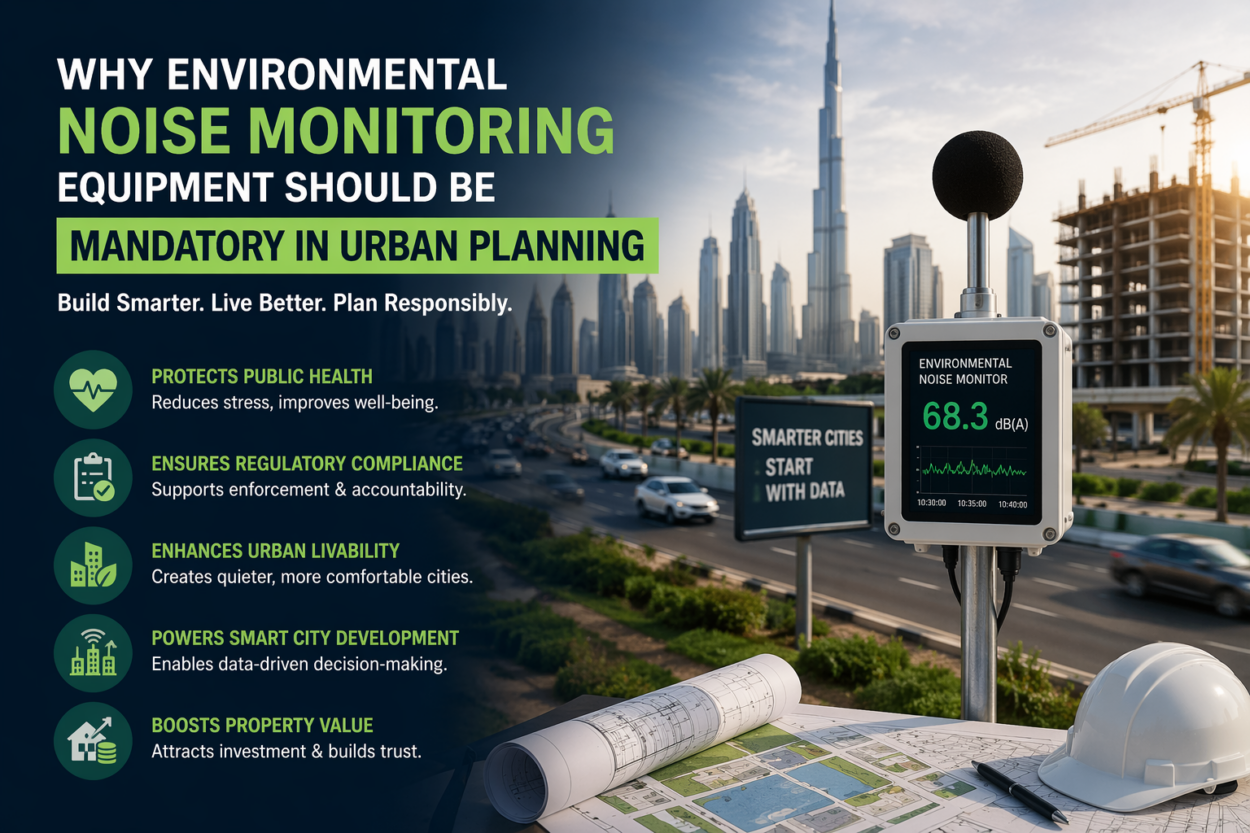
Urban development in the UAE is accelerating at an unprecedented pace. From high-rise construction in Dubai to expanding infrastructure in Abu Dhabi, growth is a sign of progress—but it comes with hidden challenges. One of the most overlooked issues is noise pollution. This is where environmental noise monitoring equipment becomes critical.
Incorporating noise monitoring into urban planning isn’t just a technical upgrade—it’s a necessity for protecting public health, ensuring regulatory compliance, and improving overall quality of life. This article explores why making noise monitoring mandatory is a smart, future-ready decision for urban planners and policymakers in the UAE.
The Growing Problem of Urban Noise Pollution
Cities are inherently noisy, but excessive and unmanaged noise can lead to serious consequences. According to the World Health Organization (WHO), prolonged exposure to high noise levels can cause sleep disturbances, cardiovascular issues, and reduced cognitive performance.
In rapidly developing regions like the UAE, sources of noise pollution include:
- Construction activities
- Traffic congestion
- Industrial operations
- Public events and nightlife
Without proper monitoring, these noise levels often exceed safe limits, affecting both residents and businesses.
What is environmental noise monitoring equipment?
Environmental noise monitoring equipment refers to advanced devices designed to measure, record, and analyze sound levels in real time. These systems provide accurate data on noise intensity, frequency, and duration, enabling authorities to make informed decisions.
Modern solutions often include the following:
- Real-time noise sensors
- Data logging and reporting systems
- Cloud-based monitoring platforms
- Integration with smart city infrastructure
This technology is essential for identifying noise hotspots and implementing targeted mitigation strategies.
Why It Should Be Mandatory in Urban Planning
1. Protecting Public Health
Noise pollution is not just an inconvenience—it’s a public health risk. Continuous exposure to noise above 55 dB can lead to stress and long-term health issues. By mandating environmental noise monitoring equipment, city planners can ensure that noise levels remain within safe limits, safeguarding residents’ well-being.
2. Supporting Regulatory Compliance
The UAE has established environmental regulations to control noise pollution, particularly in residential and commercial zones. However, enforcement is only as strong as the data supporting it.
Mandatory noise monitoring ensures the following:
- Accurate compliance tracking
- Transparent reporting
- Reduced risk of legal penalties for developers
This creates a more accountable and structured development environment.
3. Enhancing Urban Livability
A quieter city is a more livable city. By integrating environmental noise monitoring equipment into planning processes, authorities can design spaces that prioritize comfort and sustainability.
For example:
- Buffer zones between highways and residential areas
- Noise barriers in high-traffic zones
- Strategic zoning for industrial activities
These measures significantly improve the quality of urban life.
4. Enabling Smart City Development
The UAE is at the forefront of smart city innovation. Noise monitoring systems can be seamlessly integrated into smart city frameworks, providing real-time insights that enhance decision-making.
Data collected from environmental noise monitoring equipment can be used to:
- Optimize traffic flow
- Adjust construction schedules
- Monitor environmental impact dynamically
This aligns perfectly with the UAE’s vision for sustainable and technologically advanced cities.
5. Boosting Property Value and Investment Appeal
Noise levels directly influence property desirability. Residential and commercial properties in quieter areas tend to have higher value and attract more investors.
By ensuring effective noise management through mandatory monitoring, developers can:
- Increase property marketability
- Build trust with buyers and tenants
- Strengthen long-term investment potential
Real-World Insight: A Shift Toward Data-Driven Planning
Globally, cities like London and Singapore have already implemented comprehensive noise monitoring systems as part of their urban planning strategies. These cities report improved public satisfaction and better environmental management outcomes.
The UAE has the opportunity to lead the region by adopting similar practices, leveraging environmental noise monitoring equipment to create smarter, healthier urban spaces.
Conclusion: Time to Make Noise Monitoring a Priority
As urbanization continues to shape the UAE’s future, ignoring noise pollution is no longer an option. Making environmental noise monitoring equipment mandatory in urban planning is a proactive step toward healthier communities, smarter cities, and sustainable growth.
If you’re a developer, urban planner, or government stakeholder, now is the time to integrate noise monitoring into your projects. Invest in advanced environmental noise monitoring equipment and take a data-driven approach to building cities that people truly want to live in. monitoring equipment and take a data-driven approach to building cities that people truly want to live in.
Looking to implement reliable noise monitoring solutions? Start exploring cutting-edge technologies today and position your projects at the forefront of sustainable urban development.


Leave a Comment