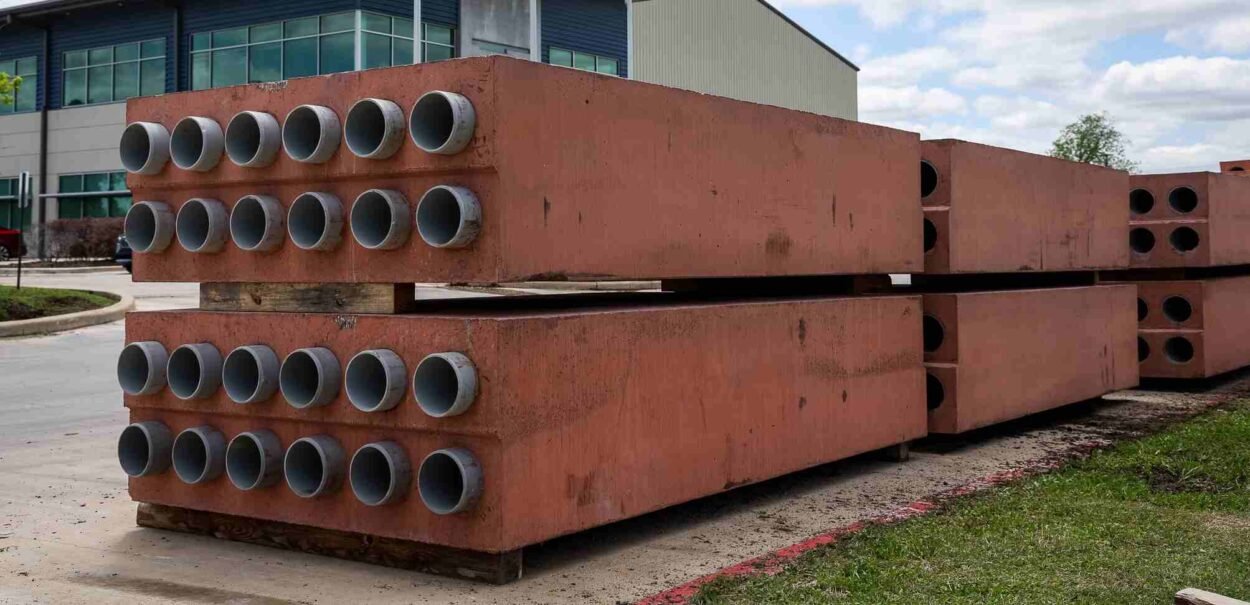
In modern construction, underground utility systems play a very important role. Electricity, internet, and communication lines all run underground to keep cities clean, safe, and organized. To protect these systems, engineers use a strong and reliable solution called duct bank concrete.
Duct bank concrete helps protect cables and conduits from damage, pressure, water, and environmental effects. It also improves the life and performance of underground systems. Without it, underground networks would face frequent damage and failures.
What Is Duct Bank Concrete?
Duct bank concrete is the concrete layer that surrounds and protects a group of conduits (pipes) placed underground. These conduits carry electrical cables, fiber optic lines, or communication wires.
Workers arrange these conduits in a structured way and then pour concrete around them. Once the concrete hardens, it forms a strong protective block called a duct bank.
In simple words, duct bank concrete is the solid concrete shield that keeps underground cables safe and organized.
Why Do We Use Duct Bank Concrete?
Engineers use duct bank concrete because underground cables need strong protection. Soil, water, heavy traffic, and construction work can easily damage exposed conduits.
Here are the main reasons why duct bank concrete is important:
- It protects cables from physical damage
- It prevents shifting of conduits
- It supports heavy loads like roads and vehicles
- It increases the life of underground systems
- It improves safety and reliability
Because of these benefits, duct bank concrete is widely used in modern infrastructure projects.
How Does Duct Bank Concrete Work?
Duct bank concrete works as a protective system for underground conduits.
Here is how it works step by step:
- Workers place multiple conduits in a trench
- They arrange them in a proper layout using spacers
- They ensure equal distance between each conduit
- They pour concrete around the conduits
- The concrete hardens and forms a solid block
- This block protects all the cables inside
The concrete spreads external pressure evenly and prevents damage to the conduits inside.
Main Components of a Duct Bank System
A duct bank system includes several important parts that work together.
1. Conduits
These are pipes that carry electrical or communication cables. They are usually made of PVC, HDPE, or fiberglass.
2. Duct Bank Concrete
This is the main protective layer that surrounds the conduits. It provides strength and stability.
3. Spacers
Spacers keep conduits properly aligned and evenly spaced during installation.
4. Reinforcement Steel (Rebar)
In some projects, steel bars are added inside concrete to increase strength and durability.
5. Pull Boxes and Manholes
These are access points that help workers install, inspect, or repair cables.
Types of Duct Bank Concrete Systems
Different types of duct bank systems are used depending on project needs.
1. Fully Encased Duct Bank
In this system, concrete completely surrounds all conduits.
Best for:
- Roads and highways
- Heavy traffic areas
- Industrial zones
This type provides maximum protection.
2. Partially Encased Duct Bank
Only part of the conduit system is covered with concrete.
Best for:
- Low-risk areas
- Light-duty installations
3. Cast-in-Place Duct Bank
Workers pour concrete directly at the site after placing conduits.
Best for:
- Large infrastructure projects
- Custom designs
4. Precast Duct Bank
Manufacturers build duct bank sections in a factory and install them on-site.
Best for:
- Fast installation
- High-quality control
Benefits of Duct Bank Concrete
Duct bank concrete offers many advantages for underground systems.
1. Strong Protection
It protects conduits from soil pressure, water, and physical damage.
2. Long Lifespan
A properly built duct bank can last for many decades.
3. Load Support
It supports heavy loads like vehicles, roads, and buildings above it.
4. Organized System
It keeps conduits in a structured and aligned layout.
5. Reduced Maintenance
Once installed, it requires very little maintenance.
6. Better Safety
It reduces risks of cable damage and electrical hazards.
7. Stable Structure
It prevents movement of conduits inside the ground.
Common Applications of Duct Bank Concrete
Duct bank concrete is used in many construction and infrastructure projects.
1. Electrical Power Systems
It protects underground power cables in cities and industrial areas.
2. Telecommunications Networks
Used for fiber optic cables and internet systems.
3. Airports and Railways
Helps manage complex underground cable systems.
4. Industrial Facilities
Factories use duct banks for heavy electrical loads.
5. Commercial Buildings
Offices, malls, and large buildings use duct banks for utility systems.
6. Road and Highway Projects
Used under roads to protect cables from traffic loads.
Step-by-Step Installation Process
Installing duct bank concrete requires careful planning and proper execution.
Step 1: Site Planning
Engineers design the layout and decide the location of duct banks.
Step 2: Excavation
Workers dig trenches according to the required depth and width.
Step 3: Base Preparation
They add sand or gravel to create a stable base for installation.
Step 4: Conduit Placement
Workers place conduits in the correct position using spacers.
Step 5: Formwork Setup
Temporary molds are installed to shape the concrete.
Step 6: Concrete Pouring
Workers pour concrete carefully around the conduits.
Step 7: Curing Process
The concrete is left to harden and gain strength.
Step 8: Backfilling
Workers fill the trench with soil after the concrete sets.
Important Design Considerations
Engineers consider many factors before designing duct bank systems.
1. Load Requirements
They check how much weight the system must support.
2. Soil Conditions
Different soil types affect stability and drainage.
3. Cable Type
Electrical and fiber optic cables have different requirements.
4. Conduit Spacing
Proper spacing prevents overheating and damage.
5. Drainage System
Good drainage prevents water accumulation.
6. Future Expansion
Extra space is often added for future cable installation.
Common Problems and Solutions
Even strong duct bank systems can face issues if not installed properly.
1. Concrete Cracks
Cause: Poor quality mix or heavy load
Solution: Use strong concrete and proper reinforcement
2. Water Leakage
Cause: Poor sealing or drainage
Solution: Improve waterproofing and drainage system
3. Misaligned Conduits
Cause: Poor installation
Solution: Use spacers and correct layout planning
4. Cable Overheating
Cause: Improper spacing
Solution: Maintain proper distance between conduits
5. Construction Delays
Cause: Poor planning
Solution: Use proper scheduling and design
Best Practices for Long-Term Performance
To ensure a strong and long-lasting duct bank system, follow these best practices:
- Use high-quality materials
- Follow engineering standards
- Maintain proper conduit spacing
- Ensure good drainage
- Allow proper curing time
- Inspect work regularly
- Plan for future expansion
These steps improve safety and performance.
Duct Bank Concrete vs Direct Burial
| Feature | Duct Bank Concrete | Direct Burial |
|---|---|---|
| Protection | Very High | Low |
| Durability | High | Medium |
| Maintenance | Low | Higher |
| Cost | Higher initial | Lower initial |
| Safety | High | Moderate |
Duct bank concrete is the better choice for long-term and high-load applications.
Why Duct Bank Concrete Is Important Today
Modern cities depend heavily on underground power and communication systems. As demand increases, these systems must be safe, reliable, and long-lasting.
Duct bank concrete provides the protection needed to support these systems. It also helps reduce maintenance costs and improves infrastructure efficiency.
With growing urban development, duct bank concrete is becoming more important every day.
Conclusion
Duct bank concrete is a key part of modern underground utility systems. It protects conduits, improves safety, and ensures long-term performance.
From roads and highways to industrial plants and cities, duct bank concrete plays a major role in keeping underground systems strong and reliable.
Leave a Comment