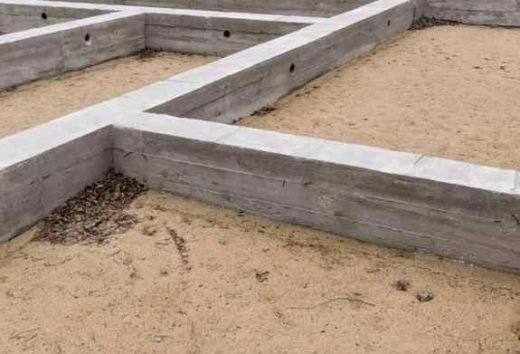
Every building you see around you stands safely because of its foundation. The foundation is the most important part of any structure. It carries the weight of the building and transfers it safely to the ground. One of the most commonly used foundation types in construction is the spread footing.
Engineers use spread footings in many projects because they are simple, strong, and cost-effective. But they are not used everywhere. Their use depends on soil conditions, building load, and project type.
What Is a Spread Footing?
A spread footing is a shallow foundation that spreads the load of a building over a large area of soil. It supports columns or walls and transfers their weight safely to the ground.
Instead of concentrating all the load on a small point, spread footing increases the base area so the soil can easily handle the pressure.
In simple words, a spread footing is a wide concrete base that spreads building load evenly into the soil.
Why Engineers Use Spread Footings
Engineers use spread footings because they offer a simple and reliable way to support buildings. They help:
- Distribute loads evenly
- Reduce pressure on soil
- Prevent settlement issues
- Provide strong support for small to medium structures
- Reduce construction cost and time
Because of these benefits, spread footings are widely used in everyday construction.
When Are Spread Footings Used in Construction?
Engineers carefully study site conditions before choosing a foundation. Spread footings are used only when certain conditions are suitable.
1. When Soil Is Strong and Stable
Engineers use spread footings when the soil has enough strength to support the building load. This is called good soil bearing capacity.
They work well in:
- Firm clay soil
- Well-compacted sandy soil
- Natural stable ground
If the soil is weak or loose, engineers avoid spread footings and choose deeper foundations like piles.
2. When the Structure Is Light or Medium Weight
Spread footings are best for buildings that do not carry extremely heavy loads.
They are commonly used for:
- Residential houses
- Small commercial buildings
- Low-rise apartments
- Boundary walls
For very tall buildings or heavy industrial structures, engineers use deep foundations instead.
3. When Construction Budget Is Limited
Cost plays a big role in foundation selection. Spread footings are economical because they:
- Use less concrete
- Require less excavation
- Need simple construction methods
- Reduce labor costs
That is why engineers often use them in budget-friendly projects.
4. When Groundwater Level Is Low
Engineers prefer spread footings when the water table is low. If too much water is present in the soil, it can weaken the foundation and cause problems.
Dry or slightly moist soil conditions are ideal for spread footing construction.
5. When Construction Time Must Be Short
Spread footings are quick to build. Engineers use them when projects need fast completion.
Workers can easily:
- Excavate the soil
- Place reinforcement steel
- Pour concrete
- Complete curing in a short time
This saves time and speeds up the construction process.
6. When Soil Settlement Is Uniform
Engineers use spread footings when the soil settles evenly under the structure. Uniform settlement ensures that the building stays level and stable.
They avoid spread footings when:
- Soil layers are uneven
- There is risk of differential settlement
- Ground conditions vary across the site
Where Are Spread Footings Used in Construction?
Spread footings are used in many types of buildings and structures. Let’s look at the most common places where engineers apply them.
1. Residential Buildings
Spread footings are very common in residential construction. Most houses use this foundation type because it is simple and cost-effective.
They support:
- Single-family homes
- Villas
- Low-rise apartments
- Townhouses
Since houses usually have light to moderate loads, spread footings work very well.
2. Small Commercial Buildings
Many small business structures use spread footings.
Examples include:
- Shops and stores
- Small offices
- Restaurants
- Local clinics
These buildings do not require deep or complex foundations, so spread footing is a practical choice.
3. Boundary Walls and Compound Walls
Engineers use strip footings (a type of spread footing) for long walls.
They are used in:
- Boundary walls around properties
- Compound walls for schools or industries
- Light retaining walls
These walls need continuous support along their length, making spread footing ideal.
4. Schools and Public Buildings
Many public buildings use spread footings because they are safe and economical.
They are used in:
- Schools
- Small hospitals
- Community halls
- Government buildings (low-rise)
These structures usually have moderate loads and stable soil conditions.
5. Rural Construction Projects
In rural areas, spread footings are widely used because:
- Buildings are usually low-rise
- Soil conditions are often suitable
- Construction budgets are limited
They are common in:
- Farmhouses
- Rural homes
- Storage sheds
- Small workshops
6. Light Industrial Buildings
Some industrial structures also use spread footings when loads are not too heavy.
Examples include:
- Small warehouses
- Light manufacturing units
- Storage facilities
However, heavy industrial plants often require stronger foundation systems.
Types of Spread Footings Used in Different Places
Engineers use different types of spread footings depending on design needs.
1. Isolated Footing
Used for single columns in houses and buildings.
2. Strip Footing
Used under load-bearing walls.
3. Combined Footing
Used when two columns are close together.
4. Strap Footing
Used when loads are uneven between columns.
5. Raft Foundation
Used when soil is weak but still suitable for shallow foundations.
Advantages of Using Spread Footings
Spread footings are popular because they offer many benefits:
- Simple design and construction
- Low cost compared to deep foundations
- Suitable for many small and medium projects
- Easy to inspect and maintain
- Faster construction time
- Less use of heavy machinery
These advantages make them a preferred choice in many construction projects.
Limitations of Spread Footings
Spread footings are not suitable for every situation.
They may not work well when:
- Soil is weak or loose
- Buildings are very tall or heavy
- Groundwater level is high
- There is risk of uneven settlement
In such cases, engineers choose deep foundations like pile foundations.
Important Factors Engineers Consider Before Using Spread Footings
Before selecting spread footing, engineers carefully study:
- Soil type and strength
- Load of the structure
- Depth of foundation required
- Water table level
- Environmental conditions
Proper study ensures safety and long-term performance.
Role of Spread Footings in Construction
Spread footings play a very important role in construction because they:
- Provide a strong base for buildings
- Spread loads evenly into the soil
- Reduce risk of structural damage
- Increase building stability
- Extend the life of the structure
Without proper footing, buildings can become unsafe and unstable.
Conclusion
Spread footings are one of the most widely used foundation systems in construction. Engineers use them when soil conditions are good, building loads are light to moderate, and cost and time are important factors.
They are commonly used in houses, small commercial buildings, boundary walls, schools, and rural projects. Their simple design, low cost, and easy construction make them a practical and reliable choice.

Leave a Comment