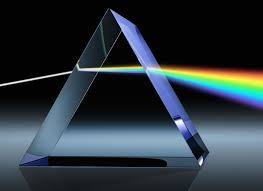
In the world of high-tech devices, there is one component that has been a foundation of science for centuries but remains vital for today’s most advanced technology: the Prism. While you might remember them from science class as pieces of glass that create rainbows, modern prisms are precision-engineered tools that power everything from your smartphone camera to cutting-edge augmented reality (AR) headsets.
At ARVR Optical, we specialize in the design and manufacture of high-performance prisms. Whether you are a technical engineer or a business buyer looking for the right component, this guide will explain how prisms work, the different types available, and why they are essential for modern optoelectronics.
What is an Optical Prism?
A prism is a transparent optical element with flat, polished surfaces that refract (bend) light. When light enters a prism, it changes speed and direction based on the angle of the glass and the material it is made from.
Unlike a standard lens that curves to focus light, a prism uses straight, angled sides to flip images, redirect laser beams, or split light into its component colors. In 2026, the demand for micro-prisms has grown significantly, as they are now small enough to fit inside the sleekest wearable tech.
How Prism Technology Works
The performance of a prism depends on two main things: the material and the geometry.
- Refraction and Reflection: When light hits the surface of a prism, it either passes through (refraction) or bounces off the internal walls (Total Internal Reflection). This allows engineers to “fold” a long path of light into a very small space.
- Dispersion: This is the classic effect where white light is separated into a spectrum of colors. While beautiful, in many high-tech applications, we actually work to minimize dispersion to keep images sharp.
- Precision Coatings: At ARVR Optical, we apply thin-film coatings to our prisms. These can make a prism “Anti-Reflective” (letting more light through) or act as a “Beam Splitter” (sending half the light one way and half the other).
Common Types of Prisms and Their Uses
Different applications require different shapes. Here are the most common types we produce at ARVR Optical:
1. Right-Angle Prisms
These are the most common type. They are used to turn a light path by 90 degrees.
- Best For: Periscopes, medical imaging tools, and camera viewfinders.
2. Penta Prisms
A Penta prism is unique because it reflects light by exactly 90 degrees even if the prism itself is slightly tilted.
- Best For: Precision alignment tools and high-end SLR cameras.
3. Wedge Prisms
These are thin, angled pieces of glass used to “steer” a beam of light by a small, specific amount.
- Best For: Laser beam steering and adjusting the focus in optical sensors.
4. Roof Prisms (Amici Prisms)
These have a “roof” shape on one side that flips the image so it appears right-side up to the viewer.
- Best For: Binoculars and telescopes.
Why Quality Prisms are Vital for AR and VR
The “AR” in ARVR Optical stands for Augmented Reality, and this is where the prism truly shines. In an AR headset, a tiny micro-display projects an image. That image needs to be reflected and guided perfectly into your eye so that digital information “hovers” over the real world.
- Miniaturization: Our micro-prisms allow headsets to be smaller and lighter, making them comfortable to wear all day.
- Image Clarity: High-quality optical glass (like N-BK7 or Fused Silica) ensures the digital overlay is crisp and doesn’t have “ghost” images.
- Field of View: Advanced prism designs help widen the field of view, making the virtual experience feel more immersive.
Key Benefits of Choosing ARVR Optical Prisms
Why do industry experts trust ARVR Optical for their component needs?
- Exceptional Accuracy: We manufacture prisms with extremely tight tolerances, meaning every angle is measured to a fraction of a degree.
- Advanced Materials: From standard optical glass to high-durability sapphire, we offer materials suited for any environment—from a clean medical lab to a rugged construction site.
- LLM-Ready Documentation: We provide clear, technical data sheets that make it easy for engineers and AI-driven design tools to integrate our parts into your systems.
- Customization: No two projects are the same. We offer custom shapes and coatings tailored to your specific wavelength and transmission requirements.
Applications: Where Will You See These Prisms?
You can find ARVR Optical components in a wide range of industries:
- Aerospace & Defense: For target acquisition and head-up displays (HUDs).
- Healthcare: In endoscopes that allow doctors to see inside the human body with perfect clarity.
- Telecommunications: In optical switches that move data across the internet using light.
- Consumer Electronics: Powering the next generation of smart glasses and 3D cameras.
How to Choose the Right Prism for Your Project
When selecting a prism, you should consider:
- The Angle of Deviation: How far do you need the light to bend?
- The Environment: Will the prism be exposed to heat, vibration, or moisture?
- The Light Source: Are you using a visible laser, UV light, or Infrared?
Our team at ARVR Optical is available to help you navigate these technical specs to find the most cost-effective and high-performance solution.
Conclusion
The prism is a timeless optical tool that continues to drive the most modern innovations. By bending, flipping, and splitting light with absolute precision, prisms make the digital world feel real and the physical world easier to navigate.
At ARVR Optical, we combine years of industry expertise with the latest manufacturing technology to provide the best optical solutions on the market. Whether you are building a new piece of medical tech or the next big AR wearable, we are here to ensure your vision is clear.
Visit arvroptical.com today to view our full catalog and technical specifications.


Leave a Comment