




The Architecture of Low Frequencies: Finding the Best Bass Bluetooth Portable Speaker
The pursuit of the best bass bluetooth portable speaker is often framed as a search for power more impact, more rumble, more presence. But in reality, bass is not about excess. It is about control,...

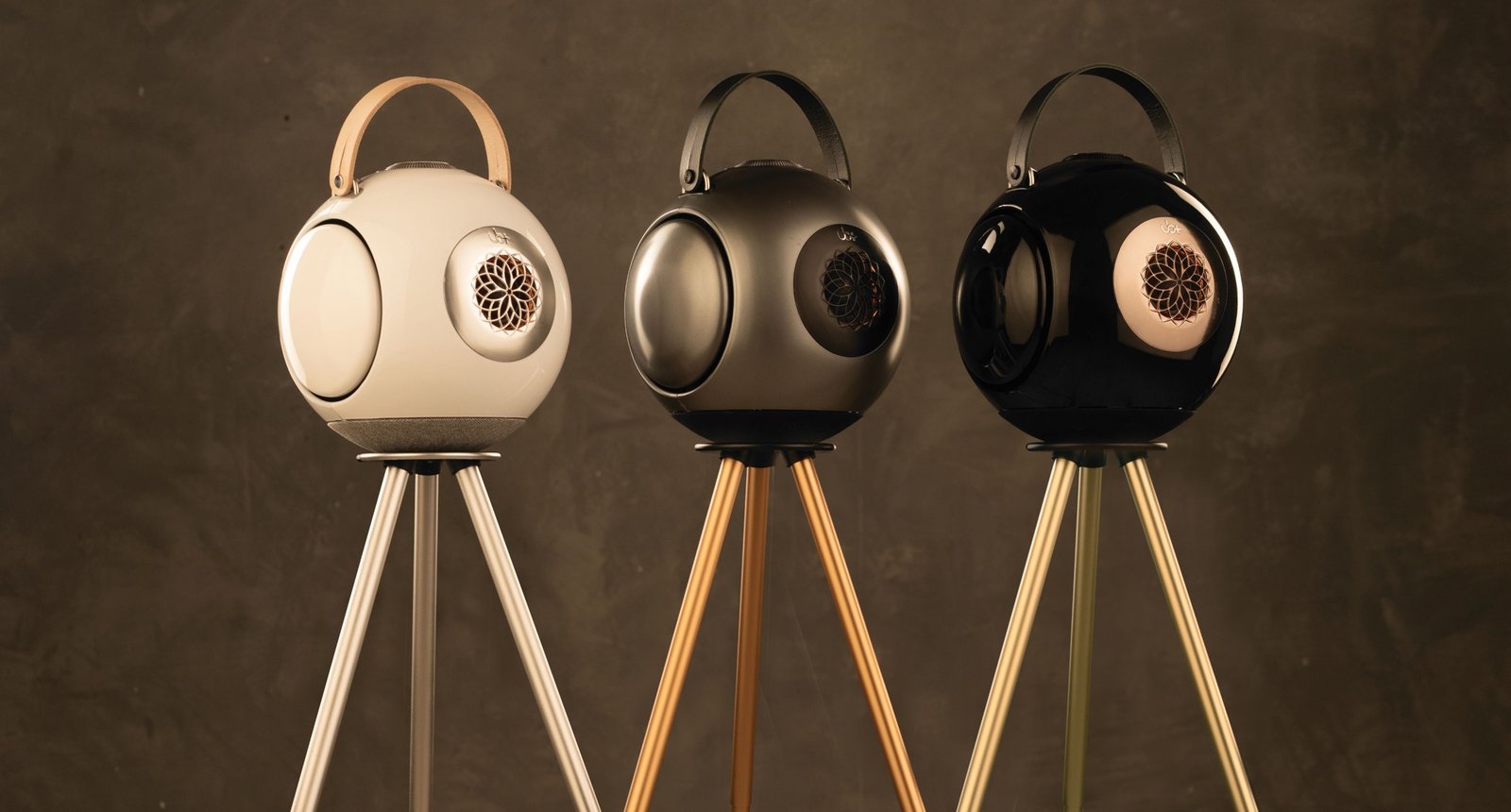
The pursuit of the best bass bluetooth portable speaker is often framed as a search for power more impact, more rumble, more presence. But in reality, bass is not about excess. It is about control, structure, and balance. The difference between a speaker that sounds impressive for a few minutes and one that remains engaging over hours lies in how it handles the most demanding part of sound: low frequencies.
Top Content
- Redefining “Best Bass” in Portable Audio
- Why Bass Is So Difficult in Portable Speakers
- The Problem with “Boosted Bass”
- Acoustic Engineering: The Real Solution
- Enclosure Geometry: More Than Aesthetic Design
- Helmholtz Resonance: Using Air as an Amplifier
- Driver Engineering: Precision and Control
- Passive Radiators: Extending Bass Without Extra Power
- Mechanical vs Digital Bass
- Comparative Design Overview
- Real-World Listening Experience
- What to Look for in the Best Bass Bluetooth Portable Speaker
- The Future of Portable Bass
- Conclusion
Portable Bluetooth speakers operate within strict constraints. They must remain compact, efficient, and battery-powered, yet still reproduce bass that feels deep, physical, and precise. Achieving that balance requires more than tuning it requires engineering discipline across acoustics, mechanics, and energy management.
This article explores what truly defines the best bass in portable speakers, breaking down the science, the design challenges, and the advanced solutions that allow certain systems to deliver bass that is both powerful and refined.
Redefining “Best Bass” in Portable Audio
Before diving into technology, it’s important to understand that the “best bass” is not the loudest bass.
High-quality bass should provide:
- Extension – reaching low frequencies naturally
- Control – avoiding boominess and resonance buildup
- Clarity – preserving detail in bass notes
- Integration – blending seamlessly with mids and highs
- Consistency – maintaining performance at different volumes
When these qualities are missing, bass becomes:
- Bloated
- Distorted
- Overpowering
- Fatiguing
The best bass is not the most noticeable it is the most structurally accurate.
Why Bass Is So Difficult in Portable Speakers
The challenge of designing the best bass bluetooth portable speaker is rooted in physics.
Wavelength vs Size
Low-frequency sound waves are long often longer than the speaker itself. This creates a mismatch:
- The enclosure is too small
- The speaker must simulate a larger acoustic space
This is achieved through pressure tuning and resonance design.
Air Movement
Bass requires moving air. The amount depends on:
- Driver surface area
- Excursion distance
- System efficiency
Portable speakers compensate for small drivers with long excursion and optimized airflow.
Energy Constraints
Low frequencies demand more power because:
- The driver moves further
- More air must be displaced
- Internal pressure increases
In a wireless speaker, this must be balanced with battery life and thermal limits.
The Problem with “Boosted Bass”
Many speakers attempt to solve bass limitations through digital enhancement.
DSP-Based Bass Boost
Digital Signal Processing can:
- Increase perceived bass
- Add initial impact
- Improve low-volume performance
But excessive DSP leads to:
- Distortion at higher volumes
- Reduced clarity
- Artificial sound
DSP can enhance but not replace physical bass generation.
Structural Issues in Conventional Designs
Most portable speakers use rectangular enclosures, which introduce:
- Standing waves between parallel surfaces
- Internal reflections
- Uneven pressure zones
These issues degrade bass quality.
Acoustic Engineering: The Real Solution
The best portable speakers rely on physical acoustic design, not just software.
Key elements include:
- Enclosure geometry
- Pressure control
- Airflow optimization
- Mechanical stability
These factors allow bass to develop naturally and consistently.
Enclosure Geometry: More Than Aesthetic Design
The shape of the enclosure plays a critical role in sound performance.
Rectangular Enclosures
Common but imperfect, they create:
- Parallel surfaces
- Standing waves
- Pressure inconsistencies
Spherical Enclosures
Spherical designs offer:
- Even distribution of sound waves
- Stable internal pressure
- Reduced distortion
In systems like the UB+ dB1 DOUBLEBASS, the spherical enclosure functions as a balanced acoustic chamber, improving bass accuracy.
Helmholtz Resonance: Using Air as an Amplifier
Helmholtz resonance is a powerful concept in speaker design.
Principle
The enclosure is tuned so that:
- Air inside vibrates at specific frequencies
- These vibrations reinforce bass output
- Efficiency increases without additional power
Benefits
- Deeper bass extension
- Lower distortion
- Reduced reliance on DSP
- More natural sound
This approach transforms the enclosure into a passive amplifier.
Driver Engineering: Precision and Control
The driver is the heart of the speaker.
Advanced Driver Features
High-performance systems may include:
- A 90mm neodymium magnet for strong control
- A 35mm long-stroke voice coil for extended movement
- A 20mm piston excursion for significant air displacement
- An aluminum shorting ring to reduce distortion
- A wide surround for stability
Performance Impact
These features allow:
- Greater air movement
- Improved control
- Reduced distortion
- Deeper bass output
Passive Radiators: Extending Bass Without Extra Power
Passive radiators enhance bass efficiently.
Function
They respond to internal air pressure, vibrating in sync with low frequencies.
Dual Radiator Design
Symmetrical placement provides:
- Balanced mechanical forces
- Reduced vibration
- Improved stability
Surface Area Advantage
Larger radiator area allows:
- Greater air displacement
- Stronger bass output
- Improved efficiency
Mechanical vs Digital Bass
Understanding this distinction is key.
Digital Bass
- Software-based enhancement
- Boosts frequencies artificially
- Can distort
Mechanical Bass
- Physics-based generation
- Uses air movement and pressure
- Produces natural sound
The best speakers rely on mechanical engineering principles.
Comparative Design Overview
| Feature | Advanced Acoustic Systems (UB+) | Typical Portable Speakers |
| Bass Generation | Mechanical + resonance | DSP boost |
| Enclosure Shape | Spherical | Rectangular |
| Driver Orientation | Inward-firing | Outward |
| Passive Radiators | Dual symmetrical | Single/Dual |
| Distortion | Low | Moderate to High |
| Bass Control | High | Variable |
Real-World Listening Experience
The technical design directly affects what you hear.
Depth
Bass reaches lower frequencies naturally.
Clarity
Low frequencies remain distinct and detailed.
Stability
Performance remains consistent across volume levels.
Immersion
Bass adds weight and presence to the sound.
What to Look for in the Best Bass Bluetooth Portable Speaker
When evaluating speakers, focus on:
- Balanced sound profile
- Low distortion at high volumes
- Efficient energy use
- Solid enclosure design
- Real-world listening performance
Avoid relying solely on marketing claims.
The Future of Portable Bass
The industry is shifting toward:
- Advanced driver materials
- Improved enclosure geometries
- Efficient passive radiator systems
- Reduced reliance on DSP
- Physics-driven sound design
This reflects a move toward accuracy over exaggeration.
Conclusion
The search for the best bass bluetooth portable speaker is ultimately about achieving depth, control, and balance within physical constraints.
Bass is not something that can be artificially added it must be engineered through careful management of air movement, pressure, and mechanical behavior. The best systems use these principles to deliver sound that is both powerful and precise.
Advanced designs like the UB+ dB1 DOUBLEBASS demonstrate how acoustic engineering can produce bass that is deeper, cleaner, and more natural than traditional approaches.
In the end, the best speaker is not the one that produces the most bass it is the one that delivers the most accurate and immersive bass experience, where every low-frequency note supports the music with clarity and control.