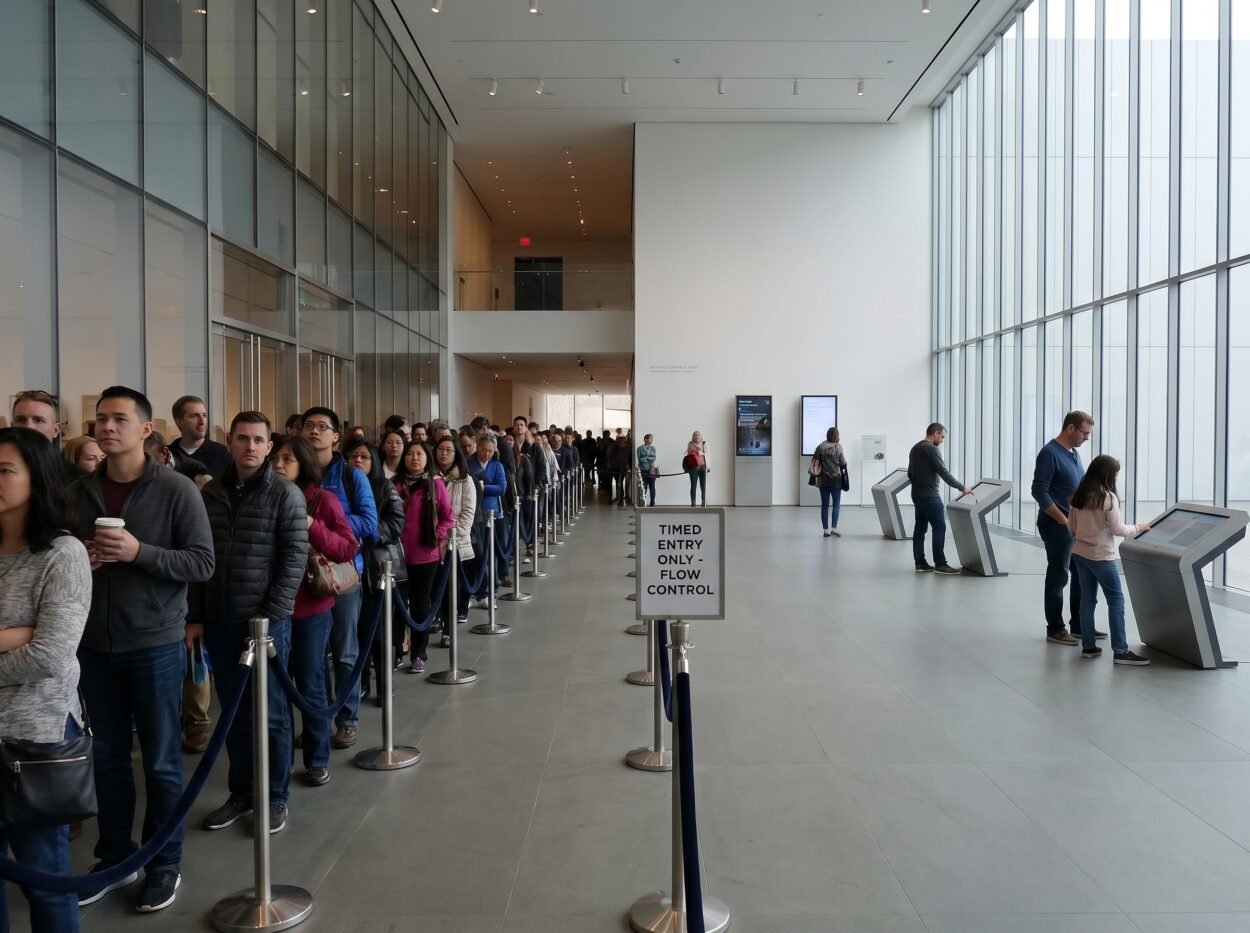
Museums are solving crowd control problems by adopting digital entry management systems that automate ticketing and manage visitor flow in real time.
If you’ve ever stood in a long queue outside a museum, you already know the problem.
Crowded entrances. Slow ticket checks. Confused staff. Frustrated visitors.
But something is changing and fast.
Museums are quietly upgrading the way they manage people, and the results are impossible to ignore.
Why Do Museums Get So Crowded in the First Place?
Museums get overcrowded because of manual ticketing, lack of planning, and no real-time tracking of visitors.
Most traditional systems still rely on:
- Paper tickets or basic counters
- Manual checking at entry gates
- No limit on how many people enter at once
- No visibility into how crowded it already is
This creates chaos, especially during weekends, holidays, or popular exhibitions.
And once the crowd builds up, there’s very little staff can do to control it.
What Is a Museum Entry Management System?
A museum entry management system is a digital solution that handles ticketing, entry, and visitor flow all in one place.
Instead of standing in line and getting a paper ticket, visitors can:
- Book tickets online
- Receive a QR code
- Scan it at the entrance for instant access
Behind the scenes, the system tracks how many people are inside, how many are entering, and when peak times occur.
How Are Museums Using Technology to Control Crowds?
Museums are using digital tools like QR scanning, time slots, and live dashboards to manage crowds efficiently.
Here’s how it works:
- QR Code Entry: Visitors scan and enter within seconds
- Time-Slot Booking: Entry is spread across different time windows
- Live Monitoring: Staff can see crowd levels instantly
- Capacity Alerts: Systems warn when limits are reached
This allows museums to prevent overcrowding instead of reacting to it.
The goal is simple: smoother entry, better experience.
Does This Actually Improve Visitor Experience?
Yes, digital entry systems significantly improve visitor experience by reducing waiting time and confusion.
Visitors enjoy:
- Faster entry with minimal queues
- Contactless and hassle-free access
- Clear timings and better planning
- Secure and transparent ticketing
Instead of starting their visit with frustration, they start with ease.
And that changes everything.
Why Are More Museums Adopting These Systems Now?
Museums are adopting digital systems because they improve efficiency, reduce workload, and meet modern visitor expectations.
Today’s visitors expect:
- Online booking
- Instant entry
- Digital payments
- Organized experiences
At the same time, museums benefit from:
- Better control over crowd flow
- Accurate visitor data
- Reduced staff dependency
- Improved revenue tracking
It’s a win-win for both sides.
What Does the Future of Museum Visits Look Like?
The future of museum visits is digital, seamless, and data-driven.
Soon, most museums will offer:
- Fully mobile-based ticketing
- Predictive crowd management
- Smart entry systems
- Integrated visitor analytics
The experience will feel less like waiting in line and more like walking into a well-organized event.
Final Thoughts
Museums are no longer just about preserving the past , they’re evolving with the present.
And it all starts at the entrance.
By adopting digital entry management systems, they’re not just solving crowd problems , they’re redefining the visitor experience.
Want to understand how these systems work in detail?
Check out this guide:
https://everyticket.in/blog/museum-entry-management-system-crowd-control
FAQs
Q: Why are museum queues so long?
A: Long queues are usually caused by manual ticketing, slow entry checks, and lack of crowd management systems.
Q: What is a QR-based entry system?
A: It allows visitors to scan a digital code for quick and contactless entry instead of using paper tickets.
Q: Do digital systems really reduce crowding?
A: Yes, features like time-slot booking and real-time tracking help distribute visitors and prevent overcrowding.
Q: Are these systems expensive for museums?
A: Many modern solutions are scalable and affordable, making them suitable for both small and large museums.
Interested in upgrading your museum’s visitor experience or solving crowd management challenges?
Let’s connect and explore how digital solutions can make a difference.

Leave a Comment