


Why Is IHC Required After a Biopsy?
The biopsy result comes back. The tissue is abnormal, but the pathologist still cannot tell you exactly what you are dealing with. A pathologist looks at cells under glass. How they’re shaped,...

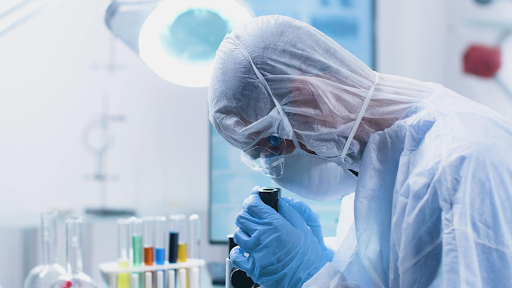
The biopsy result comes back. The tissue is abnormal, but the pathologist still cannot tell you exactly what you are dealing with.
Table Of Content
A pathologist looks at cells under glass. How they’re shaped, how they’re arranged, their size. Usually, that’s the answer. But not always. Sometimes cancer cells and non-cancer cells look almost identical. A tumor that started in one organ looks the same as one that has spread there. Inflammation looks like malignancy.
IHC solves this by asking a different question. Not “what do these cells look like?” but “what proteins are they making?”
What IHC Actually Does
IHC applies antibodies directly to the biopsy tissue. Each antibody is built to bind to one specific protein, called an antigen. When it finds that protein in the tissue, it locks on. A detection system then produces a visible color change, typically a brown or red stain, right at the site of binding.
The pathologist reads the stain under a microscope. Where the stain appears, which cells carry it, and how densely it appears all carry meaning. Different disease types express different protein markers. IHC maps those markers onto the actual tissue, in the exact location they exist.
The antibody is not just a reagent here. It is the diagnostic instrument. Its quality determines the accuracy of what follows.
Why the Antibody Choice Matters
IHC results are only as reliable as the antibodies used to produce them. This is where antibody type becomes a real clinical concern.
Old polyclonal antibodies come from animal serum. They’re a grab bag—lots of different antibody types in one batch. That means results vary. One run looks different from the next. It works for screening. It doesn’t work for diagnosis.
Recombinant antibodies are made differently. The gene gets cloned and expressed in a controlled system. Every batch is molecularly identical to the last.
In a diagnostic setting, that consistency is a requirement. A result that cannot be reproduced is a result that cannot be trusted.
What IHC Is Used to Determine
Once the biopsy tissue goes through IHC, the information it provides covers several categories that directly affect patient management.
The first is tumor classification. Pathologists use marker panels to identify not just whether cancer is present, but which subtype. Breast cancer subtypes, for instance, are distinguished partly by markers like ER, PR, and HER2. Each subtype responds differently to treatment. Getting the classification right is the foundation of everything that follows.
The second is determining the origin of metastatic disease. When cancer spreads, the cells in a secondary site can look very different from the original tumor. IHC traces those cells back to their source tissue, which tells the treatment team where the primary cancer began.
The third is treatment planning. Some therapies are only effective when a specific protein target is present. IHC confirms whether that target exists in the patient’s tissue before a targeted therapy is considered.
IHC is also used to identify non-cancer conditions. Infectious agents, autoimmune markers, and inflammatory patterns all leave protein signatures that IHC can locate and confirm.
The Role of IHC Recombinant Antibodies in Modern Pathology
IHC recombinant antibodies offer defined specificity, consistent performance across time, and reduced lot-to-lot variability.
In a panel-based IHC approach, where multiple markers are tested on the same tissue, consistency across all antibody reagents is what allows the combined result to be interpreted accurately. If one antibody performs differently run to run, the diagnostic picture becomes unreliable.
The move toward IHC recombinant formats is not a trend. It is a response to the accuracy demands that modern diagnostic medicine places on pathology labs.
IHC Is Where Diagnosis Gets Precise
A biopsy opens a window. IHC tells you what you are looking at through it.
Without IHC, many diagnoses would be incomplete or incorrect. With it, pathologists can distinguish conditions that appear visually identical, confirm or rule out disease types, trace the origin of metastatic cells, and select appropriate targeted therapies.
The quality of the antibodies used throughout that process determines the quality of the diagnosis.
If you are sourcing antibodies for IHC applications, explore the recombinant antibody collection at AAA Biotech. Validated, reproducible, and built for the precision that diagnostic work demands.







No Comment! Be the first one.