


Mylar Bags for Cannabis Packaging: Compliance and Customisation Guide
Cannabis packaging sits at the intersection of product protection, consumer safety regulation, and brand marketing in a way that few other product categories do. The packaging must preserve product...

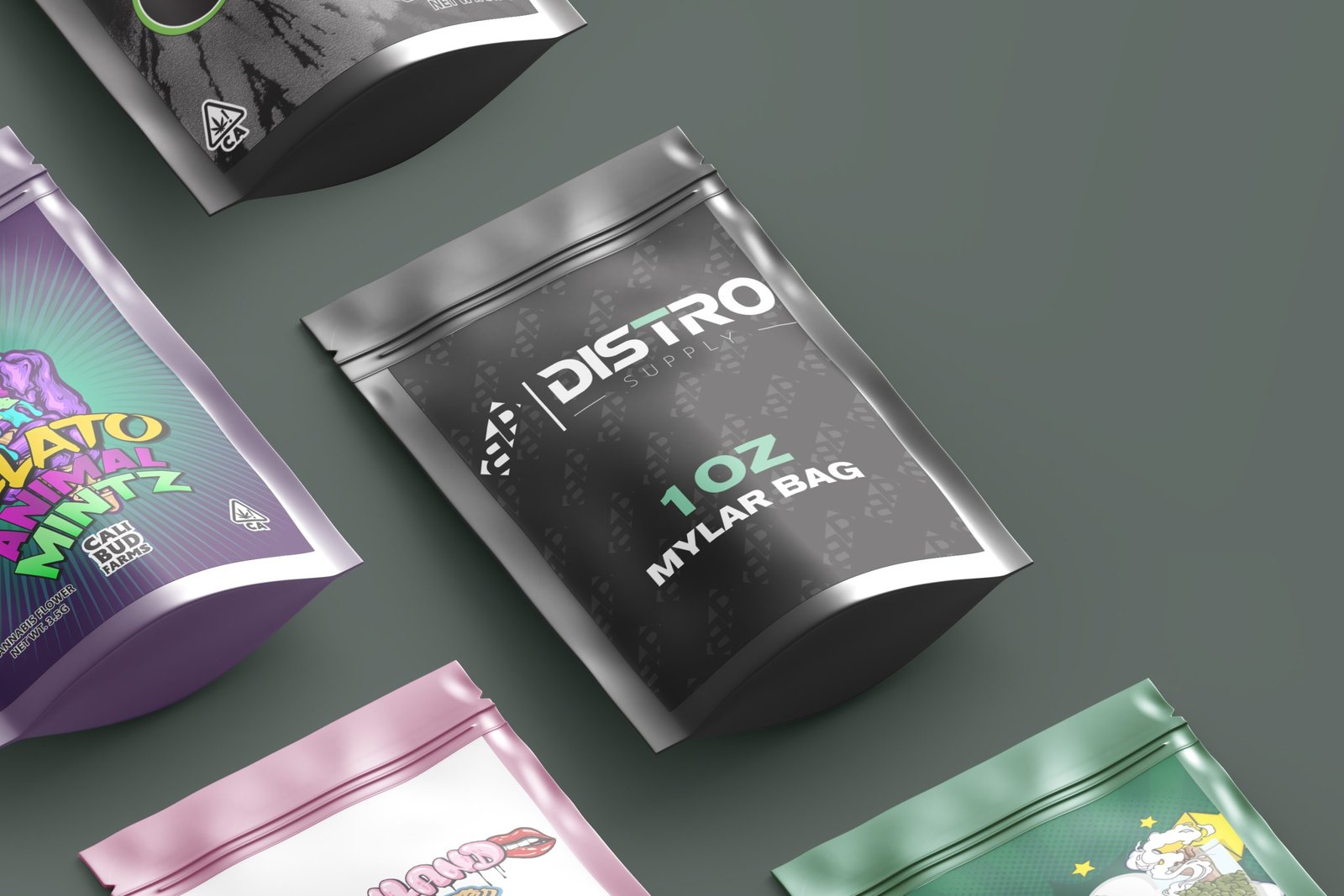
Cannabis packaging sits at the intersection of product protection, consumer safety regulation, and brand marketing in a way that few other product categories do. The packaging must preserve product integrity.
Table Of Content
- Why Mylar Is Dominant in Cannabis Packaging
- Odour Control
- Product Preservation
- Tamper Evidence
- Compliance Requirements: What You Need to Know
- Child-Resistant Packaging
- Opaque Packaging
- Resealability
- Required Label Information
- Custom Printed Mylar Bags: Cannabis Brand Strategy
- The Front Panel
- Finish and Tactile Experience
- Custom Sizing
- Smell-Proof Performance: Setting Realistic Expectations
- Selecting the Right Mylar Bag Format for Your Cannabis Products
- Questions to Ask Your Packaging Supplier
- Building Your Compliance-Ready Packaging Programme
It must satisfy a growing body of state and provincial compliance requirements. And it must do both of those things while also presenting the brand compellingly in an increasingly competitive retail environment.
Mylar bags have become the dominant flexible packaging format in the cannabis category for good reason they address all three of these requirements more effectively than any other flexible format available at commercial price points.
But the decision about which Mylar bag specification to use, and how to customise it, is more consequential in cannabis than in almost any other category.
Why Mylar Is Dominant in Cannabis Packaging
The properties that make Mylar bags ideal for cannabis packaging are the same properties that make them valuable in food and supplement applications but in cannabis, their importance is amplified.
Odour Control
Cannabis is a highly aromatic product. Uncontrolled odour is not just a consumer experience issue it is a regulatory concern in many jurisdictions, where cannabis packaging must contain product odour.
True aluminium foil laminate Mylar bags create an airtight barrier that prevents odour migration in a way that polythene bags, paper packaging, and thin-film pouches cannot.
The distinction between a metallised polyester bag and a true aluminium foil laminate is particularly important here. Metallised polyester allows some gas transmission through the metal coating.
Aluminium foil laminate does not. For cannabis packaging where odour containment is both a consumer expectation and a regulatory requirement the specification matters.
Product Preservation
Cannabis flower and infused products are sensitive to the same environmental factors that degrade food quality: oxygen (which degrades cannabinoids through oxidation), moisture (which promotes mould growth and degrades terpene profiles), and light (which accelerates photodegradation of THC into CBN).
A properly sealed Mylar bag with oxygen absorbers addresses all three simultaneously. The aluminium foil core blocks light completely. The heat-seal closure and low OTR laminate block oxygen and moisture. The result is cannabis that reaches the consumer in the condition it left the processing facility rather than degraded by poor packaging.
Tamper Evidence
Cannabis regulatory frameworks in most jurisdictions require tamper-evident primary packaging. Mylar bags with an initial heat seal provide inherent tamper evidence the bag cannot be opened and resealed without visible evidence of tampering. Child-resistant zipper closures add a secondary layer of tamper resistance appropriate for regulated markets.
Compliance Requirements: What You Need to Know
Cannabis packaging compliance requirements vary significantly by jurisdiction. Federal frameworks exist in Canada and are emerging in Germany and other markets pursuing legalisation.
In the United States, regulation is at state level, with each legal state maintaining its own packaging ruleset. The following requirements appear across most regulated jurisdictions:
Child-Resistant Packaging
Child-resistant (CR) packaging is mandated for all cannabis products in virtually every regulated market. For flexible packaging, child-resistant performance is achieved through specialised zipper closures that require a specific squeeze-and-pull action to open a motion that young children lack the dexterity and strength to replicate.
CR compliance is not self-certifying. Your packaging supplier should be able to provide certification that the child-resistant closure in your bag has been tested against applicable standards.
In the US, this typically means ASTM D3475 Standard Classification for Child-Resistant Packaging. Request this documentation before placing an order.
Opaque Packaging
Most jurisdictions require cannabis packaging to be opaque consumers should not be able to see the product inside the packaging from the exterior. Aluminium foil laminate Mylar bags are inherently opaque, satisfying this requirement by material property.
However, if you specify a window or clear panel in your bag design, you will likely be non-compliant in most regulated markets. Verify your state or provincial regulations before specifying any clear panel.
Resealability
Many jurisdictions require cannabis packaging to be resealable after initial opening. The resealable zipper closure standard in Mylar cannabis bags addresses this requirement.
Confirm your jurisdiction’s specific resealability requirements some require the bag to reseal effectively after a defined number of open-close cycles.
Required Label Information
Cannabis packaging label requirements typically include: total cannabinoid content (THC, CBD, and others as required), batch number and lot traceability codes, licensed producer and retailer information, health warnings (jurisdiction-specific), country or state of origin, best-before dating, and in some jurisdictions, QR code linking to certificate of analysis.
These requirements generate a significant volume of mandatory copy that must be accommodated in your packaging design. Work with your regulatory affairs advisor to confirm the complete list for every jurisdiction where you sell before finalising artwork.
Custom Printed Mylar Bags: Cannabis Brand Strategy
Regulatory constraints do not eliminate the opportunity for cannabis brand differentiation they define the playing field within which that differentiation must occur. The most successful cannabis brands treat packaging not as a compliance exercise but as a primary brand asset.
The Front Panel
In most jurisdictions, a portion of the packaging must be devoted to mandated health warnings and required information. This is typically specified as a percentage of the total display area. The remaining space is yours to design. Treat the front panel as a billboard for your brand it is what the consumer sees first on a dispensary shelf or in an online product listing.
Strong cannabis packaging design tends to be graphic, confident, and distinctive rather than hedged and generic. Given the product category restrictions on health claims, brand personality expressed through visual design is one of the few differentiation tools available.
Finish and Tactile Experience
Matte lamination has become predominant in premium cannabis packaging it signals quality, photographs well, and does not attract fingerprints in the high-contact retail environment of a dispensary. Soft-touch lamination is increasingly adopted by ultra-premium brands as a sensory differentiation point.
Spot UV over matte creates high-contrast visual effects that retain the premium feel of matte while adding graphic impact.
Custom Sizing
Cannabis products are sold by weight, and the relationship between product weight and bag size should be precise. Oversized packaging a bag too large for the quantity of flower inside creates a poor consumer experience and may trigger regulatory scrutiny in some jurisdictions that address packaging proportionality.
Specify your bag dimensions based on actual fill volume, with appropriate headspace for oxygen absorbers if used.
If you are sourcing custom printed Mylar bags for a cannabis brand at any scale, Alpha Global Packaging offers fully customisable options including child-resistant closures, matte and soft-touch finishes, and compliance-compatible design support. Low minimum order quantities support the frequent design updates that regulatory changes sometimes require.
Smell-Proof Performance: Setting Realistic Expectations
‘Smell-proof’ is a frequently used term in cannabis packaging marketing that warrants some clarification. A properly sealed aluminium foil laminate Mylar bag will contain odour effectively when the heat seal is intact. Once a bag is opened even with a resealable zipper odour containment is reduced significantly.
For consumers, the practical implication is that a partially used bag that has been resealed via zipper will retain some odour management properties but is not equivalent to an unopened heat-sealed bag. This is relevant for brands making smell-proof claims in markets where such claims are regulated.
For packaging specification purposes, the meaningful performance metric is whether the bag passes an organoleptic test (odour panel test) in its sealed, as-delivered condition. Ask your supplier whether their bags have been tested against any standard for odour containment.
Selecting the Right Mylar Bag Format for Your Cannabis Products
Cannabis products span a wide range of physical forms, each with somewhat different packaging requirements:
- Flower – standard stand-up pouch with zipper; sizes typically 3.5g, 7g, 14g, and 28g; opaque, child-resistant
- Pre-rolls – typically flat or tube packaging rather than pouches; Mylar pre-roll pouches for multi-packs are a growing format
- Edibles – gummies, chocolates, and baked goods require food-grade compliance in addition to cannabis regulatory compliance; stand-up pouches with child-resistant zippers
- Concentrates – small-volume flat pouches; precise sizing to prevent product shifting; typically paired with a rigid outer secondary package
- Tinctures – primary liquid packaging is typically glass; Mylar outer pouches sometimes used for retail bundling
- Topicals – product-specific; Mylar not typically the primary container for lotions and creams
Questions to Ask Your Packaging Supplier
- Can you provide child-resistant certification documentation for your closure system?
- Is your laminate compliant with applicable food-contact regulations? Can you provide documentation?
- What is your minimum order quantity for custom printed bags in our required sizes?
- What is your lead time from artwork approval to delivery?
- Do you have experience producing cannabis packaging in my jurisdiction, and can you provide references?
- What quality testing do you perform on seal integrity and child-resistant closure performance?
Packaging requirements vary by product, industry, and region. Always consult with a packaging specialist to ensure compliance with applicable regulations for your product category.
Building Your Compliance-Ready Packaging Programme
Cannabis packaging compliance is not a one-time exercise. Regulations change. New jurisdictions open. Label requirements are updated. The brands that manage this most effectively treat packaging compliance as an ongoing programme rather than a project maintaining a regulatory calendar, building relationships with suppliers who can accommodate design updates on reasonable lead times, and keeping a buffer stock that provides runway when regulatory changes require a packaging revision.
The investment in well-specified, compliant, custom Mylar cannabis packaging is also a brand investment. In a category where the product itself cannot be displayed on a shelf and where health claims are heavily restricted, the packaging is frequently the primary brand touchpoint. Make it count.






No Comment! Be the first one.