


Advanced Architectural Design for Large-Scale Temporal Streams
In the current era of industrial digitization, the capacity to process and analyze massive streams of telemetry data has become a defining characteristic of market leaders. To achieve this,...

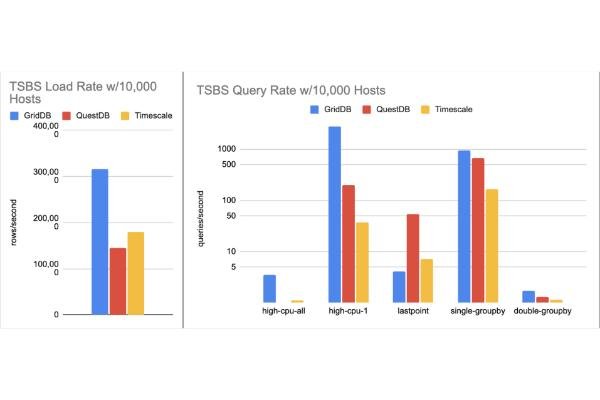
In the current era of industrial digitization, the capacity to process and analyze massive streams of telemetry data has become a defining characteristic of market leaders. To achieve this, organizations must move beyond generic storage solutions and perform a rigorous time series database performance comparison to identify architectures that can sustain high-velocity writes while maintaining the low-latency query performance required for real-time monitoring. By selecting a system specifically engineered for time-stamped telemetry, enterprises can build a robust foundation that supports everything from real-time operational monitoring to long-term historical audits.
Table Of Content
- Structural Efficiency in Temporal Data Management
- Managing the Data Lifecycle for Scalable Operations
- The Role of Intelligent Downsampling
- Multi-Tiered Storage and Hardware Optimization
- Strategic Implementation for Time Series Database Performance
- Driving Innovation through Integrated Analytics
- Facilitating Predictive Maintenance
- Ensuring Connectivity and Resilience
- Future-Proofing with a High Performance Time Series Database
- Conclusion: Data as the Catalyst for Growth
Structural Efficiency in Temporal Data Management
The fundamental challenge of modern industrial data is its relentless pace. Unlike traditional business data, which is often transactional and subject to frequent updates, industrial data is append-only and sequential. Specialized databases address this by organizing data chronologically on physical disks, which significantly reduces the overhead associated with random I/O operations.
By utilizing columnar storage formats, these systems achieve much higher data density than traditional relational databases. This format allows for “projection pushdown,” where the database only reads the specific sensor columns required for a calculation, rather than scanning entire rows. This precision is what enables engineers to visualize trends across billions of data points in a matter of seconds.
Managing the Data Lifecycle for Scalable Operations
As an industrial network expands, the volume of accumulated data can quickly become a bottleneck if not managed intelligently. A high-performance architecture must incorporate automated lifecycle policies to ensure that storage costs remain predictable as the dataset grows.
The Role of Intelligent Downsampling
Automated downsampling is a critical feature for balancing detail with performance. This process aggregates high-resolution raw data—such as millisecond-level vibration metrics—into lower-resolution summaries like averages or maximums for long-term retention.
This ensures that while high-fidelity data is available for immediate troubleshooting, the broader historical trends remain accessible and fast to query without consuming excessive disk space.
Multi-Tiered Storage and Hardware Optimization
Effective data management also involves moving older, “cold” data from expensive high-speed drives to more cost-effective storage layers, such as object storage or high-capacity HDDs. Modern systems handle this migration transparently, allowing users to query years of history without needing to know where the data is physically stored. This tiered approach is essential for organizations that must comply with strict long-term data retention regulations.
Strategic Implementation for Time Series Database Performance
To maximize the ROI of a data platform, technical teams must apply time series database performance strategies that optimize the flow of data from the edge to the core. Implementing specialized encoding algorithms, such as bit-packing and delta-of-delta encoding, can compress numerical datasets by up to 90%, significantly reducing the network bandwidth required for synchronization.
Driving Innovation through Integrated Analytics
The true value of a database lies in its ability to turn raw metrics into actionable intelligence. Modern time series solutions feature built-in mathematical functions that allow for complex aggregations and windowing operations to be performed directly within the storage engine.
Facilitating Predictive Maintenance
By providing a high-speed, high-fidelity stream of historical data, a specialized database serves as the essential training ground for machine learning models. These models can identify subtle signs of equipment degradation that are invisible to the naked eye. This transition from reactive to predictive maintenance allows companies to schedule repairs during planned downtime, significantly reducing the risk of catastrophic failures.
Ensuring Connectivity and Resilience
In a globalized manufacturing environment, data integrity is paramount. High-performance databases offer robust synchronization features that manage intermittent connectivity between remote “edge” sites and centralized cloud repositories. This ensures that even if a local network fails, data is buffered and synced once the connection is restored, maintaining a continuous and reliable “single source of truth.”
Future-Proofing with a High Performance Time Series Database
Investing in a high performance time series database is a strategic move that prepares an organization for the next decade of industrial growth. As sensor density increases and sampling rates rise, the underlying data layer must be robust enough to handle the load without performance degradation. A high-performance foundation provides the confidence to scale operations, explore new service models, and maintain a leading position in an increasingly competitive global market.
Conclusion: Data as the Catalyst for Growth
The transition to a truly data-driven enterprise is built on the strength of its technical infrastructure. By prioritizing the efficiency, speed, and scalability of time series storage, companies can turn their vast streams of raw telemetry into a potent competitive advantage. The ability to see further back into history and respond faster to the present is what defines the leaders in the modern industrial landscape.



No Comment! Be the first one.