



The Tracking Gap That Turns Small Delays Into Big Losses
Small delays are part of construction. Crews wait for materials, weather changes the schedule, and project conditions shift. But when delays come from not knowing where assets are or whether they are...

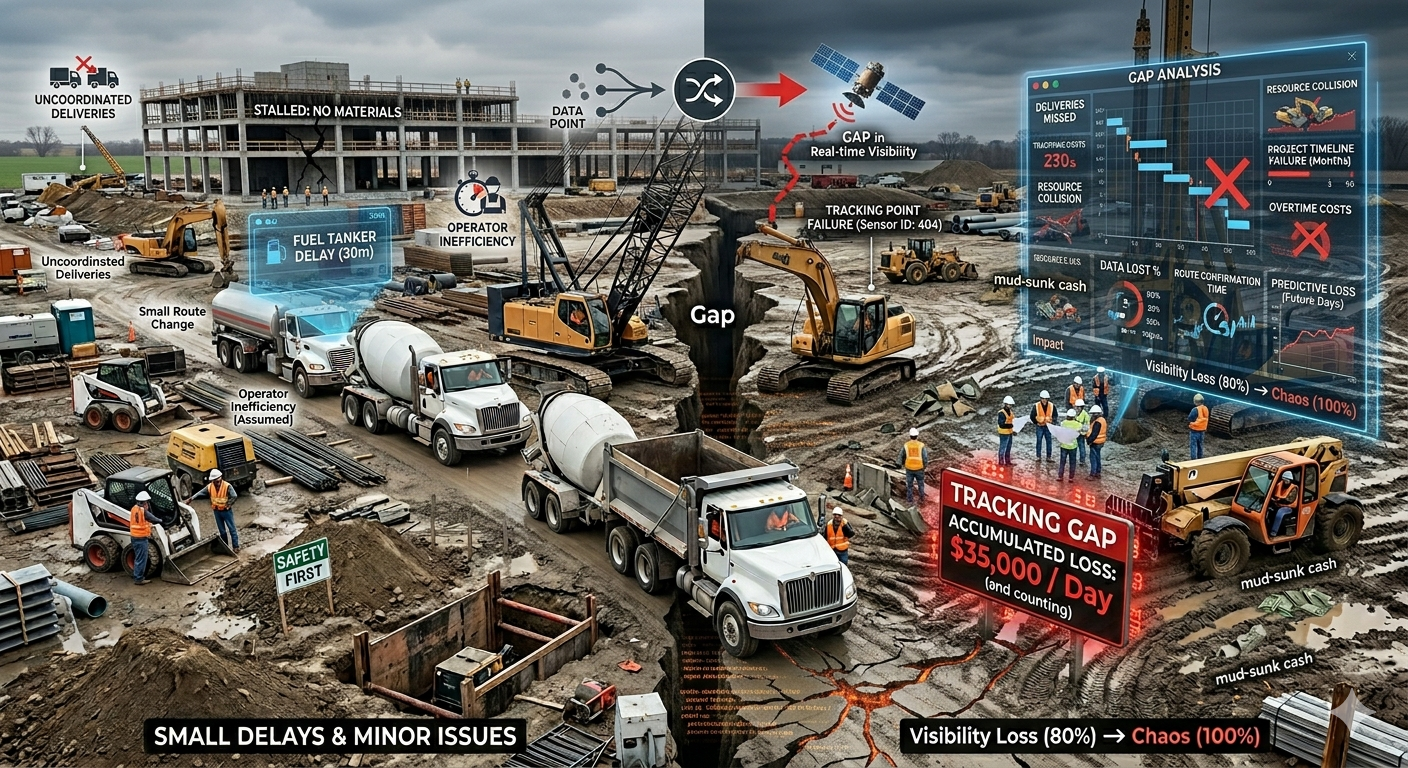
Small delays are part of construction. Crews wait for materials, weather changes the schedule, and project conditions shift. But when delays come from not knowing where assets are or whether they are available, the problem is preventable.
Table Of Content
- Why Asset Tracking Matters in Construction
- Multiple Jobsites Create More Complexity
- Small Assets Are Easy to Lose Track Of
- How Tracking Gaps Create Financial Loss
- Crews Wait for Missing Assets
- Teams Buy or Rent What They Already Own
- Accountability Gets Weak
- What Construction asset tracking software Helps Solve
- Location Visibility
- Movement History
- Asset Availability
- Better Asset Tracking Improves Jobsite Planning
- Project Managers Plan With Confidence
- Dispatchers Move Assets Faster
- Field Teams Reduce Confusion
- Asset Tracking Supports Better Cost Control
- Reducing Duplicate Purchases
- Improving Utilization
- Protecting High Value Equipment
- Final Thoughts
The tracking gap starts when contractors manage assets through scattered records, phone calls, spreadsheets, and memory. A compressor gets left on one site. A generator moves without being logged. A trailer attachment sits unused because no one knows where it went. These small gaps turn into lost hours, extra costs, and bigger project disruption.
Construction asset tracking software helps contractors close that gap by giving teams better visibility into where assets are, how they move, and how they support active work.
Why Asset Tracking Matters in Construction
Construction companies manage equipment across jobsites, yards, storage areas, service locations, and transport routes. That creates constant movement. Without reliable tracking, assets can disappear from the operational view even when they are not physically lost.
Multiple Jobsites Create More Complexity
A contractor with one jobsite can often manage equipment by memory. A contractor with several projects cannot. As soon as assets move across multiple locations, the risk of confusion increases. Teams need a system that shows where equipment is and who last used it.
Small Assets Are Easy to Lose Track Of
Large equipment gets attention because it is expensive and visible. Smaller assets like attachments, compactors, pumps, generators, tools, and trailers often create tracking problems. These assets may not always get the same level of oversight, but losing them still costs money.
How Tracking Gaps Create Financial Loss
The tracking gap affects more than asset location. It creates waste across labor, operations, rental spending and project planning.
Crews Wait for Missing Assets
If a crew needs an asset and no one knows where it is, work slows down. One missing generator or attachment can delay a task, waste labor hours and push the schedule back.
Teams Buy or Rent What They Already Own
When assets cannot be found quickly, teams often replace them temporarily. That may mean buying another tool, renting another unit, or transporting equipment from farther away. These costs add up over time.
Accountability Gets Weak
Without tracking records, it is hard to know who used an asset last, where it moved, and why it is missing. Better tracking strengthens accountability without turning the jobsite into a courtroom. It simply gives teams cleaner records.
What Construction asset tracking software Helps Solve
Construction asset tracking software gives contractors a better way to manage equipment visibility. It helps connect assets to locations, projects, users, and operational status.
Location Visibility
Location tracking helps teams see where assets are across jobsites and yards. This reduces wasted time spent calling around for updates.
Movement History
Movement history helps contractors understand how assets moved over time. This supports better accountability and makes it easier to investigate missing or misplaced equipment.
Asset Availability
Tracking should show whether an asset is available, assigned, in use, under maintenance, or unavailable. Location alone is useful, but availability makes planning stronger.
Better Asset Tracking Improves Jobsite Planning
Construction planning depends on knowing what resources are available. If asset information is outdated, schedules become fragile.
Project Managers Plan With Confidence
When project managers can see which assets are available, they can schedule tasks more accurately. That reduces the risk of planning work around equipment that is not actually ready.
Dispatchers Move Assets Faster
Dispatchers need accurate information to move equipment efficiently. Better asset tracking helps them decide which asset should move, where it should go, and whether another jobsite still needs it.
Field Teams Reduce Confusion
Field teams benefit from simple visibility. If they can confirm asset location and status quickly, they spend less time chasing updates and more time doing productive work.
Asset Tracking Supports Better Cost Control
Asset tracking is not only about finding equipment. It helps contractors understand how assets contribute to jobsite performance and cost.
Reducing Duplicate Purchases
When contractors know what they already own and where it is, they reduce unnecessary purchases. This is especially important for smaller assets that are frequently misplaced.
Improving Utilization
Tracking helps show whether assets are being used or sitting idle. If an asset stays at one site without activity, teams can move it where it is needed.
Protecting High Value Equipment
Better tracking supports theft prevention and recovery efforts. It also makes teams more disciplined about where assets are stored and how they move.
Final Thoughts
The tracking gap turns small delays into big losses because construction work depends on timing. When teams cannot find assets, confirm availability, or understand movement history, they lose hours, spend more money, and weaken jobsite control.
Construction asset tracking software gives contractors a practical way to reduce those losses. It improves visibility, accountability, planning and cost control across multiple jobsites. For equipment-heavy companies, better tracking is not just a convenience. It is a direct path to fewer delays and stronger project execution.




No Comment! Be the first one.