



How to Prepare for NID Entrance Exam 2026: Complete Guide for Beginners
Preparing for the National Institute of Design (NID) entrance exam can feel overwhelming, especially if you are just starting your journey in design. Unlike traditional exams, NID focuses heavily on...

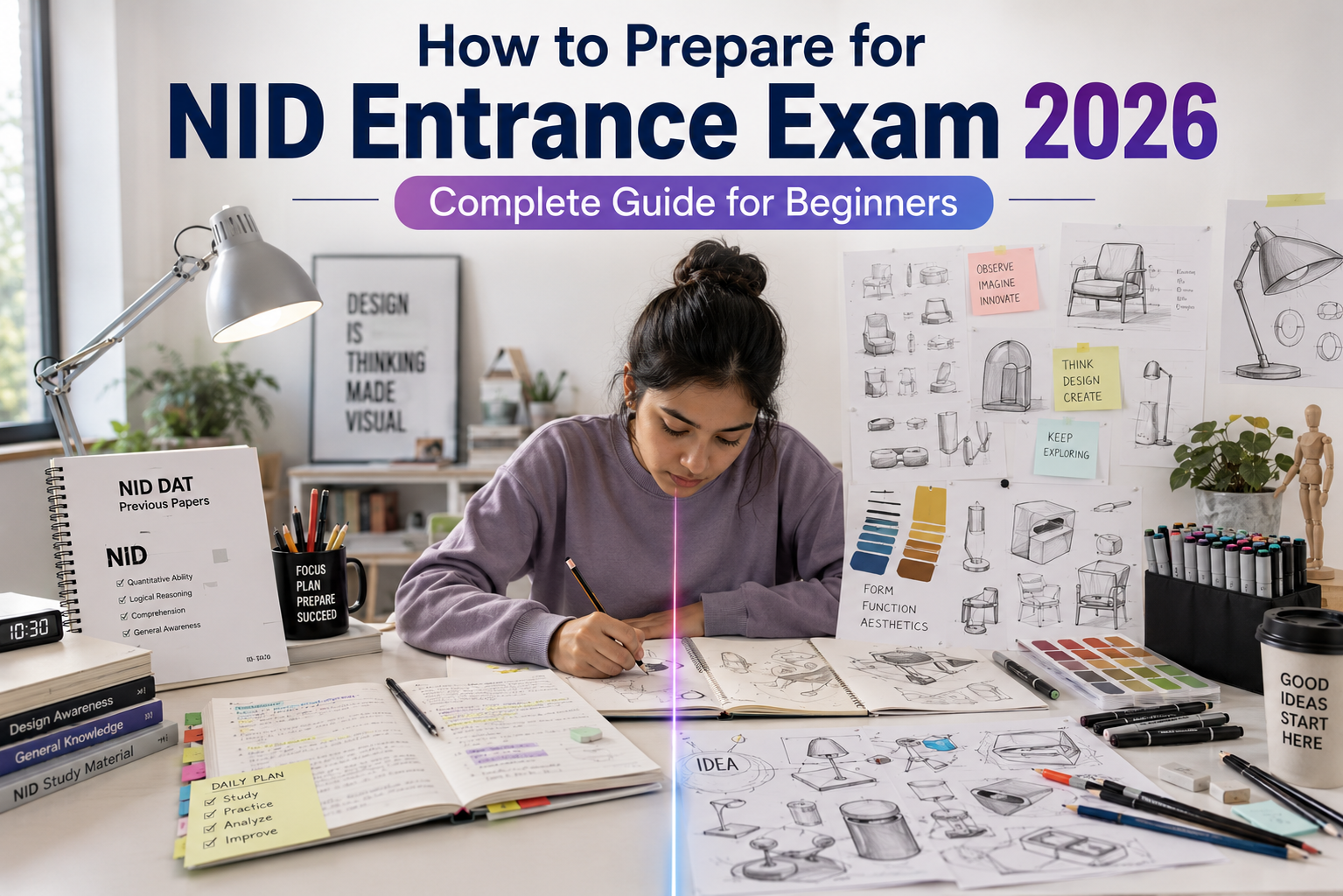
Preparing for the National Institute of Design (NID) entrance exam can feel overwhelming, especially if you are just starting your journey in design. Unlike traditional exams, NID focuses heavily on creativity, observation, problem-solving, and visual communication skills. This guide will help you understand exactly how to prepare effectively and improve your chances of getting into top NID campuses.
Table Of Content
- Understanding the NID Exam Structure
- Step 1: Build Strong Observation Skills
- Step 2: Improve Your Drawing Skills
- Step 3: Develop Creativity & Idea Generation
- Step 4: Solve Previous Year Papers
- Step 5: Stay Updated with Current Affairs
- Step 6: Work on Portfolio (For Mains)
- Step 7: Take Mock Tests & Get Feedback
- Why Choose the Right Guidance Matters
- Final Tips for NID Aspirants
- Conclusion
Understanding the NID Exam Structure
The NID entrance exam is divided into two main stages:
- DAT Prelims – A written test that evaluates creativity, drawing skills, observation, and logical thinking.
- DAT Mains – Studio test and interview round to assess hands-on skills, material handling, and design thinking.
To crack NID, you need a balanced preparation strategy that focuses on both theory and practical skills.
Step 1: Build Strong Observation Skills
Observation is the foundation of design. Start paying attention to everyday objects, people, and surroundings. Try to analyze shapes, colors, textures, and usability.
Practice Tip: Carry a sketchbook and draw daily life scenes like markets, streets, or household objects.
Step 2: Improve Your Drawing Skills
You don’t need to be a perfect artist, but you must be able to express ideas clearly through sketches.
Focus on:
- Human figures
- Perspective drawing
- Storyboarding
- Object sketching
Consistency matters more than perfection.
Step 3: Develop Creativity & Idea Generation
NID tests your ability to think differently. Practice brainstorming and come up with multiple solutions for a single problem.
Example: Design a bag for students – think beyond normal bags (multi-use, eco-friendly, tech-integrated, etc.)
Step 4: Solve Previous Year Papers
Previous papers give you a clear idea of question patterns and difficulty level. Try solving them within time limits.
But remember, only solving past papers is not enough. You must also work on creative thinking.
Step 5: Stay Updated with Current Affairs
Design is connected with real-world trends. Questions may be based on:
- Social issues
- Environmental concerns
- Innovation and technology
Read newspapers, blogs, and design magazines regularly.
Step 6: Work on Portfolio (For Mains)
Your portfolio showcases your creativity and thinking process. Include:
- Sketches
- Creative projects
- Photography
- Craft work
Make sure your portfolio tells a story about your design journey.
Step 7: Take Mock Tests & Get Feedback
Mock tests help you manage time and improve performance. Feedback from mentors can highlight your weak areas and guide improvement.
Why Choose the Right Guidance Matters
Self-study is important, but structured guidance can accelerate your preparation. Platforms like Design Aspirants provide expert mentorship, study materials, and personalized feedback to help students crack NID with confidence.
Final Tips for NID Aspirants
- Practice daily (at least 2–3 hours)
- Focus on creativity, not mugging up
- Learn from mistakes
- Stay consistent and patient
Conclusion
Cracking the NID entrance exam is not about being the best artist—it’s about being a smart and creative thinker. With the right strategy, consistent practice, and proper guidance, you can achieve your dream of getting into NID.
Start your preparation today and take one step closer to your design career.




No Comment! Be the first one.