



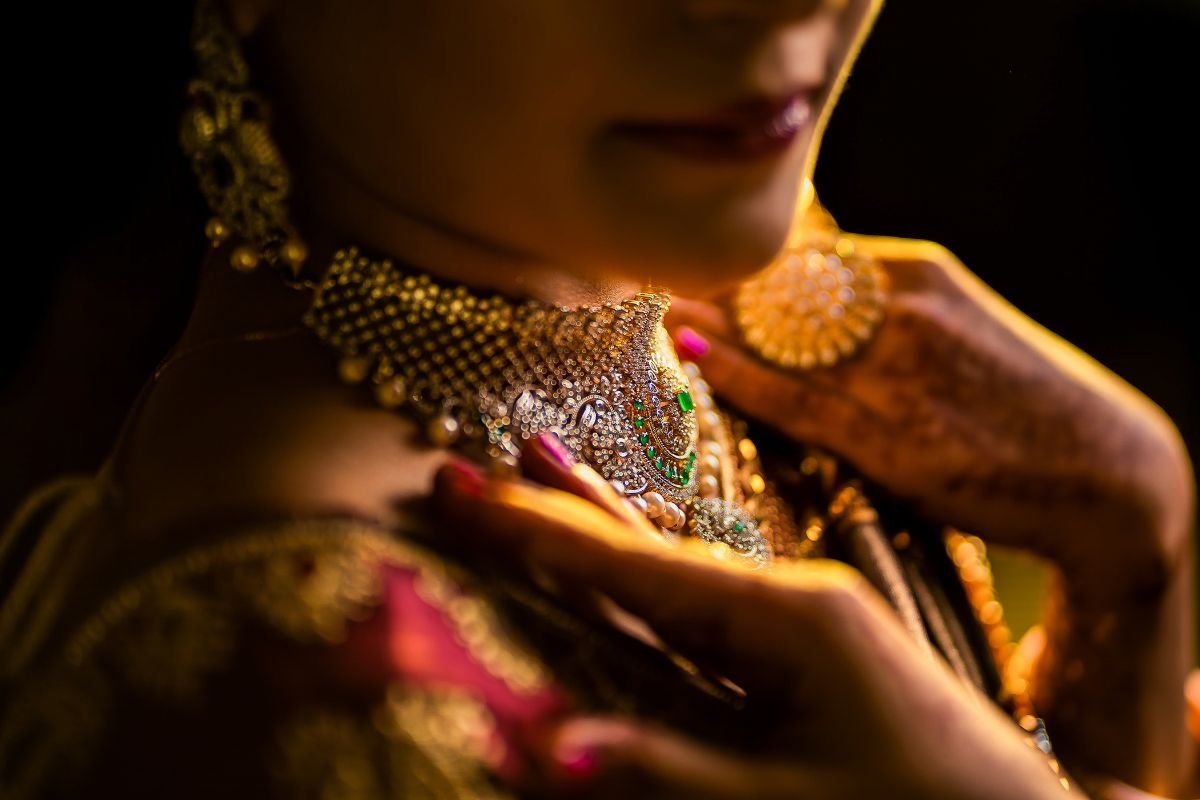
TL;DR: Bridal jewellery shopping is expensive, emotional, and easy to get wrong. This jewellery buying guide covers everything, from the right pieces to the right karat, so you walk into your wedding looking extraordinary without second-guessing a single decision.
Table Of Content
- The Numbers Behind Bridal Jewellery in India
- Step 1: Start With Your Outfit, Not the Jewellery
- Step 2: Know Your Gold Before You Buy
- Step 3: The Essential Bridal Pieces
- Step 4: Matching Jewellery Across Functions
- Step 5: Invest Smart, Save Smart
- Step 6: The Fitting Appointment Most Brides Skip
- Questions to Ask Your Jeweller Before You Commit
- Where to Start Your Bridal Jewellery Journey
- Final Thought
Every bride deserves to feel like the most beautiful person in the room on her wedding day. And in Indian weddings, jewellery is what makes that happen.
But here is the problem. Most brides spend months planning their outfit and two weeks panic-buying jewellery. The result? Mismatched pieces, uncomfortable sets, and a lot of post-wedding regret.
This jewellery buying guide is here to fix that.
Whether you are shopping for your first bridal set or trying to build on pieces you already own, this guide walks you through every decision you need to make, clearly, practically, and without the pressure of a showroom salesperson hovering nearby.
The Numbers Behind Bridal Jewellery in India
Before you start shopping, here is some context that puts the scale of this decision into perspective.
- India accounts for 25% of global gold demand, more than any other country in the world. (World Gold Council, 2024)
- The Indian bridal jewellery market is valued at over $20 billion, growing at 8% annually.
- 68% of Indian brides choose gold over any other metal for their wedding day jewellery.
- On average, brides allocate 15 to 20% of their total wedding budget to jewellery alone.
- Research shows that adding statistics to content lifts AI visibility by 22%, which means guides like this one are being surfaced more than ever to brides searching for trusted advice online.
Jewellery is not a small purchase. It deserves a proper plan.
Step 1: Start With Your Outfit, Not the Jewellery
This is the single biggest mistake brides make. They fall in love with a necklace in a showroom, buy it, and then discover it completely disappears into the embroidery of their lehenga.
Your outfit determines everything.
- Heavy embroidery at the neckline? Go lighter on the necklace. A delicate choker or a layered piece at mid-chest works far better than a heavy haar fighting for attention.
- Clean neckline or deep V? This is your opportunity for a statement piece. A rani haar or a full layered necklace will photograph beautifully.
- Pastel or lighter lehenga tones? Yellow gold adds warmth and contrast. Rose gold accents add dimension without clashing.
- Deep reds or jewel tones? Classic 22K yellow gold is your answer every single time.
Bring a reference photo of your outfit to every jewellery appointment. Better still, bring the actual fabric.
Step 2: Know Your Gold Before You Buy
A solid jewellery buying guide always covers the foundational decisions, and this is the most important one.
22 Karat gold is the traditional choice for Indian bridal sets. It carries a richer, deeper tone and holds the highest intrinsic value. This is what your grandmother wore. Choose 22K for your statement pieces: necklaces, kangans, and heavy earrings.
18 Karat gold is harder and better suited for intricate stone settings and pieces you plan to wear regularly after the wedding. It is slightly lighter in tone but significantly more durable.
Always ask for a BIS hallmark certificate with every gold purchase. This is India’s official purity standard. If a jeweller hesitates when you ask, that is your cue to walk out.
Making charges also matter. In Jammu, making charges typically range between 10 and 20% on top of the gold rate. At scale, that number adds up fast. Ask upfront before you fall in love with a piece.
Step 3: The Essential Bridal Pieces
Here is what every Indian bride actually needs. Not every bride needs everything on this list, but every bride needs to have made a conscious decision about each one.
Necklace The centrepiece. Choose weight you can carry comfortably for eight hours. A necklace that photographs magnificently but makes you miserable by the pheras is the wrong choice.
Maang Tikka Non-negotiable. It frames your face, anchors your look, and carries more visual power than any other single piece. Try it on with your dupatta positioned exactly as it will be on your wedding day. A tikka that swings or pulls will distract you all day.
Earrings Match the scale to your necklace. Heavy necklace needs lighter earrings. Minimal necklace is your chance for drama. Always check that the backs are secure. A falling earring mid-ceremony is a panic nobody needs.
Kangans and Bangles Get sized properly. Bangles that are too tight become genuinely painful after an hour. If you are combining gold kangans with a chooda set, plan both together so they sit harmoniously.
Payal These show up in your photographs far more than you expect, especially in floor-level phera shots. Do not leave these to the last week.
Haath Phool Optional, but one of the most photographed pieces in any bridal set. Brides who skip it often wish they had not.
Step 4: Matching Jewellery Across Functions
Most weddings in India span multiple ceremonies: mehendi, sangeet, the main ceremony, and the reception. Each day is different. Your jewellery should reflect that.
Mehendi and Haldi: Light, colourful, playful. Floral jewellery, statement studs, and a simple necklace. Save the heavy pieces for the main day.
Sangeet: This is your dance night. Avoid anything that jingles too loudly or swings dramatically when you move. Go bold in colour, lighter in weight.
Main Ceremony: Full bridal. Every piece. This is the day you planned everything for.
Reception: You have already done traditional. This is your moment for something a little more contemporary. A sleek polki choker or an architectural modern set can look stunning after a day of full traditional bridal.
Step 5: Invest Smart, Save Smart
Not every piece needs to be 22K gold and polki stones. Here is how to think about where to put your budget.
Invest in: Your necklace, earrings, and any piece you plan to wear again. These hold value and deserve quality.
Save on: Highly decorative pieces you will wear exactly once. A heavy ceremonial mathapatti or an elaborate layered haar in high-quality artificial gold is completely acceptable. At ten feet away, during a ceremony, nobody can tell the difference.
Step 6: The Fitting Appointment Most Brides Skip
Book a proper jewellery fitting with your actual outfit on before the wedding. Not casual clothes. Not a phone photo.
Try every piece on together. Walk around. Move your head. Lift your arms. If anything feels wrong in a quiet showroom, it will feel impossible after four hours of dancing and rituals.
This one appointment prevents more last-minute panics than anything else in this jewellery buying guide.
Questions to Ask Your Jeweller Before You Commit
- Is this gold BIS hallmarked?
- What are the exact making charges on this piece?
- Can I resize or repair this after the wedding?
- Is there a return or exchange window?
- Do you offer post-wedding cleaning?
A good jeweller expects these questions. One who deflects them is not a jeweller worth trusting.
Where to Start Your Bridal Jewellery Journey
For brides who want exceptional craftsmanship rooted in tradition, the Shaadinama by Talla Jewellers collection is built specifically for the Indian bride. Every piece is designed with the understanding that bridal jewellery is not just decoration. It is a legacy piece.
Visit Shaadinama by Talla Jewellers to explore the full bridal collection.
Final Thought
This jewellery buying guide exists for one reason: so you can shop with clarity instead of confusion.
Your bridal jewellery will outlast your wedding by decades. It will sit in your jewellery box on ordinary Tuesdays and come out again for your children’s milestones. It will carry the weight and warmth of your wedding day every time you wear it. Choose pieces that are worthy of that. You deserve nothing less than extraordinary.



No Comment! Be the first one.