


Singapore CFD Traders Using AI for Smarter Trading Decisions
Artificial intelligence has entered the retail trading conversation in Singapore with less hype than its potential might suggest and more measured adoption than many critics expected. The transition...

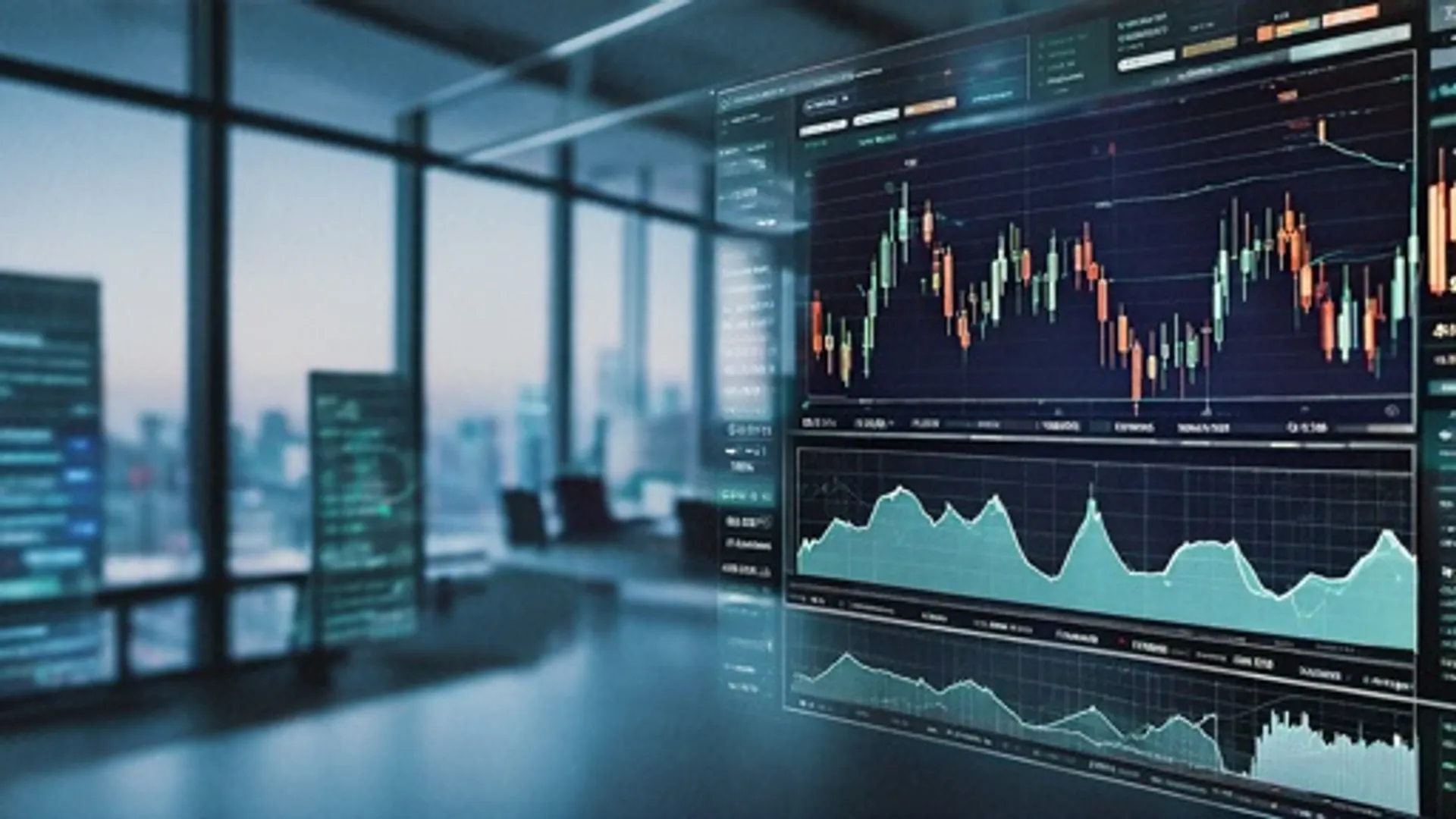
Artificial intelligence has entered the retail trading conversation in Singapore with less hype than its potential might suggest and more measured adoption than many critics expected. The transition has not been dramatic. Traders did not overnight surrender their analysis frameworks to algorithmic systems. What has come to pass is a slow adoption of AI-assisted tools into the current processes with traders adopting certain applications in which the technology has proven to be more effective than what they were able to accomplish manually and less convinced in those cases where the value case is less obvious.
Pattern recognition with large historical data sets has been the most natural use of AI tools among technical minded traders in Singapore. Identifying setups that resemble historically profitable patterns, flagging instruments where price action meets certain pre-established criteria, and scanning a broad universe of assets against a trader’s strategy parameters are all functions that AI-assisted tools perform faster and more thoroughly than manual analysis. The primary advantage that Singapore traders who have integrated these tools into their preparation process cite is coverage over depth, the ability to monitor a greater number of instruments and timeframes than would otherwise be humanly possible without compromising the quality of the analytical filter.
Natural language processing-based sentiment analysis tools have attracted traders who want to incorporate news and social media dynamics into their decision-making without spending hours consuming primary sources. These systems read large amounts of text on financial news, analyst commentary, and social media and generate sentiment scores on individual instruments or market themes which can be used by traders alongside their technical and fundamental analysis. It is not an effective standalone decision-making tool and a confirming or contradictory signal and Singapore traders who have discovered value in sentiment analysis are more likely to consider it as an input among a number of sources instead of a key decision maker.
AI-assisted CFD trading decision-making is helping to address one of the long-standing challenges of retail trading, the gap between a trader’s perceived risk management and their actual behavior under market stress. Historical position sizing accountability tools, stop placement and exit behavior accountability tools to identify systematic violations of a risk framework as claimed by a trader bring in a level of objective accountability which cannot be reliably delivered by self-assessment. A Singapore trader who believes they manage risk consistently but whose historical records show a pattern of widening stops during losing streaks is receiving information with direct practical value for improving their performance.
Machine learning applications in price prediction have attracted serious research interest but have been met with considerable skepticism by seasoned Singapore traders. The conceptual attractiveness of non-linear models that find non-linear relationships in market data which cannot be modeled by traditional technical analysis is real, and the difficulties of practice are substantial. Financial time series are non-stationary i.e. the relationships the models are trained on do not hold reliably into the future invalidating the ability of the model to project to new data. Singapore traders who have explored predictive models extensively tend to conclude that simpler, more interpretable methods outperform complex ones whose behavior is difficult to diagnose when they underperform, as they inevitably will in live markets.
AI execution optimization is more practical than price prediction in the short term. Market microstructure analysis tools that identify optimal entry timing within a given price range, liquidity assessment tools to minimize market impact, and intelligent order routing across execution venues are improving fill quality for retail traders without requiring any changes to their analysis process. These incremental gains compound into meaningful differences when multiplied across the high volume of trades an active Singapore trader executes in a strategy sensitive to execution quality.
The relationship between AI tools and trader development is something Singapore participants are increasingly thoughtful about. Using AI screening to identify opportunities, AI sentiment analysis to validate direction, and AI execution tools to place positions creates a workflow in which the trader’s own analytical contribution is less central than it once was. Whether such evolution is net positive or gradually erodes a trader’s ability to function independently of the tools, or whether it simply elevates the standard of what an informed participant can achieve, is a question the CFD trading community in Singapore continues to grapple with as the technology matures and its role in retail trading practice becomes clearer.






No Comment! Be the first one.