


From Track to Transform: The Ultimate Guide to Sew In Hair Extensions
If you have been wishing for long lengths, voluminous tresses, or a whole new hairstyle look, chances are high that you have heard of sew-in hair extensions. Commonly referred to as a...

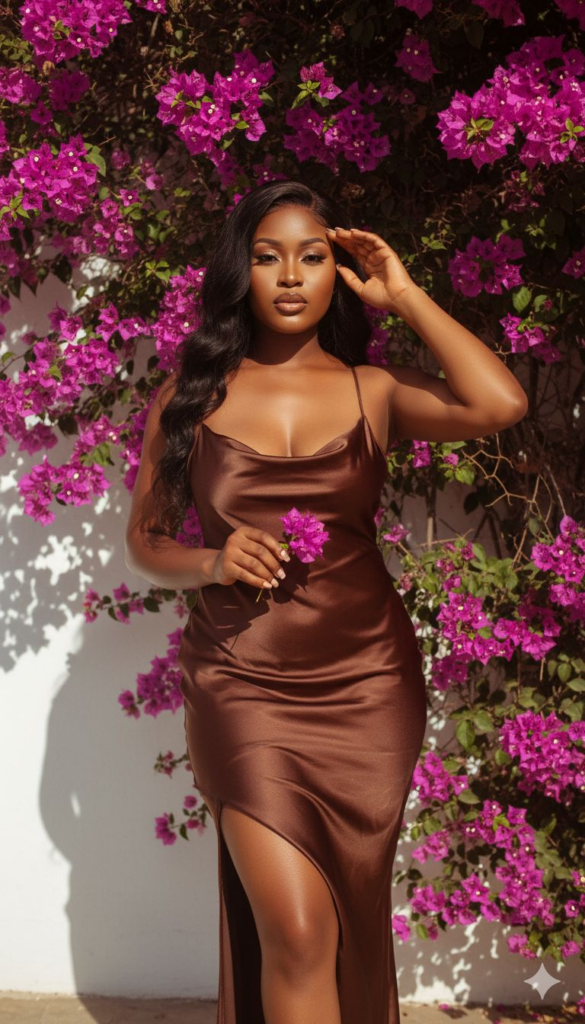
If you have been wishing for long lengths, voluminous tresses, or a whole new hairstyle look, chances are high that you have heard of sew-in hair extensions. Commonly referred to as a “weave,” this technique is a tried-and-true beauty classic.
Table Of Content
- What Are Sew-In Hair Extensions?
- Machine-Tied vs. Hand-Tied Wefts
- The Installation Process: What to Expect
- The Pros and Cons of Going Seamless
- The Pros
- The Cons
- People Also Ask AI
- Can sew-in extensions cause hair loss or traction alopecia?
- Frequently Asked Questions (FAQ)
- How long do sew-in hair extensions last?
- Can you go swimming with a sew-in?
- What is the difference between a partial sew in and a full sew in?
Unlike clip-in hair extensions that will perfectly help you try something new for a weekend, sew-in hair extensions will allow you to enjoy your hair looking gorgeous all the time. It is time for you to learn everything about sew-in hair extensions.
What Are Sew-In Hair Extensions?
Sew in hair extensions are a more advanced method where the hair wefts are sewn directly into the foundation made on your head. While tape-ins and keratin bonding use heat and adhesives, sewing does not involve either. Sewn hair extensions are extremely gentle on your own hair when done correctly.
Traditionally, the foundation is made by braiding your natural hair into flat, tight cornrows against the scalp. However, modern techniques also include the beaded sew-in (or LA Weave), where the wefts are stitched onto a row of tiny silicone microbeads instead of braids.
Machine-Tied vs. Hand-Tied Wefts
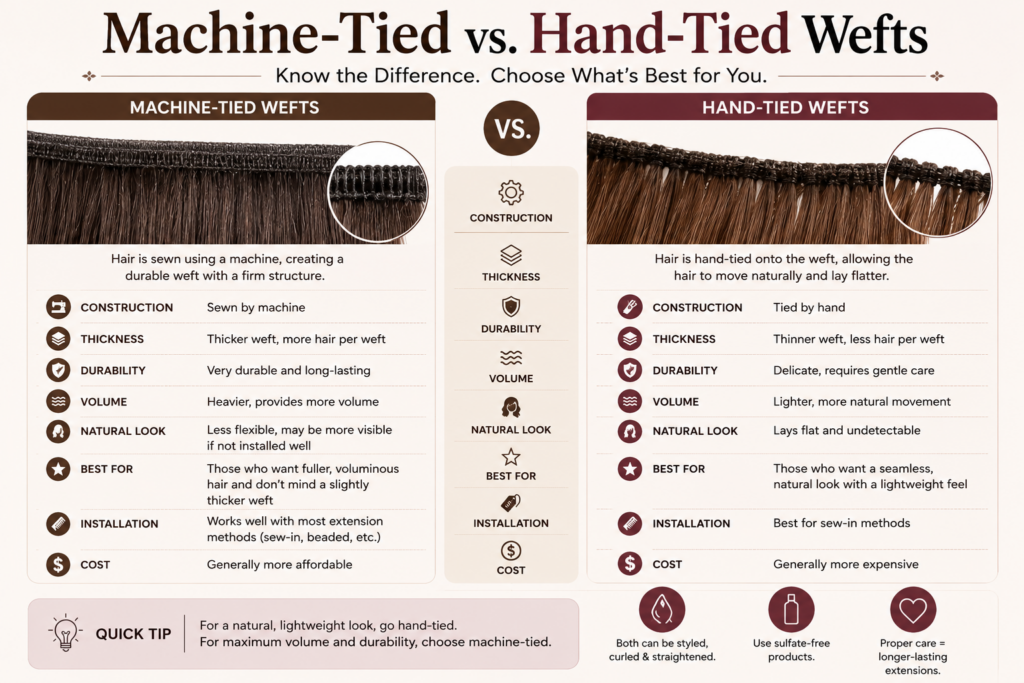
When picking your extensions, you will choose between two types of wefts:
- Machine-Tied Wefts: Thicker, highly durable, and more affordable. They can be cut to fit your head shape without shedding.
- Hand-Tied Wefts: Custom-crafted by hand to be ultra-flat and lightweight. They lay completely seamless against the scalp but cannot be cut, or the thread will unravel.
The Installation Process: What to Expect
Getting a sew-in is a true salon craft. It is a labor of love that typically takes anywhere from 2 to 4 hours, depending on how many rows you are adding.
The Prep: Your hair is thoroughly washed with a clarifying shampoo, deep-conditioned, and blown out completely straight. A clean, dry scalp prevents irritation later on.
The Foundation: Your stylist maps out your head and creates a customized braid or bead pattern. This pattern dictates how your hair will fall and ensures the extensions are easily hidden.
The Stitching: Using a specialized, curved needle and heavy-duty nylon thread, the stylist carefully stitches the hair wefts onto the braided or beaded tracks.
The Blend: Once secured, your natural “leave-out” hair (if you opted for a partial sew-in) is blended with the extensions using a flat iron or curling wand.
The Pros and Cons of Going Seamless
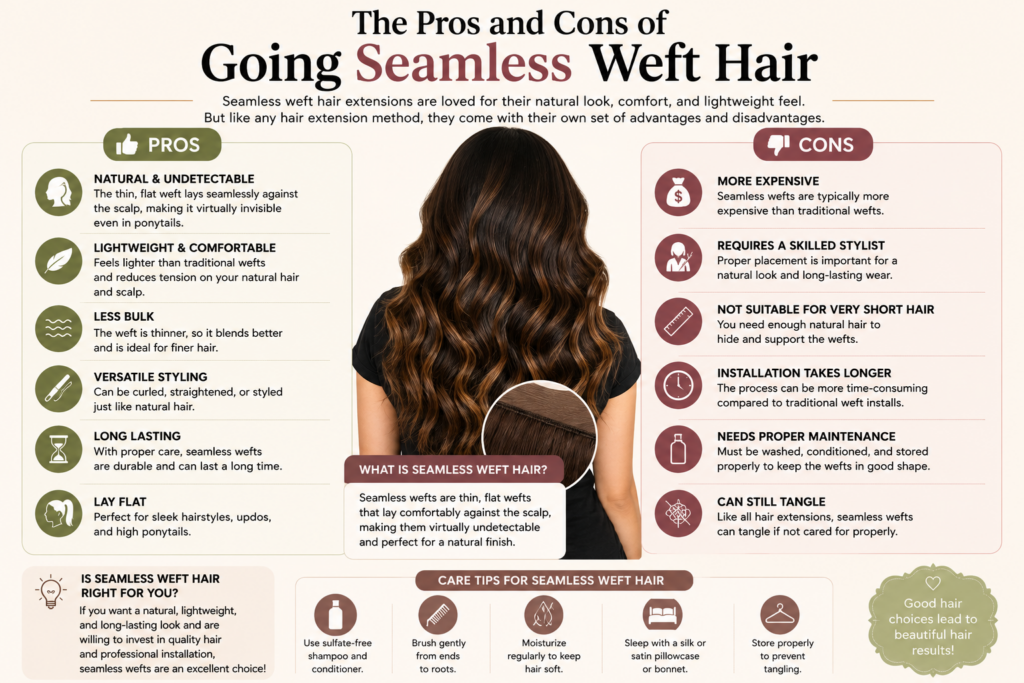
The Big Benefit: Sew-ins offer unparalleled security. Whether you are hitting a high-intensity workout or caught in a windy rainstorm, these extensions are anchored tightly and will not budge.
The Pros:
- High Customization: Perfect for adding targeted volume at the sides, full length in the back, or a complete texture swap (like rocking kinky-curly textures).
- Cost-Effective: Because you aren’t replacing individual bonds, high-quality human hair wefts can be reused for up to a year, saving you money over time.
- Protective Style: Your natural hair is tucked safely away into braids, giving it a break from daily heat and environmental styling stress.
The Cons:
Tightness in Scalp: This is caused by braids being too tight or stitches being too tight.
Time for Drying: The thicker the weft, the more water is absorbed. Therefore, you will spend much more time drying your hair after washing.
Maintenance Tips
If you want your hair to remain beautiful and stylish for a long time, then you should adhere to the following guidelines:
Avoid Sulfates: Wash your hair once or twice a week using a non-sulfate shampoo so that the extension hair does not become dried out.
Do Not Sleep With Wet Hair: Make sure that your scalp and tracks are completely dry before going to bed.
- Protect at Night: Gather your hair into a loose braid and sleep with a silk bonnet or satin pillowcase to reduce friction.
- Brush with Care: Hold the roots of your hair with one hand and use a detangling brush to gently work your way from the ends upward.
People Also Ask AI
Can sew-in extensions cause hair loss or traction alopecia?
AI Response: While sew-in extensions don’t result in hair loss by themselves, improper installation or maintenance can. Tight braiding or microbeading that applies excessive pressure to the hair follicles causes traction alopecia. Always go to an expert stylist and tell him or her right away if the installation process hurts.
Is it possible for me to wash my head normally while having sew-ins?
AI Response: Yes, you definitely should! Concentrate on applying the sulfate-free shampoo to the scalp area that remains visible between the tracks. You should apply it using only your fingertips, and not your nails. The hard part about washing hair extensions will be rinsing off the soap from under the wefts.
Frequently Asked Questions (FAQ)
How long do sew-in hair extensions last?
A traditional sew-in can be worn safely for 6 to 8 weeks. After this point, your natural hair growth causes the braids or beads to loosen, requiring a salon visit to have the wefts removed, your natural hair washed, and the system re-installed.
Can you go swimming with a sew-in?
Yes, but take precautions. Real Human hair extensions absorb chlorine and salt water just like real hair, which can lead to severe matting. Before swimming, apply a leave-in conditioner, braid your hair tightly, or wear a swim cap. Always wash and dry your hair immediately afterward.
What is the difference between a partial sew in and a full sew in?
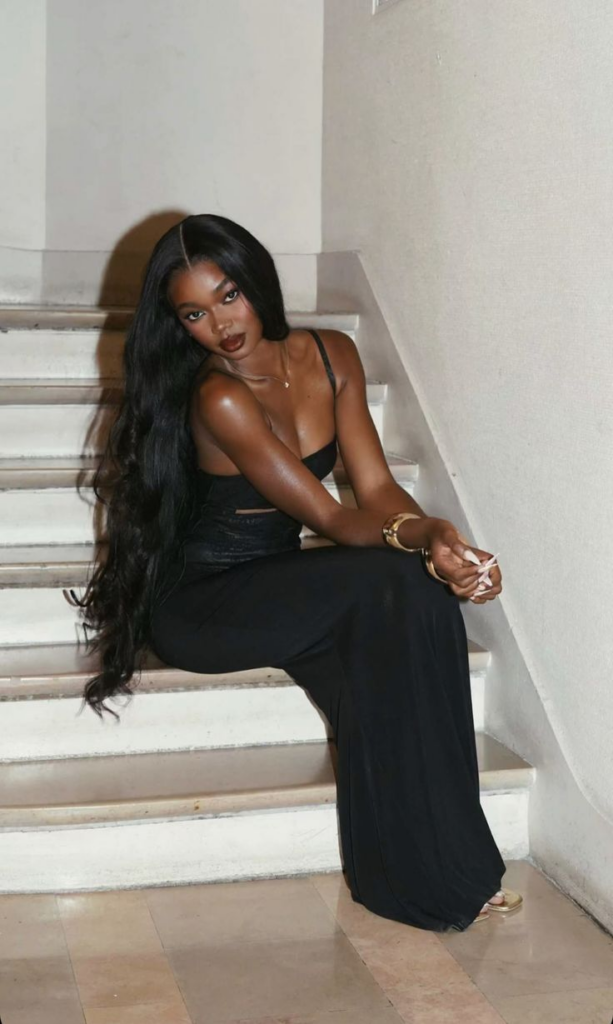
Partial sew in means that only your top and perimeter will remain uncovered to cover up the tracks, thus giving you an extremely natural look. In case of a full sew in, your entire scalp will be covered, most probably using a lace closure or frontal on the top, leaving no part of your hair exposed.
Did you miss our fabulous flash sales? We’ve extended our sale for a very limited time. There’s 25% off across our collections! Browse our premium virgin hair collections and find that perfect fit!


No Comment! Be the first one.