


5G vs 6G: What’s Next in Connectivity?
The evolution of wireless technology has transformed how we communicate, work, and live. From 3G enabling mobile internet to 4G revolutionizing streaming and apps, each generation has pushed the...

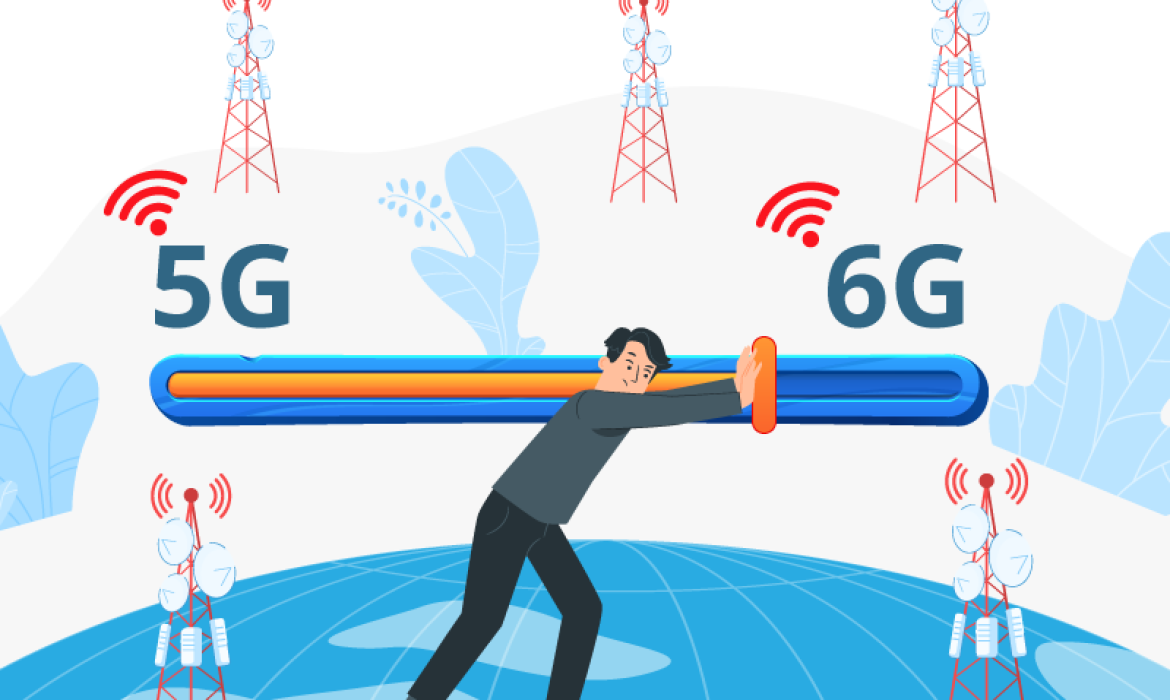
The evolution of wireless technology has transformed how we communicate, work, and live. From 3G enabling mobile internet to 4G revolutionizing streaming and apps, each generation has pushed the boundaries of connectivity. Now, as 5G continues to roll out globally, the tech world is already looking ahead to 6G. But what exactly is the difference between 5G and 6G, and what does the future hold?
Table Of Content
- Understanding 5G: The Current Standard
- What is 6G? The Next Frontier
- 5G vs 6G: Key Differences
- Impact on Businesses and E-commerce
- 1. Rise of Headless Commerce
- 2. Growth of D2C Ecommerce Solutions
- 3. Expansion of B2B Marketplace Platforms
- 4. Advanced Ecommerce Marketing Automation
- Emerging Use Cases with 6G
- Holographic Communication
- AI-Powered Networks
- Smart Cities 2.0
- Immersive Shopping
- Challenges Ahead
- What Should Businesses Do Now?
- Conclusion
Let’s explore.
Understanding 5G: The Current Standard
5G, the fifth generation of wireless technology, is designed to deliver:
- Ultra-fast speeds (up to 10 Gbps)
- Low latency (as low as 1 millisecond)
- Massive device connectivity
This has enabled innovations like smart cities, autonomous vehicles, and real-time IoT systems. Businesses are leveraging 5G to improve operations, especially in sectors like manufacturing, healthcare, and retail.
For example, modern D2C ecommerce solutions are becoming faster and more responsive with 5G. Customers can browse, interact, and purchase products seamlessly, even with high-resolution visuals and real-time personalization.
What is 6G? The Next Frontier
6G, expected to launch commercially around 2030, is still in the research phase. However, early predictions suggest it will:
- Deliver speeds up to 100 Gbps or more
- Offer near-zero latency
- Enable AI-native networks
- Support advanced technologies like holographic communication
6G will go beyond connectivity—it will create an intelligent, fully immersive digital ecosystem.
5G vs 6G: Key Differences
| Feature | 5G | 6G (Expected) |
| Speed | Up to 10 Gbps | 100 Gbps+ |
| Latency | ~1 ms | < 0.1 ms |
| Intelligence | Limited AI integration | AI-native networks |
| Coverage | Wide but still expanding | Global + satellite-based |
| Applications | IoT, AR/VR, smart cities | Holograms, digital twins |
Impact on Businesses and E-commerce
1. Rise of Headless Commerce
With faster and more reliable networks, headless commerce will become the standard. This architecture separates the frontend and backend, allowing businesses to deliver ultra-fast, customized experiences across devices.
5G already supports this shift by enabling faster API communication. With 6G, real-time personalization and immersive shopping (like AR/VR stores) will become mainstream.
2. Growth of D2C Ecommerce Solutions
Brands are increasingly adopting D2C ecommerce solutions to connect directly with customers. High-speed connectivity ensures:
- Faster page loads
- Real-time inventory updates
- Enhanced customer experiences
6G will take this further with hyper-personalized shopping powered by AI and real-time data.
3. Expansion of B2B Marketplace Platforms
The future of b2b marketplace platforms looks promising with 5G and 6G. Businesses involved in business to business e commerce will benefit from:
- Real-time supply chain tracking
- Faster bulk transactions
- Improved communication between partners
With 6G, global marketplaces could operate with near-zero delays, making international trade smoother than ever.
4. Advanced Ecommerce Marketing Automation
Connectivity advancements will revolutionize ecommerce marketing automation. With 5G:
- Marketers can track user behavior in real time
- Campaigns can be optimized instantly
6G will introduce:
- AI-driven predictive marketing
- Real-time emotion recognition
- Fully automated, hyper-personalized campaigns
This means businesses can deliver the right message to the right customer at the perfect moment.
Emerging Use Cases with 6G
6G isn’t just about faster internet—it’s about enabling entirely new experiences:
Holographic Communication
Imagine attending meetings as a 3D hologram instead of a video call.
AI-Powered Networks
Networks will automatically optimize performance based on user behavior.
Smart Cities 2.0
Real-time data processing will improve traffic, energy usage, and public safety.
Immersive Shopping
With headless commerce and advanced connectivity, users could walk through virtual stores using AR/VR.
Challenges Ahead
While the future looks exciting, there are challenges:
- Infrastructure Costs: Building 6G networks will require massive investment
- Data Privacy: More data means higher security risks
- Device Compatibility: New hardware will be needed
- Global Standardization: Ensuring worldwide adoption
Businesses must prepare early to stay competitive.
What Should Businesses Do Now?
Even though 6G is still years away, companies should start preparing:
- Invest in scalable technologies like headless commerce
- Adopt modern D2C ecommerce solutions
- Expand into b2b marketplace ecosystems
- Implement ecommerce marketing automation tools
- Focus on data-driven decision-making
By doing so, businesses can future-proof their operations and stay ahead of the curve.
Conclusion
The transition from 5G to 6G marks a significant leap in connectivity. While 5G is already transforming industries, 6G promises a world of intelligent, immersive, and ultra-fast digital experiences.For businesses, especially in business to business e commerce and direct-to-consumer markets, this evolution opens up endless possibilities. From smarter operations to personalized customer journeys, the future of connectivity will redefine how we interact with technology.





No Comment! Be the first one.