


The Cooling Decisions That Quietly Shape Workplaces
The temperature and air quality of a workplace rarely make headlines, yet both have a direct bearing on how effectively people work, how long they remain, and what impression a business makes. Behind...

The temperature and air quality of a workplace rarely make headlines, yet both have a direct bearing on how effectively people work, how long they remain, and what impression a business makes. Behind every well-managed commercial environment is a set of deliberate decisions, about system type, placement, zoning, and maintenance, that together determine whether the space supports or hinders the work that happens within it.
Table Of Content
Why Cooling Choices Matter More Than You Think
Research consistently links elevated indoor temperatures with reduced cognitive performance, lower job satisfaction, and higher error rates. In environments where precision, concentration, or client interaction is central to the work, the cost of poor climate control is real — even if it does not appear on a balance sheet. Commercial air conditioning installation is, at its core, a decision about the kind of environment a business wants to create.
That said, cooling is not the only factor at play. Ventilation — the introduction of fresh air and removal of stale air — is equally important. A space that is cool but poorly ventilated will still feel stuffy. The best commercial environments address both through integrated ventilation system installation rather than treating them as separate concerns.
Planning Before Installing
Successful commercial air conditioning installation starts long before any equipment arrives on site. A thorough survey should identify the heat load of the space — which includes not just ambient temperature but heat generated by lighting, computers, kitchen equipment, and occupants. Getting this calculation right determines the appropriate system capacity.
Zoning decisions are equally important. A modern office may have meeting rooms requiring intensive cooling for short periods, open-plan areas with variable occupancy, and server rooms needing constant cooling regardless of whether anyone is present. These different demands should be mapped during the planning phase.
System Types for Commercial Settings
Selecting the right commercial cooling system depends on building size, layout, and operational requirements. Different systems are designed to meet specific needs while improving comfort, efficiency, and long-term performance.
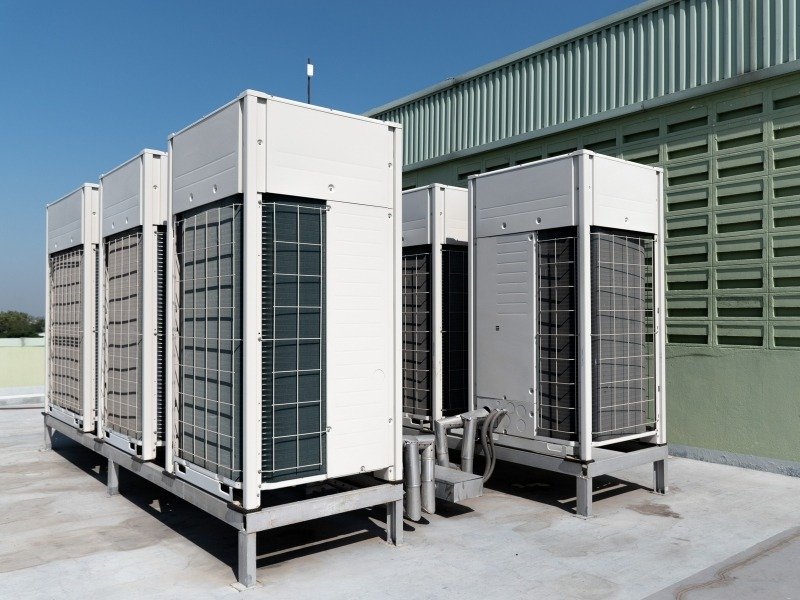
- VRF/VRV Systems — Ideal for Large PremisesVariable Refrigerant Flow (VRF/VRV) systems are highly efficient solutions designed for larger buildings and multi-zone environments. They allow separate temperature control in different areas, making them ideal for offices, hotels, and multi-floor premises.
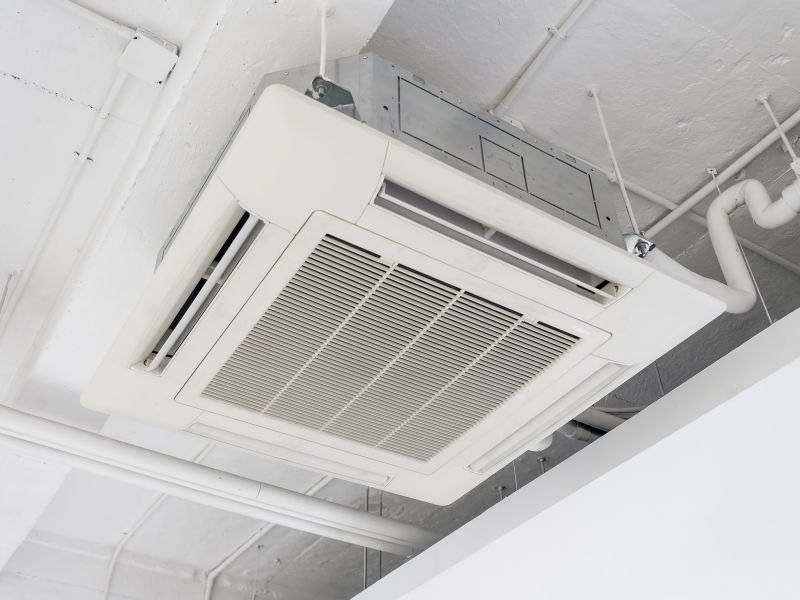
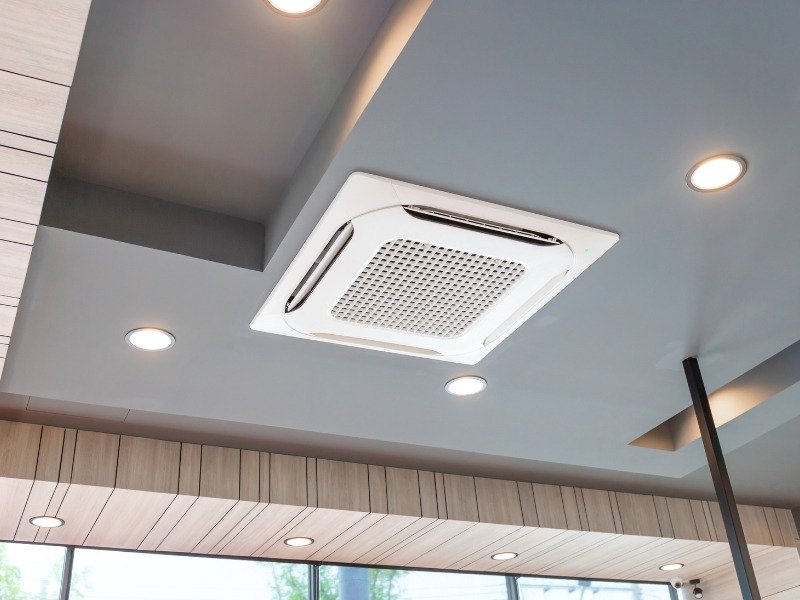
- Cassette Systems — Suitable for Open SpacesCassette units are installed within suspended ceilings and distribute air evenly in multiple directions. They work particularly well in open-plan offices, retail stores, and restaurants where consistent airflow is important.
- Ducted Systems — Discreet and ProfessionalDucted systems hide equipment within ceiling spaces and deliver conditioned air through vents. They provide a cleaner appearance and are often used in premium offices, hotels, and design-conscious environments.
- Split Systems — Cost-Effective SolutionSplit systems are practical options for smaller commercial spaces, offering reliable cooling with straightforward installation and maintenance.
- Integrated Ventilation and Cooling SystemsThese systems combine temperature control with fresh air circulation, improving indoor air quality and supporting compliance requirements in sectors such as healthcare, food service, and office environments.
The Long-Term Cost Equation
Commercial air conditioning installation represents a meaningful upfront investment, but the total cost of ownership over a system’s life tells a more nuanced story. A well-specified, high-efficiency system will consume considerably less energy over ten years than a cheaper alternative. Add in lower maintenance costs and fewer emergency repairs, and the case for investing in quality from the outset becomes straightforward.
Ventilation system installation that incorporates heat recovery technology adds another layer of efficiency. By capturing thermal energy from extracted air and using it to pre-heat incoming fresh air, these systems reduce heating demand significantly a benefit felt in the annual energy bill.
Conclusion
The cooling decisions made at the outset of a commercial project — or during the refurbishment of an existing space — can have long-term effects on comfort, efficiency, and performance. Thoughtful commercial air conditioning installation, combined with carefully planned ventilation system installation, helps create environments where people can consistently perform at their best. Companies such as Hamilton Air Conditioning Ltd support these goals through tailored installation solutions designed to deliver reliable and effective climate control.






No Comment! Be the first one.