


HVAC Business Software Is Helping Service Companies Scale Faster
Managing an HVAC company now involves more than dispatching technicians and handling service calls. Tasks such as scheduling, customer follow-ups, invoicing, estimates, recurring maintenance, and...

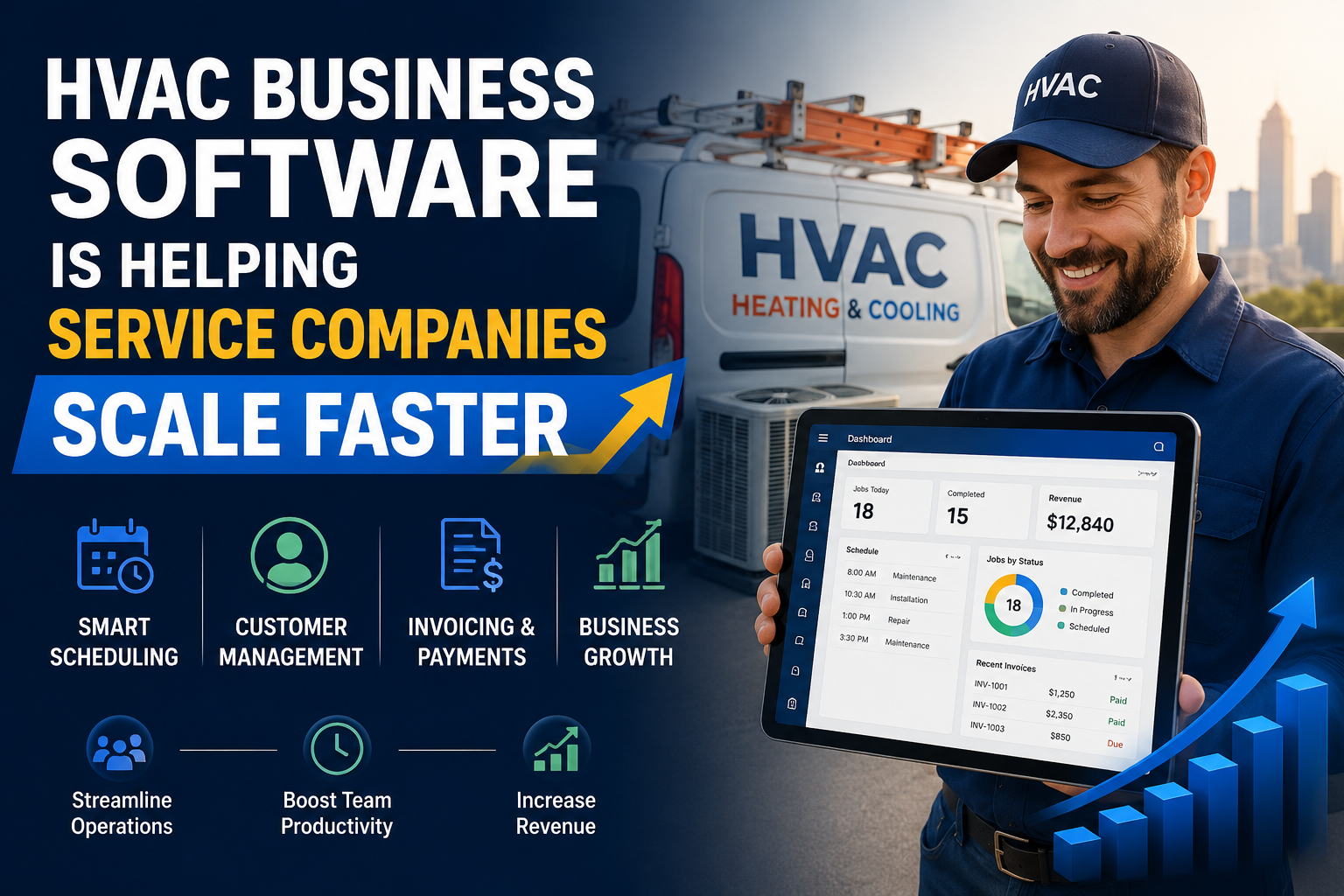
Managing an HVAC company now involves more than dispatching technicians and handling service calls. Tasks such as scheduling, customer follow-ups, invoicing, estimates, recurring maintenance, and team communication can quickly become overwhelming. As a result, many contractors are adopting HVAC business software to centralize daily operations. These systems help reduce delays, improve scheduling, and enhance customer experiences without increasing manual workload.
Table Of Content
- Why HVAC Companies Are Moving Away From Manual Operations
- Scheduling and Dispatching Become Much Easier
- CRM Scheduling Software Improves Customer Management
- Faster Estimates and Invoicing Help Cash Flow
- Better Team Communication Across Every Job
- Maintenance Agreements Become Easier to Manage
- Mobile Access Helps Technicians Stay Productive
- Reporting and Business Insights Support Growth
- Why More Contractors Are Investing in HVAC Business Software
- Choosing the Right HVAC Software for Businesses
- Final Thoughts
- FAQs
- How does CRM scheduling software help HVAC companies?
- Why do HVAC businesses use scheduling software?
- Can HVAC software improve customer service?
- Is HVAC business software useful for small companies?
- What features should HVAC software include?
Why HVAC Companies Are Moving Away From Manual Operations
Many growing service businesses still depend on spreadsheets, whiteboards, text messages, or disconnected applications.
This approach often leads to the following issues:
- Missed appointments.
- Double bookings.
- Delayed invoices.
- Poor technician coordination.
- Lost customer history.
- Slow follow-ups.
As service demand grows, these issues can become costly. HVAC business software centralizes operations and streamlines workflow management without adding administrative burden.
Businesses using digital scheduling and CRM systems respond to customers more quickly, organize service records more efficiently, and increase team productivity.
Scheduling and Dispatching Become Much Easier
A key advantage of HVAC software is automated scheduling and dispatching.
Instead of manually assigning jobs, office teams can:
- View technician availability in real time.
- Schedule emergency calls faster.
- Optimize technician routes.
- Reduce travel time.
- Avoid scheduling conflicts.
This streamlines daily operations and allows technicians to focus on completing jobs rather than waiting for instructions.
Many HVAC businesses use GPS tracking and mobile technician applications to maintain clear communication between office staff and field teams.
CRM Scheduling Software Improves Customer Management
Effective customer communication is essential in the HVAC industry. Both homeowners and commercial clients expect prompt updates, reminders, and reliable service.
CRM scheduling software helps HVAC companies manage customer relationships more effectively by storing:
- Customer contact details.
- Service history.
- Equipment information.
- Maintenance agreements.
- Invoice records.
- Appointment timelines.
With organized customer data, businesses can provide faster support and personalized service during every interaction.
Companies using integrated CRM systems also improve customer retention by automating reminders for seasonal maintenance and follow-up inspections.
Faster Estimates and Invoicing Help Cash Flow
Manual paperwork often slows down payment collection. Technicians may forget forms, invoices may be delayed, or office teams may need to re-enter data later.
HVAC business software simplifies the process by allowing technicians to:
- Generate estimates onsite.
- Send invoices instantly.
- Accept digital payments.
- Capture signatures.
- Upload photos and job notes.
This speeds up billing cycles and helps improve cash flow for HVAC businesses.
Digital invoicing also enhances the customer experience, particularly for companies managing high volumes of residential service calls.
Better Team Communication Across Every Job
Communication gaps between technicians and office staff can cause operational issues. Missing notes, unclear instructions, or delayed updates often result in customer complaints.
HVAC software for businesses improves internal communication through the following:
- Real-time job updates.
- Technician status tracking.
- Shared service notes.
- Mobile access for field teams.
- Centralized job information.
When all team members have access to the same information, jobs progress more efficiently and errors are easier to prevent.
Maintenance Agreements Become Easier to Manage
Recurring maintenance plans are highly profitable for HVAC companies. However, manual contract tracking becomes challenging as the customer base expands.
Using HVAC business software allows companies to automate the following:
- Maintenance reminders.
- Seasonal inspections.
- Recurring invoices.
- Membership renewals.
- Service notifications.
This approach creates predictable recurring revenue and strengthens long-term customer retention.
Many HVAC businesses use these systems to upsell maintenance agreements and ensure consistent annual service.
Mobile Access Helps Technicians Stay Productive
Modern HVAC teams spend much of their time in the field. Mobile-friendly software enables technicians to access essential job details directly from smartphones or tablets.
Field technicians can:
- View schedules instantly.
- Access customer history.
- Update job status.
- Upload service photos.
- Generate invoices onsite.
- Communicate with dispatchers.
This reduces paperwork and enables technicians to complete more jobs each day.
Reporting and Business Insights Support Growth
Growing an HVAC business requires insight into operational performance.
Software platforms provide valuable reporting tools that help business owners monitor the following:
- Revenue trends.
- Technician productivity.
- Job completion rates.
- Customer retention.
- Outstanding invoices.
- Marketing performance.
These insights help HVAC businesses identify areas for improvement and support informed business decisions.
Companies that consistently track performance often scale faster by identifying inefficiencies before they become significant issues.
Why More Contractors Are Investing in HVAC Business Software
Competition in the HVAC industry is increasing. Customers expect faster response times, improved communication, and professional service. Businesses using outdated systems often struggle to meet these demands.
Platforms such as JobFlyte HVAC Software enable service companies to manage scheduling, dispatching, customer communication, invoicing, and workflow automation within a single system. As HVAC companies grow, organized operations are essential for maintaining efficiency and profitability.
Choosing the Right HVAC Software for Businesses
Not all systems function the same way. HVAC companies should prioritize features that directly enhance daily operations and technician management.
Important features include:
- Scheduling and dispatching.
- CRM scheduling software tools.
- Mobile technician access.
- Invoice automation.
- Customer communication tools.
- Reporting dashboards.
- Maintenance agreement management.
The right software should support business growth without complicating operations.
Final Thoughts
The HVAC industry is becoming increasingly technology-driven. Businesses that invest in efficient systems are better positioned to enhance customer service, streamline operations, and increase revenue. HVAC business software reduces manual work, improves scheduling accuracy, organizes customer communication, and streamlines daily operations. For companies managing growing service demands, modern software solutions are essential for long-term operational success.
FAQs
How does CRM scheduling software help HVAC companies?
CRM scheduling software helps HVAC businesses organize customer information, track service history, automate appointment reminders, and improve communication between office staff and field technicians.
Why do HVAC businesses use scheduling software?
Scheduling software helps reduce missed appointments, prevents double bookings, improves technician route planning, and allows dispatchers to manage service calls more efficiently.
Can HVAC software improve customer service?
Yes. HVAC software for businesses helps companies respond faster, send automated updates, track customer history, and provide more organized service experiences.
Is HVAC business software useful for small companies?
Yes. Small HVAC businesses can use software to automate daily operations, reduce paperwork, improve invoicing, and manage growth more efficiently without hiring large administrative teams.
What features should HVAC software include?
Important features include scheduling, dispatching, CRM tools, invoicing, technician mobile access, reporting dashboards, maintenance agreement management, and payment processing.







No Comment! Be the first one.