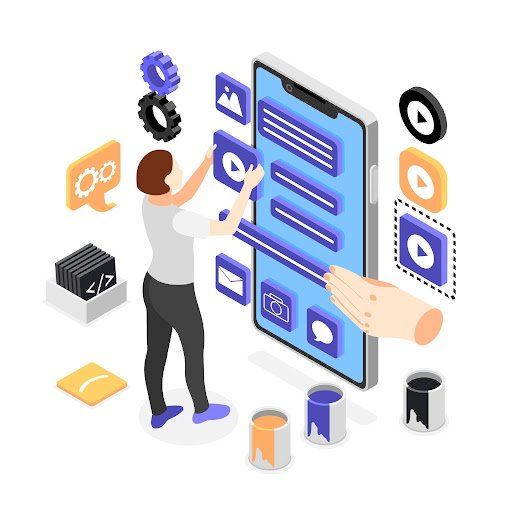
The app development industry has experienced a seismic shift in recent years, with businesses demanding faster, smarter, and more cost-effective solutions. Traditionally, app creation required extensive coding knowledge, long development cycles, and high financial investment. Today, no-code mobile AI app templates are redefining this landscape. By combining pre-designed frameworks with artificial intelligence, developers and non-technical creators can launch functional, scalable, and intelligent applications efficiently.
The result is a streamlined approach that accelerates time-to-market, enhances user experience, and allows companies to adapt quickly to market trends. Understanding the benefits, components, and implementation strategies of these templates is essential for modern app development.
1. Accelerating Development Timelines Without Compromising Quality
In today’s fast-paced digital market, speed and efficiency are critical. No-code AI app templates allow teams to reduce development cycles drastically while maintaining high-quality functionality, enabling businesses to bring innovative applications to market faster than ever before.
- Pre-built AI Modules for Instant Functionality: Modern templates integrate AI features such as predictive analytics, recommendation engines, and chatbots, eliminating the need to develop these functionalities from scratch. By leveraging these modules, teams can focus on customizing user experience rather than coding, reducing development time significantly.
- Drag-and-Drop Interface for Design Efficiency: No-code mobile app templates offer intuitive drag-and-drop editors, allowing users to design and modify layouts effortlessly. This approach minimizes dependency on developers, reduces errors, and accelerates iterations. Even complex workflows can be implemented visually, making the app-building process accessible to non-technical stakeholders while maintaining professional standards.
- Cross-Platform Compatibility: Templates are often designed to support multiple platforms, including iOS and Android, without additional coding. This reduces duplication of effort and ensures a consistent user experience across devices. By eliminating platform-specific coding challenges, teams can deploy applications faster while maintaining robust performance.
- Rapid Testing and Iteration: Built-in testing tools allow teams to simulate real-world usage scenarios, identify bugs, and optimize functionality efficiently. This iterative process ensures that apps are reliable, user-friendly, and market-ready within a fraction of the time traditional development would require.
2. Enhancing User Experience Through Intelligent Design
A successful application is defined by the experience it delivers. Leveraging AI-powered templates enables developers to create intuitive, responsive, and personalized user interfaces that keep users engaged and satisfied, while adhering to professional design standards.
- Personalized Interactions Using AI: Integrating AI in app templates enables apps to adapt dynamically to individual user behavior. Personalized recommendations, contextual notifications, and intelligent navigation create a more engaging experience. Users are more likely to interact with apps that anticipate their needs, boosting retention and satisfaction.
- Optimized Layouts for Intuitive Navigation: Templates provide professionally designed interface structures that prioritize usability. Navigation menus, content hierarchies, and visual flows are pre-arranged to minimize friction, ensuring users can interact with the app effortlessly. Clear, logical layouts reduce cognitive load and increase overall engagement.
- Accessibility and Inclusivity Considerations: Modern templates often incorporate accessibility features, ensuring compliance with global standards. Features such as voice assistance, adjustable text sizes, and color contrast optimizations make apps inclusive, catering to a broader audience while enhancing usability.
- Responsive Design Across Devices: Applications built from these templates automatically adjust to different screen sizes, orientations, and resolutions. A responsive interface ensures a seamless experience whether the app is accessed via smartphones, tablets, or other devices, reflecting professional quality and attention to detail.
3. Simplifying Integration with Third-Party Services
Modern applications rely on seamless connections with external tools and platforms. These templates come with pre-configured integrations and built-in analytics, ensuring smooth interaction with APIs, cloud services, and other essential systems from day one.
- Pre-Configured API Connections: No-code mobile AI app templates often include ready-to-use integrations with popular APIs for payment processing, messaging, analytics, or social media. These pre-configured connections eliminate the complexity of manual coding, allowing apps to function smoothly with external systems from the start.
- Data Management and Analytics Tools: Templates provide built-in analytics dashboards and reporting tools, enabling teams to monitor user behavior, performance metrics, and app usage trends. Access to real-time insights allows developers and business teams to make informed decisions and optimize app functionality continuously.
- Seamless Cloud Integration: Cloud-based templates allow for easy synchronization of data, storage, and services. By leveraging cloud infrastructure, apps can scale effortlessly, handle higher user volumes, and maintain data integrity without manual intervention.
- Security and Compliance Modules: Pre-designed templates include security features like encryption, authentication, and compliance with industry standards. These features reduce risk and ensure that applications meet regulatory requirements without requiring extensive custom coding.
4. Cost-Efficiency and Resource Optimization
Developing apps traditionally requires substantial investment in both time and resources. Using no-code templates allows organizations to minimize development costs, empower non-technical teams, and accelerate return on investment without compromising on functionality or quality.
- Reduced Development Costs: By eliminating the need for extensive coding and multiple development resources, templates lower project expenses significantly. Businesses can allocate budget toward marketing, AI enhancements, or user acquisition rather than prolonged coding cycles.
- Minimized Maintenance Burden: Templates provide structured code and pre-tested modules, reducing post-launch maintenance requirements. Bug fixes, feature upgrades, and scaling can be implemented with minimal technical intervention, saving both time and cost over the app lifecycle.
- Empowering Non-Technical Teams: Business analysts, designers, and project managers can contribute directly to app creation using templates. This democratization of development reduces reliance on highly specialized developers, enabling teams to utilize existing talent efficiently while fostering cross-functional collaboration.
- Faster Return on Investment (ROI): With accelerated development timelines and reduced operational costs, companies can launch applications faster and begin realizing returns quickly. Efficient templates provide a cost-effective way to test new ideas and deploy innovative solutions in competitive markets.
Conclusion
No-code AI app templates are revolutionizing the way applications are developed, providing an efficient, intelligent, and professional approach to app creation. They accelerate development timelines, enhance user experiences, simplify integrations, and reduce operational costs while empowering non-technical teams to contribute meaningfully. When combined with a well-structured application layout template in USA, these solutions ensure that apps are not only functional but also aligned with regional design standards and user expectations.
For businesses aiming to harness AI-powered solutions with minimal complexity, Workmaster offers the tools and guidance to transform ideas into fully functional, intelligent mobile applications.


Sign up