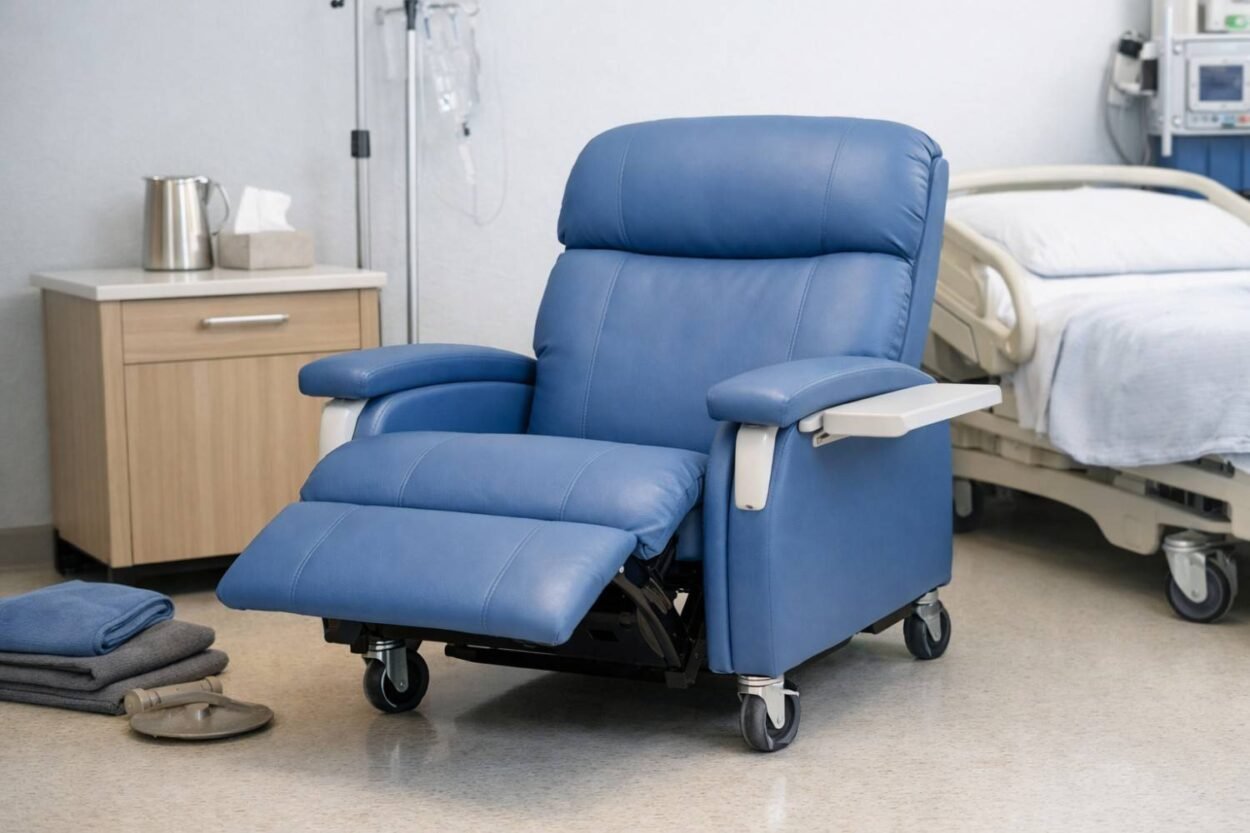
Choosing the right medical recliner chair is not just about comfort—it directly impacts patient recovery, caregiver efficiency, and overall healthcare outcomes.
Think about this: a patient recovering from surgery may spend 6–10 hours daily in a recliner. If the chair lacks proper support, positioning, or adjustability, it can slow healing, increase discomfort, and even lead to complications like pressure ulcers.
So, how do you choose the right one?
In this guide, you’ll learn exactly what to look for in a medical recliner chair—from ergonomics and materials to advanced features—so you can make a smart, future-proof investment.
Why a Medical Recliner Chair Matters More Than You Think
A medical recliner chair is not just furniture—it’s a recovery tool.
Here’s why it matters:
- Promotes better blood circulation
- Reduces pressure on joints and spine
- Improves patient independence
- Enhances caregiver efficiency
- Minimizes risk of bedsores
According to healthcare studies, proper seating can reduce recovery time by up to 20% in post-operative patients.
Now ask yourself: are you choosing a chair—or investing in recovery?
Types of Medical Recliner Chairs
Before diving into features, you need to understand the types available.
Manual Recliner Chairs
- Operated via lever
- Cost-effective
- Suitable for low-intensity use
Power Recliner Chairs
- Motorized adjustments
- Ideal for elderly or limited mobility patients
- Offers smoother transitions
Trendelenburg Recliners
- Allows head-down positioning
- Used in critical care settings
Bariatric Recliners
- Designed for higher weight capacity
- Wider and reinforced structure
Medical Exam Chair (Multi-purpose)
A medical exam chair combines examination and recliner functionality. These are ideal for:
- Clinics
- Outpatient centers
- Diagnostic rooms
They provide flexibility for both treatment and comfort, making them a popular choice in modern healthcare setups.
Key Features to Look for in a Medical Recliner Chair
Choosing blindly can cost you more in the long run. Focus on these essential features:
Adjustability
Look for:
- Multiple reclining positions
- Adjustable headrest and footrest
- Smooth transition controls
More adjustability = better patient comfort.
Weight Capacity
Always check:
- Standard capacity: 250–300 lbs
- Bariatric models: 400–700 lbs
Choosing the wrong capacity can compromise safety.
Mobility
Does it have:
- Lockable casters?
- Easy maneuverability?
This is critical in hospitals where frequent movement is required.
Ease of Cleaning
In healthcare, hygiene is non-negotiable.
Look for:
- Antimicrobial upholstery
- Fluid-resistant materials
- Seamless surfaces
Electric vs Manual Controls
- Electric = convenience + precision
- Manual = budget-friendly
If patients will operate it themselves, go electric.
Ergonomics & Patient Positioning
Ergonomics is where most buyers make mistakes.
A well-designed medical recliner chair should:
- Support the natural spine curve
- Reduce pressure points
- Allow zero-gravity positioning
Why does this matter?
Because poor positioning can lead to:
- Back pain
- Circulatory issues
- Delayed healing
Pro Tip:
Choose chairs with lumbar support and memory foam cushioning for long-term patients.
Materials, Hygiene & Durability
Healthcare environments demand durability.
Best Materials:
- Vinyl (easy to clean, durable)
- Polyurethane (comfortable + antimicrobial)
- Leather (premium but requires maintenance)
What to Avoid:
- Fabric upholstery (hard to sanitize)
- Low-density foam (loses shape quickly)
A good chair should last 5–10 years under regular use.
Safety & Compliance Standards
In the USA, compliance is critical.
Ensure your chair meets:
- FDA guidelines (for medical devices if applicable)
- Fire safety standards (CAL 117)
- Infection control protocols
Also, check for:
- Anti-tip design
- Emergency quick-release features
Matching Chair to Use Case
Not every chair fits every setting.
Hospitals
- Power recliners
- High durability
- Easy mobility
Clinics (Medical Exam Chair Use)
- Multi-purpose exam chairs
- Compact design
- Adjustable height
Home Care
- Comfortable and aesthetic
- Easy controls
- Quiet operation
Dialysis Centers
- Long-duration comfort
- Full recline capability
- Pressure relief cushioning
Budget vs Value: What Really Matters
Here’s a common mistake: choosing the cheapest option.
Instead, focus on value over cost.
Price Range (USA):
- Basic: $500–$1,000
- Mid-range: $1,000–$3,000
- Advanced: $3,000+
What affects pricing?
- Motorization
- Material quality
- Brand reputation
- Additional features
Smart Tip:
A $2,000 chair that lasts 8 years is cheaper than a $800 chair replaced every 2 years.
Expert Tips Before Buying
Here are some insider tips:
✔ Always test the recline smoothness
✔ Check warranty (minimum 2–5 years)
✔ Read real user reviews
✔ Consider patient demographics
✔ Choose modular designs for easy repair
And most importantly—think long-term, not short-term.
Key Takeaways
- A medical recliner chair directly impacts patient recovery
- Choose based on use case, not just price
- Prioritize ergonomics, hygiene, and durability
- Consider a medical exam chair for multi-purpose clinical use
- Invest in quality for long-term savings
FAQ Section
Q1: What is the difference between a medical recliner chair and a normal recliner?
A medical recliner chair is designed for healthcare use with features like antimicrobial materials, better ergonomics, and safety compliance.
Q2: Is a power recliner better than a manual one?
Yes, especially for elderly or immobile patients, as it allows easy and smooth adjustments.
Q3: How long does a medical recliner chair last?
Typically 5–10 years depending on usage and build quality.
Q4: Can a medical exam chair replace a recliner?
In clinical settings, yes. A medical exam chair offers both examination and reclining functions.
Q5: What is the ideal material for hygiene?
Vinyl or polyurethane, as they are easy to clean and resistant to fluids.
Choosing the right medical recliner chair is not just a purchase—it’s a decision that affects comfort, recovery speed, and overall patient care quality.
Whether you’re setting up a hospital, clinic, or home care environment, the right chair can make a measurable difference.
So before you buy, ask yourself:


Sign up