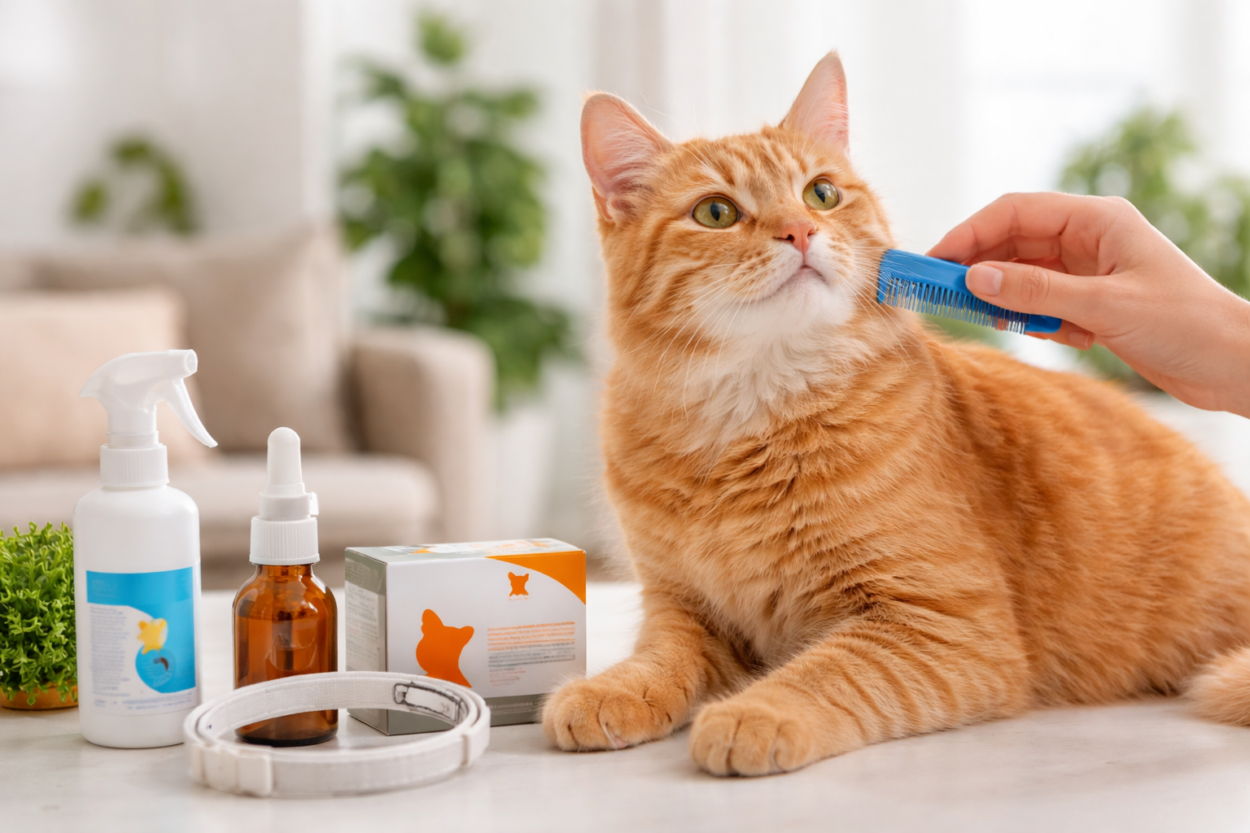
If you’ve ever noticed your cat scratching nonstop or seen tiny black specks in their fur, you already know how frustrating fleas can be. The truth is, cat flea treatment isn’t something you do once and forget—it’s a routine. And if you want your cat to stay healthy, comfortable, and itch-free, a monthly flea treatment plan is essential.
In this guide, I’ll walk you through a simple, effective routine that works for USA pet parents—whether your cat stays indoors or loves exploring outside.
Table of Contents
- Why Monthly Cat Flea Treatment Matters
- Signs Your Cat Has Fleas
- Step-by-Step Monthly Flea Treatment Routine
- Best Flea Treatment for Cats (Options Explained)
- How to Get Rid of Fleas on Cats Naturally & Effectively
- Preventing Future Flea Infestations
- Expert Tips from Pet Care Professionals
- FAQs
- Conclusion
Why Monthly Cat Flea Treatment Matters
Fleas are more than just annoying—they can cause serious health issues.
A single flea can lay up to 50 eggs per day, which means a small problem can quickly turn into a full-blown infestation in your home.
Here’s why consistent cat flea treatment is critical:
- Prevents skin irritation and infections
- Reduces risk of flea allergy dermatitis (FAD)
- Protects against tapeworm transmission
- Keeps your home flea-free
👉 Even indoor cats are at risk. Fleas can hitch a ride on your clothes, shoes, or other pets.
So ask yourself—are you treating fleas only when you see them, or proactively preventing them?
Signs Your Cat Has Fleas
Before building a routine, it helps to know what to look for.
Common Symptoms:
- Excessive scratching or biting
- Hair loss (especially near tail or neck)
- Red or irritated skin
- Tiny black dots (flea dirt) in fur
- Visible fleas moving quickly
If you spot even one flea, it’s time to act immediately.
Step-by-Step Monthly Flea Treatment Routine
Let’s break this into a simple monthly system you can follow.
Week 1: Apply Flea Treatment
Start with a vet-approved flea treatment.
Options include:
- Topical treatments (applied to neck)
- Oral medications
- Flea collars
💡 Most treatments last 30 days, making monthly application ideal.
Week 2: Deep Clean Your Cat’s Environment
Fleas don’t just live on your cat—they live in your home.
Do this:
- Wash bedding in hot water
- Vacuum carpets, sofas, and corners
- Dispose of vacuum bag immediately
👉 This step is crucial when learning how to get rid of fleas on cats completely.
Week 3: Grooming & Inspection
Use a flea comb to check your cat.
- Focus on neck, tail base, and belly
- Dip comb in soapy water to kill fleas
- Check for flea dirt
Regular grooming helps catch fleas early before they multiply.
Week 4: Reassess & Prepare
Before the next treatment cycle:
- Check if scratching has reduced
- Look for any signs of reinfestation
- Prepare next dose
Consistency is what makes cat flea treatment truly effective.
Best Flea Treatment for Cats (Options Explained)
Choosing the best flea treatment for cats depends on your cat’s lifestyle and health.
1. Topical Treatments (Most Popular)
Applied to the back of the neck.
Pros:
- Easy to apply
- Long-lasting
- Kills fleas quickly
Cons:
- Can be messy
- Needs careful application
2. Oral Medications
Given as tablets or chewables.
Pros:
- Fast-acting
- No residue on fur
Cons:
- Some cats resist pills
3. Flea Collars
Provides continuous protection.
Pros:
- Long-term protection (up to 8 months)
- Convenient
Cons:
- Not ideal for all cats
- May cause irritation in some cases
4. Flea Shampoos (Short-Term Relief)
Best for immediate infestation.
Pros:
- Kills fleas instantly
Cons:
- Doesn’t prevent future fleas
👉 Pro Tip: Always consult your vet before choosing a product—especially for kittens or senior cats.
How to Get Rid of Fleas on Cats (Complete Approach)
If your cat already has fleas, you’ll need a multi-step approach.
Step 1: Treat Your Cat
Use a fast-acting flea treatment immediately.
Step 2: Clean Your Home
- Vacuum daily for a week
- Wash fabrics
- Use flea sprays if needed
Step 3: Treat Other Pets
Fleas spread quickly between animals.
Step 4: Repeat Treatment
Consistency is key—don’t skip monthly doses.
Natural Methods (Supportive, Not Replacement)
Some pet parents prefer natural remedies. While helpful, they should not replace vet-approved treatments.
- Apple cider vinegar spray (repellent only)
- Diatomaceous earth (home use only)
- Herbal flea sprays
Preventing Future Flea Infestations
Prevention is easier than treatment.
Simple Preventive Tips:
- Stick to monthly flea treatments
- Keep your home clean
- Avoid contact with infested animals
- Maintain your yard (trim grass, remove debris)
Indoor Cats Need Protection Too
Many USA pet owners assume indoor cats are safe.
But fleas can enter through:
- Open doors/windows
- Other pets
- Visitors
👉 So yes—your indoor cat still needs cat flea treatment.
Expert Tips from Pet Care Professionals
Here are some insider tips that make a real difference:
✔️ Use Year-Round Protection
Fleas don’t disappear in winter—especially indoors.
✔️ Don’t Skip Doses
Missing one month can restart the flea cycle.
✔️ Treat the Environment
Up to 95% of fleas live off your pet (eggs, larvae, pupae).
✔️ Choose Vet-Recommended Products
Cheap products often fail to break the flea lifecycle.
Real-Life Scenario
Let’s say you applied a flea treatment once, and your cat still has fleas after a week.
What happened?
👉 Most likely:
- Eggs in your home hatched later
- Environment wasn’t cleaned
- Treatment wasn’t repeated
That’s why a monthly flea treatment routine is essential—not optional.
FAQs
1. How often should I use cat flea treatment?
You should apply cat flea treatment once every 30 days for continuous protection.
2. What is the best flea treatment for cats in the USA?
Top vet-recommended options include topical treatments, oral medications, and flea collars—depending on your cat’s needs.
3. How long does it take to get rid of fleas on cats?
It can take 2–4 weeks with consistent treatment and home cleaning.
4. Can fleas live in my house without pets?
Yes. Flea eggs and larvae can survive in carpets, bedding, and furniture.
5. Is natural flea treatment enough?
Natural methods can help, but they are not strong enough alone for full flea control.
Conclusion: Stay Consistent, Stay Flea-Free
A healthy, happy cat starts with a simple habit—consistent cat flea treatment.
By following a monthly routine, choosing the best flea treatment for cats, and learning how to get rid of fleas on cats effectively, you can protect your pet and your home from recurring infestations.
Remember, fleas don’t wait—and neither should you.
👉 Start your monthly routine today, and give your cat the itch-free life they deserve.
Read more: Modern Orthopedic Surgery for Pets for Stronger Bone Recovery


Sign up