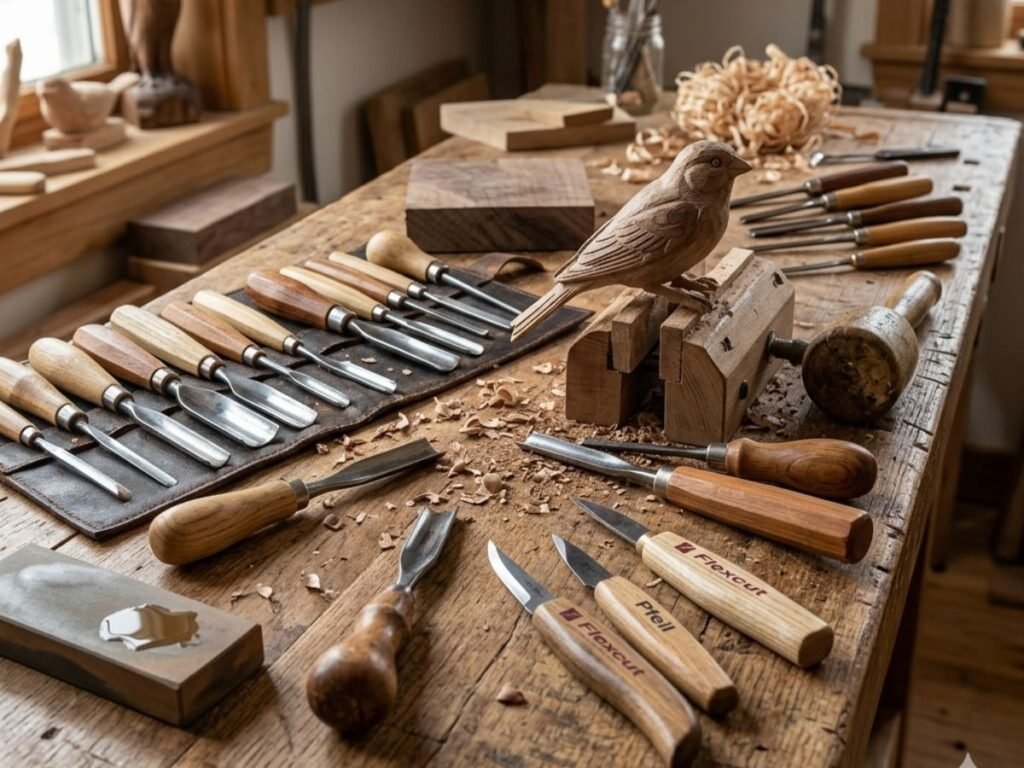
Creating refined wooden art requires more than creativity; it demands control, patience, and the right equipment for every stage of the process. Whether you are carving figurines, relief panels, decorative accents, or custom furniture details, professional tools for wood sculpture help improve precision, reduce fatigue, and deliver cleaner results. From hand chisels to rotary systems, skilled artisans rely on specialized gear to shape texture, contours, and fine edges with confidence. Choosing durable tools also supports better safety, smoother workflow, and more consistent craftsmanship, especially when detailed shaping work calls for both subtle hand control and efficient material removal.
Why Professional Wood Sculpture Tools Matter?
Detailed carving is a balance between removing material efficiently and preserving the intended form. In professional workshops, the quality of the finish often depends on how well the carver matches the tool to the wood species, grain direction, and desired level of detail. For this reason, experienced artists invest in reliable tools that offer edge retention, ergonomic handling, and controlled cutting performance. Unlike general woodworking tools, sculpture-focused equipment is designed for shaping curves, facial details, layered textures, and undercuts. High-quality wood sculpting tools allow the user to create crisp transitions without tearing the grain, which is especially important when working on hardwoods such as walnut, maple, or oak.
Essential Hand Tools for Detailed Shaping
Hand tools remain the foundation of wood sculpture because they provide unmatched tactile feedback. Gouges, chisels, V-tools, and carving knives are essential for shaping forms with precision. Sweep gouges are particularly useful for hollowing and contouring, while straight chisels help define planes and edges. In the middle stages of carving, skilled artisans often rotate between several tools for wood sculpture to maintain clean transitions and preserve the character of the design.
Mallets, Clamps, and Support Accessories
While cutting tools receive most of the attention, support tools are just as important in a professional carving setup. A wooden or urethane mallet allows the sculptor to drive chisels with controlled force, especially during rough shaping or when working dense hardwoods. Stable clamping systems, carving vises, and bench dogs keep the workpiece secure and reduce the risk of slipping during delicate cuts.
Rotary and Electric Tools for Faster Material Removal
For larger projects or highly textured surfaces, power-assisted carving tools can dramatically increase productivity. Rotary tools, flexible shaft systems, die grinders, and reciprocating carvers are commonly used for shaping, texturing, and refining contours. These machines are especially valuable when removing bulk material before switching to finer hand detailing. In professional settings, many artisans combine traditional tools for wood sculpture with electric carving systems to achieve both speed and control. Rotary burrs and abrasive accessories come in many shapes, including ball, flame, cone, and cylindrical profiles. Each shape supports different carving motions and surface effects.
Sanding, Rasps, and Surface Refinement Tools
After carving, surface refinement determines how polished and professional the final piece looks. Cabinet rasps, rifflers, needle rasps, abrasive cords, and sanding pads help smooth tool marks while preserving form. These are especially useful in curved or recessed areas where standard sandpaper is difficult to control. Midway through finishing, many sculptors return to tools for wood sculpture briefly to restore crisp edges that sanding may soften.
Conclusion
Professional carving is built on skill, patience, and the proper equipment for each stage of shaping and finishing. From gouges and carving knives to rasps and rotary systems, the right toolkit helps artists work more accurately and efficiently while protecting the integrity of the wood grain. Whether you focus on decorative carving, custom sculptures, or fine-detail restoration, investing in quality, dependable wood-sculpting tools will elevate both workflow and results. For advanced shaping speed and textured depth, many professionals also rely on power carving tools for wood in demanding studio applications.

Sign up