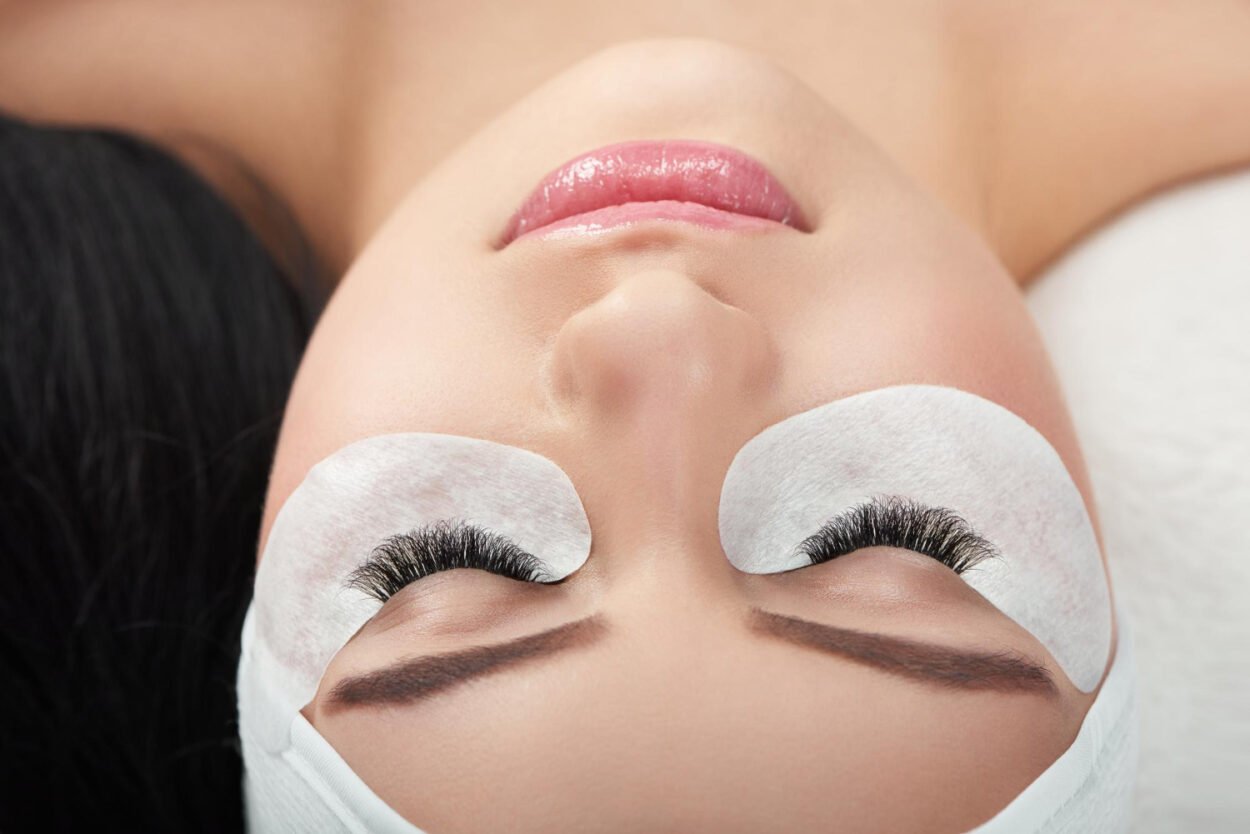
One of the most common reasons hybrid lash extensions fall out prematurely has nothing to do with the application — it’s what goes on the skin afterward. Many people invest in a quality lash set and then unknowingly use skincare products that quietly break down the adhesive bond day by day. If your extensions aren’t lasting as long as they should, your skincare routine is one of the first places to look. This guide identifies the specific ingredients that cause the most damage, explains why they’re problematic, and gives you practical guidance on building a routine that protects your lashes without compromising your skin.
How Skincare Ingredients Interact With Hybrid Lash Extensions
To understand why certain ingredients are harmful, it helps to understand how hybrid lash extensions are held in place.
Lash adhesive — the bonding agent used in all professional lash extension applications — is primarily composed of cyanoacrylate. This compound creates a strong, flexible bond between the extension and the natural lash. Once fully cured, the bond is durable, but it’s not impervious to chemical interference.
Certain skincare ingredients weaken cyanoacrylate in different ways. Some dissolve it directly. Others create an oily film over the bond that prevents adhesion and accelerates shedding. A few work more slowly, causing cumulative degradation over days or weeks that shortens the overall lifespan of the set.
The tricky part is that many of these ingredients are found in products that are otherwise excellent for skin health. Understanding which ones to avoid — or how to use them safely — makes the difference between a lash set that lasts three weeks and one that barely makes it ten days.
The Skincare Ingredients Most Damaging to Hybrid Lash Extensions
Here is a breakdown of the most problematic ingredients, organized by how they affect the lash bond:
Oils are the most universally damaging category. Any oil — whether it’s a luxurious facial oil, a cleansing balm, or a natural ingredient like jojoba or argan — will weaken lash adhesive over time. This includes:
- Coconut oil
- Mineral oil
- Sweet almond oil
- Argan oil
- Squalane (derived from olive or sugarcane sources)
- Cleansing balms and oil-based makeup removers
Even products that don’t market themselves as oils can contain them buried in the ingredient list. Always read the full INCI list, not just the front label claims.
Glycols are another category that damages hybrid lash extensions more than most people realize. Propylene glycol and butylene glycol, which appear in a wide range of moisturizers, serums, and toners, act as solvents that gradually break down adhesive bonds. They’re effective at driving other ingredients deeper into the skin — which is useful in skincare — but that penetrating quality is exactly what makes them problematic near lash line adhesive.
Retinoids, including retinol, retinal, and prescription tretinoin, accelerate cell turnover and can affect the condition of the natural lash and the follicle area over time. More immediately, many retinoid formulations are oil-based or contain emollients that compromise the bond. They also increase skin sensitivity, which can make the eye area more reactive to adhesive during fills.
AHAs and BHAs — alpha hydroxy acids and beta hydroxy acids — include glycolic acid, lactic acid, salicylic acid, and mandelic acid. These exfoliating acids can affect the adhesive bond when used close to the lash line and also cause faster skin cell turnover in the surrounding area, which can accelerate the natural lash shedding cycle.
Micellar waters that contain high concentrations of surfactants can also degrade adhesive bonds with repeated use directly on the lash line. Not all micellar waters are equal — some are formulated to be lash-extension safe, while others contain conditioning agents or oils that are not.
Skincare Ingredients That Are Safe to Use With Lash Extensions
Knowing what to avoid is only half the picture. Understanding what works safely is just as important for maintaining both your skin and your lash set.
Water-based formulations are generally the safest category. Lightweight, oil-free serums and moisturizers that rely on humectants like hyaluronic acid and glycerin for hydration are typically well-tolerated around hybrid lash extensions.
Niacinamide is one of the most lash-friendly active ingredients available. It’s water-soluble, non-oily, and has no known negative interaction with lash adhesive. It also delivers real benefits — pore refinement, brightening, and strengthening of the skin barrier — making it an excellent swap for more problematic actives.
Peptide serums are another strong option. Most peptide formulations are water-based and do not contain the oils or solvents that degrade adhesive. They support collagen production and skin firmness, making them useful for the eye area specifically.
Aloe vera gel, when used in its pure or near-pure form, is safe around lash extensions and can be soothing for the delicate skin of the eyelid.
How to Adjust Your Skincare Routine to Protect Your Lash Set
Making your routine extension-compatible doesn’t require starting from scratch. A few targeted adjustments will preserve both your skin health and your lash investment.
Switch your cleanser first. An oil-free foaming or gel cleanser used with your fingertips — not a washcloth — is the safest approach for daily cleansing around hybrid lash extensions. Avoid anything creamy, balm-based, or marketed as a micellar formula unless it explicitly states it is lash-extension safe.
Apply eye-area products with precision. Using a cotton swab rather than broad application with your fingers reduces the risk of problematic ingredients migrating onto the lash line. Keep retinoids and exfoliating acids away from the orbital bone entirely if possible.
Time your actives strategically. If you use retinol or glycolic acid in your routine and don’t want to cut them out entirely, applying them on alternating nights and keeping them strictly to the lower face rather than around the eyes is a reasonable compromise.
Always apply moisturizer before it fully dries. Pressing damp moisturizer close to the lashes can introduce moisture to the bond. Let each product absorb fully before moving on to the next step, and avoid the immediate lash line wherever possible.
Common Mistakes People Make With Skincare and Lash Extensions
Even with good intentions, these errors come up repeatedly:
- Assuming “natural” ingredients are safe. Natural oils like coconut and argan are among the most damaging things you can apply near extensions. Natural does not mean lash-safe.
- Using makeup wipes to remove eye makeup. Most makeup wipes contain conditioning agents, glycols, or oils. They’re convenient but genuinely problematic for extension retention.
- Applying eye cream too close to the lash line. Even a lash-extension-friendly eye cream applied too liberally can migrate onto the bond during sleep. Keep eye cream to the orbital bone, not the lid margin.
- Sleeping with skincare products that haven’t fully absorbed. Rich night creams or facial oils left on the skin can transfer to lashes during sleep, especially for side sleepers. Allow adequate absorption time before bed.
- Ignoring ingredient lists on products labeled “gentle” or “sensitive skin.” These labels don’t indicate lash compatibility. Always check for oils, glycols, and surfactants regardless of the marketing language.
Conclusion
Protecting your hybrid lash extensions isn’t complicated once you know what to look for. A few targeted swaps in your skincare routine can dramatically extend the life of your set and reduce the cost of frequent fills. When in doubt, ask your lash technician to review your current products — a good technician will know exactly what to look for and can recommend lash-safe alternatives that work for your skin type.
FAQs
Can I use retinol if I have hybrid lash extensions?
It’s not recommended to use retinol directly around the eye area when wearing hybrid lash extensions. Many retinol formulations contain oils or emollients that affect the adhesive bond, and even oil-free versions can accelerate lash turnover in the surrounding skin when applied close to the lash line.
Why do my hybrid lash extensions fall out faster after I moisturize?
If you’re using a moisturizer that contains oils, glycols, or silicones near the eye area, those ingredients are likely degrading the adhesive bond gradually. Switching to a lightweight, oil-free moisturizer and keeping it away from the immediate lash line will typically improve retention noticeably.
Is micellar water safe to use with lash extensions?
Some micellar waters are formulated to be extension-safe, but many are not. Check the ingredient list for oils, glycols, or conditioning agents. Oil-free, surfactant-minimal formulas designed specifically for lash extension wearers are the safest option.
How far from the lash line should I apply skincare products?
As a general rule, keep any product that contains oils, AHAs, BHAs, or glycols at least a centimeter away from the lash line. Even if a product doesn’t directly contact the extensions, it can migrate during sleep or throughout the day.
Does sunscreen affect hybrid lash extensions?
Chemical sunscreens often contain alcohol esters and emollients that can affect adhesive. Mineral sunscreens with a water-based formula are a safer choice around the eye area. Apply carefully and avoid the lash line regardless of formula type.


Sign up