


What Makes a Type C Fast Charging Cable Essential Today
In today’s fast-paced digital world, staying connected is more important than ever. Smartphones, tablets, laptops, and other portable devices have become essential tools for work, communication, and...

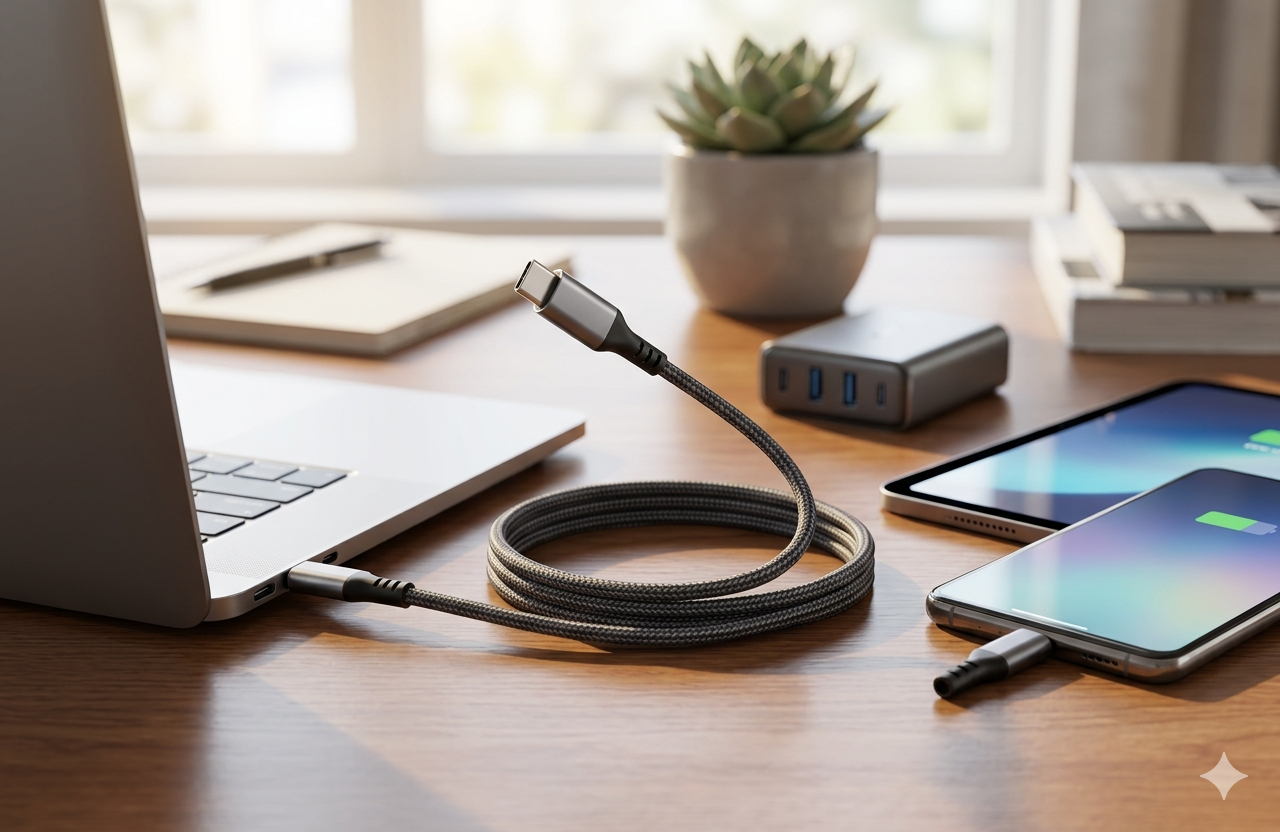
In today’s fast-paced digital world, staying connected is more important than ever. Smartphones, tablets, laptops, and other portable devices have become essential tools for work, communication, and entertainment. However, all these devices depend heavily on efficient charging solutions. This is where the type c fast charging cable plays a crucial role.
Table Of Content
- What Is a Type C Fast Charging Cable
- How Fast Charging Works
- Key Components of Fast Charging
- Benefits of Using a Type C Fast Charging Cable
- 1. Faster Charging Speeds
- 2. Universal Compatibility
- 3. Reversible Design
- 4. High Power Delivery
- 5. Faster Data Transfer
- Types of Type C Fast Charging Cables
- USB 2.0 Type-C Cable
- USB 3.1 and 3.2 Type-C Cable
- USB Power Delivery (PD) Cable
- Thunderbolt 3 and 4 Type-C Cable
- How to Choose the Best Type C Fast Charging Cable
- 1. Power Rating
- 2. Cable Length
- 3. Build Quality
- 4. Certification
- 5. Brand Reputation
- Common Uses of Type C Fast Charging Cables
- Charging Smartphones
- Powering Laptops
- Data Transfer
- Connecting Accessories
- Safety Tips for Using Fast Charging Cables
- Type C vs Other Charging Cables
- Type C vs Micro USB
- Type C vs Lightning
- Future of Type C Fast Charging Technology
- Conclusion
Over the past few years, USB Type-C technology has transformed how we charge and transfer data. Unlike older USB standards, Type-C cables offer faster charging speeds, improved durability, and universal compatibility. This article explores everything you need to know about Type C fast charging cables, including how they work, their benefits, types, and tips for choosing the best one.
What Is a Type C Fast Charging Cable
A type c fast charging cable is a modern USB cable designed with a reversible connector and advanced power delivery capabilities. Unlike traditional USB-A or Micro-USB cables, the USB Type-C connector can be plugged in either direction, making it more convenient to use.
More importantly, Type-C cables support fast charging technologies such as USB Power Delivery (PD) and Quick Charge, enabling devices to charge significantly faster than standard cables.
How Fast Charging Works
Fast charging works by increasing the amount of power (measured in watts) delivered to your device. A standard charger typically delivers 5 watts of power, while a fast charging setup can deliver anywhere from 18 watts to 100 watts or more.
Key Components of Fast Charging
- Compatible Device: Your smartphone or laptop must support fast charging.
- Power Adapter: A fast charging adapter is required to deliver higher wattage.
- Type C Cable: The cable must support high power output and efficient current flow.
When all three components are compatible, the device communicates with the charger to safely increase power delivery, reducing charging time significantly.
Benefits of Using a Type C Fast Charging Cable
1. Faster Charging Speeds
The most obvious advantage of a type c fast charging cable is speed. Devices can charge up to 70% faster compared to traditional cables, depending on compatibility.
2. Universal Compatibility
USB Type-C has become the standard for many devices, including smartphones, tablets, laptops, and even gaming consoles. This means one cable can serve multiple devices.
3. Reversible Design
No more struggling to plug in your cable correctly. The reversible connector makes it easy and user-friendly.
4. High Power Delivery
Type-C cables can handle higher wattage, making them suitable for charging larger devices like laptops.
5. Faster Data Transfer
In addition to charging, these cables support high-speed data transfer, making file sharing quick and efficient.
Types of Type C Fast Charging Cables
Not all Type-C cables are the same. Understanding the different types can help you choose the right one.
USB 2.0 Type-C Cable
- Basic charging and data transfer
- Lower speeds compared to newer versions
- Suitable for everyday use
USB 3.1 and 3.2 Type-C Cable
- Faster data transfer speeds
- Supports higher power output
- Ideal for professionals and heavy users
USB Power Delivery (PD) Cable
- Designed for high-wattage charging
- Perfect for laptops and tablets
- Supports up to 100W or more
Thunderbolt 3 and 4 Type-C Cable
- Ultra-fast data transfer
- Supports video output and high-performance tasks
- More expensive but highly versatile
How to Choose the Best Type C Fast Charging Cable
Selecting the right cable is essential for performance and safety. Here are some factors to consider:
1. Power Rating
Check the wattage rating of the cable. For smartphones, 18W–30W is sufficient, while laptops may require 60W–100W.
2. Cable Length
Choose a length that suits your needs. Short cables are portable, while longer ones offer convenience.
3. Build Quality
Look for cables with braided exteriors and reinforced connectors for durability.
4. Certification
Always choose certified cables to ensure safety and compatibility.
5. Brand Reputation
Reliable brands often provide better quality and longer-lasting products.
Common Uses of Type C Fast Charging Cables
Charging Smartphones
Most modern smartphones now use USB Type-C ports, making these cables essential for daily charging.
Powering Laptops
Many laptops now rely on USB-C charging, eliminating the need for bulky adapters.
Data Transfer
Quickly transfer large files between devices without delays.
Connecting Accessories
Use Type-C cables to connect external drives, monitors, and other peripherals.
Safety Tips for Using Fast Charging Cables
While fast charging is convenient, it’s important to use it safely.
- Avoid cheap, unbranded cables that may damage your device
- Do not overheat your device by using incompatible chargers
- Unplug when fully charged to preserve battery life
- Use original or certified accessories for best results
Type C vs Other Charging Cables
Type C vs Micro USB
- Type-C is faster and more efficient
- Micro USB is outdated and slower
Type C vs Lightning
- Type-C is universal across many brands
- Lightning is limited to specific devices
Future of Type C Fast Charging Technology
The future of charging technology is centered around USB Type-C. With advancements in power delivery and universal adoption, Type-C is expected to become the global standard for charging and connectivity.
Innovations such as faster charging speeds, improved efficiency, and smarter power management will continue to enhance user experience.
Conclusion
The type c fast charging cable has become an essential accessory in modern life. Its ability to deliver faster charging, support multiple devices, and provide reliable performance makes it a must-have for anyone using electronic devices.
Whether you are charging your smartphone, powering your laptop, or transferring data, investing in a high-quality Type-C cable ensures efficiency, safety, and convenience. As technology continues to evolve, the importance of fast and reliable charging solutions will only grow.






No Comment! Be the first one.