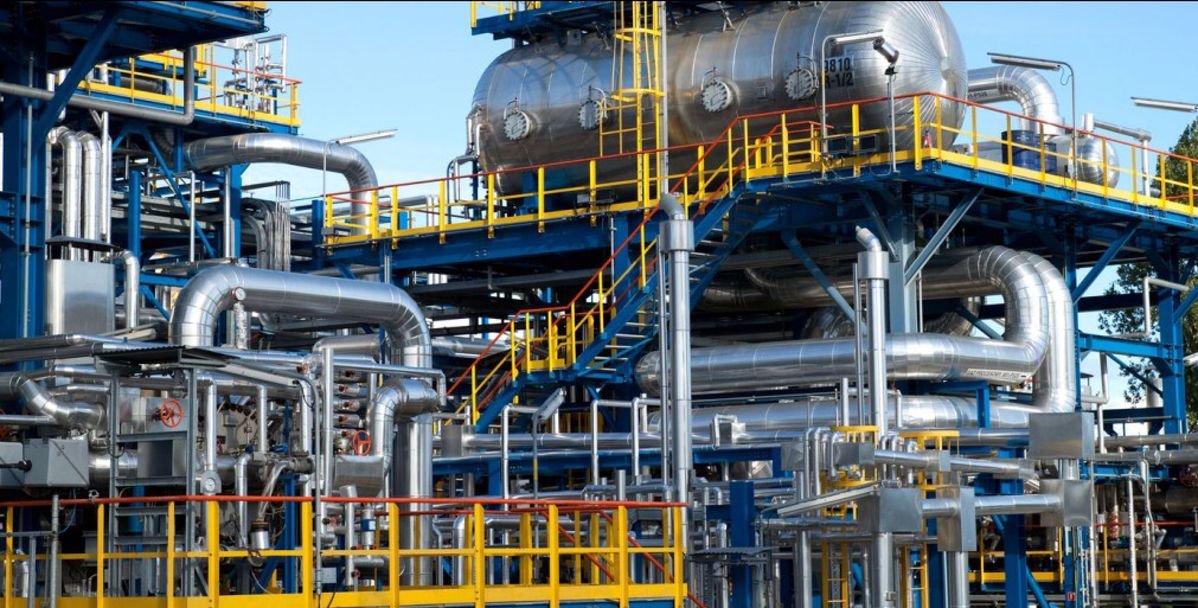
Fans are spinning. Exhaust stacks are humming. Your industrial oven is glowing like it just discovered self-confidence. And somewhere above the roofline, valuable energy is drifting into the atmosphere like it has better plans.
Here’s the twist: that “waste” heat isn’t waste at all. It’s unpaid overtime. And in 2026, letting usable energy float away is the industrial equivalent of leaving your espresso on the roof of your car and driving off.
Let’s talk about how modern heat recovery systems are quietly reshaping smart manufacturing — without turning your plant into a science experiment.
The Secret Life of Hot Air
Hook: If heat could text, it would say, “Hey… I’m still useful.”
Every industrial process generates heat. Combustion systems, curing lines, drying tunnels, and chemical reactions all produce more thermal energy than they strictly need to complete the job.
That excess heat typically exits through stacks, ducts, or ventilation systems. In a paint booth, hot exhaust air carries solvents and thermal energy away. In a thermal oxidizer, high-temperature gases destroy volatile compounds — but the exhaust still holds significant recoverable energy. Even a standard industrial oven vents warmth that could be put back to work.
Heat recovery systems intercept this outgoing energy and redirect it. Instead of letting it vanish, facilities reuse it to:
- Preheat combustion air
- Warm incoming process air
- Heat water or thermal oil
- Support adjacent processes
The principle is simple: capture, transfer, reuse. The impact, however, is substantial — reduced fuel use, lower emissions, and tighter operational control.
Why “Waste” Heat Isn’t Actually Waste
Hook: Your exhaust stack is basically a heated ATM spitting out energy.
Waste heat recovery systems are engineered to collect energy from high-temperature exhaust streams and convert it into something useful. These systems can be integrated into:
- Thermal oxidizers
- Industrial ovens
- Kilns and furnaces
- Drying systems
- Paint booth exhaust systems
Depending on temperature levels and process design, recovery can range from modest preheating to significant fuel displacement.
In facilities operating continuous high-temperature processes, the financial implications are hard to ignore. Energy costs drop. System efficiency rises. Sustainability metrics improve. And suddenly, your plant manager is smiling during energy review meetings.
The beauty of waste heat recovery systems is that they don’t require reinventing your process. They simply optimize what’s already happening.
Industrial Ovens: The Quiet Energy Giants
Hook: That glowing chamber isn’t just baking parts — it’s baking your utility bill.
An industrial oven is one of the most common and energy-intensive components in manufacturing environments. Whether curing coatings, drying components, or heat-treating materials, ovens operate at elevated temperatures for extended periods.
Now imagine this scenario:
Hot exhaust exits the oven continuously. Instead of venting directly outside, it passes through a heat exchanger. That captured heat preheats incoming air or supports another thermal process.
Result? Reduced burner demand. Lower fuel consumption. Faster temperature stabilization.
In high-production facilities, this approach can significantly decrease operational costs without compromising throughput.
Modern heat recovery systems designed for industrial oven applications often integrate seamlessly into airflow designs, maintaining consistent curing performance while improving efficiency.
Efficiency and productivity do not have to compete. They can collaborate.
The Paint Booth Plot Twist
Hook: The paint booth works hard. Its exhaust works harder.
A paint booth must maintain strict airflow and environmental control. It pulls air in, filters it, and exhausts solvent-laden air safely — often at elevated temperatures.
Now add a thermal oxidizer into the picture.
The oxidizer destroys volatile organic compounds in the exhaust stream at high temperatures. But after oxidation, the gases are still hot — sometimes very hot.
This is where waste heat recovery systems shine.
Recovered energy can:
- Preheat incoming process air
- Reduce burner input to the oxidizer
- Supply heat to nearby industrial oven systems
- Heat facility air in colder months
Pairing a paint booth and a thermal oxidizer with an integrated heat recovery strategy transforms a compliance requirement into an efficiency advantage.
Environmental responsibility meets operational intelligence.
Thermal Oxidizers: Compliance Meets Opportunity
Hook: Destroying pollutants shouldn’t mean destroying your energy budget.
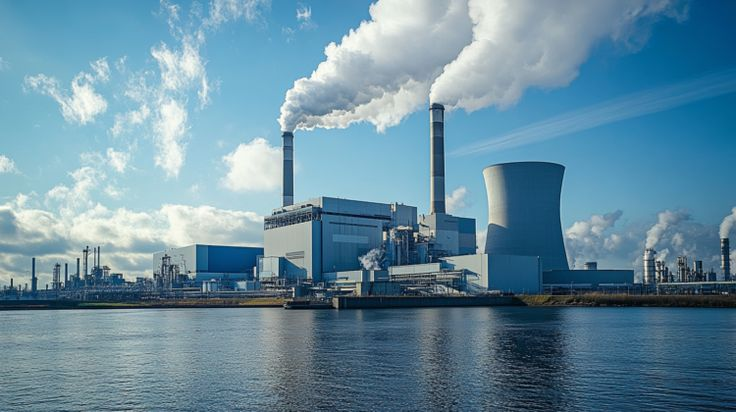
A thermal oxidizer is designed to eliminate hazardous air pollutants and VOCs by exposing them to high temperatures. It’s a critical piece of environmental compliance infrastructure.
But it’s also a high-temperature energy source.
Modern designs increasingly incorporate heat recovery systems directly into oxidizer architecture. Recuperative, regenerative, and hybrid systems capture combustion heat and reintroduce it into the process.
Instead of treating emissions control as a standalone cost center, facilities now view it as an integrated efficiency hub.
The result?
- Reduced fuel demand
- Improved thermal efficiency
- Lower greenhouse gas output
- Greater regulatory alignment
In short: compliance doesn’t have to be expensive. It can be strategic.
Thermal Cleaning Equipment: Hot, Precise, and Smarter Than Ever
Hook: Even cleaning tools are getting energy-conscious.
Thermal cleaning equipment is used to remove coatings, polymers, paints, and residues from metal components through controlled high-temperature processes.
These systems generate substantial heat — and just like ovens and oxidizers, they benefit from intelligent energy reuse.
By integrating heat recovery systems into thermal cleaning equipment, facilities can:
- Preheat incoming combustion air
- Reduce burner cycling
- Maintain tighter temperature consistency
- Improve overall system efficiency
Thermal cleaning solutions are no longer just about removing residue. They are about process optimization, energy discipline, and long-term operational resilience.
Cleaning parts and cleaning up energy waste? That’s efficiency squared.
Designing Smarter Thermal Cleaning Solutions
Hook: Efficiency isn’t a feature. It’s a design philosophy.
When specifying thermal cleaning solutions today, engineers look beyond performance alone. They ask:
- How much heat is generated?
- Where does it go?
- Can it be reused?
- How does it integrate with adjacent processes?
Modern facilities increasingly connect systems. Heat from a thermal oxidizer may support a curing oven. Exhaust from an industrial oven may assist facility heating. A paint booth’s airflow may be partially tempered using recovered energy.
The facility becomes an ecosystem rather than a collection of isolated machines.
Heat recovery systems serve as the connective tissue.
Let’s Make This Interactive
Hook: You’ve got questions. Good. Curiosity runs efficient plants.
Q1: Is waste heat recovery systems technology complicated to install?
Not necessarily. Integration depends on process temperature, exhaust flow, and available space. Many modern systems are modular and designed for retrofits, making installation far less disruptive than people assume.
Q2: Will adding heat recovery affect process performance?
Properly engineered systems enhance stability rather than disrupt it. By preheating air or reducing burner demand, temperature control can actually improve.
Q3: Is it worth it for mid-sized facilities?
If your process runs consistently at elevated temperatures, the answer is often yes. Even moderate fuel savings accumulate significantly over time.
Q4: What about maintenance?
Heat exchangers and recovery components require inspection and routine care, but they are typically designed for durability in industrial environments. Maintenance schedules align with existing system service intervals.
Q5: Does this help sustainability goals?
Absolutely. Lower fuel consumption means reduced emissions. Many organizations use heat recovery systems as part of broader carbon reduction and efficiency initiatives.
Now ask yourself: where is your facility generating heat right now? And where is it going?
The Economics of Not Letting Heat Escape
Hook: Energy you already paid for shouldn’t ghost you.
Fuel is one of the largest operational expenses in thermal processes. Every BTU that escapes unused represents unrealized value.
Waste heat recovery systems can reduce fuel consumption significantly, depending on application and temperature range. Over time, those savings compound.
But the story isn’t just about cost.
It’s about resilience.
Energy prices fluctuate. Regulations evolve. Sustainability standards tighten. Facilities that design with efficiency in mind are more adaptable to change.
Recovering heat is no longer a niche engineering upgrade. It is part of modern industrial strategy.
The 2026 Industrial Mindset Shift
Hook: Smart factories don’t just produce. They optimize.
Manufacturing in 2026 is not defined solely by throughput. It’s defined by intelligence.
Data-driven controls, predictive maintenance, digital monitoring — and yes, integrated heat recovery systems — are reshaping how facilities operate.
The shift is cultural as much as technical.
Instead of asking:
“How do we run this equipment?”
Forward-thinking teams ask:
“How do we make this entire thermal ecosystem work together?”
Industrial oven performance connects to paint booth airflow. Thermal oxidizer efficiency ties into facility heating. Thermal cleaning equipment integrates into broader energy strategies.
Efficiency becomes systemic.
Final Thought: Stop Letting Your Stack Steal the Show
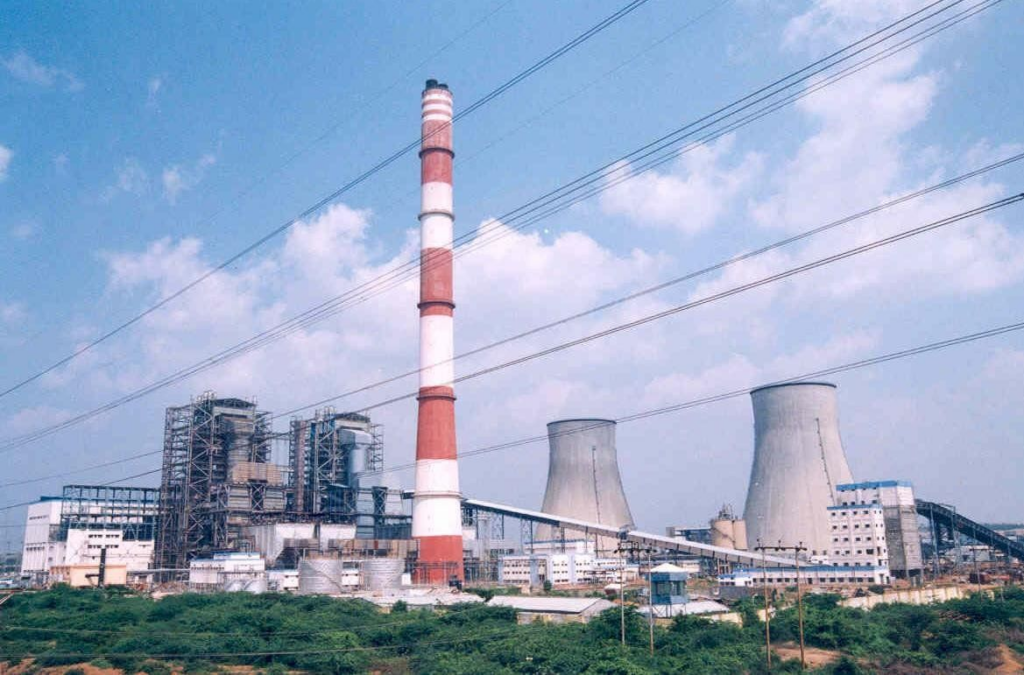
Hook: That plume above your building shouldn’t be your most dramatic feature.
Industrial processes will always generate heat. That’s physics.
The question is whether that heat becomes a liability — or an asset.
By integrating waste heat recovery systems into industrial ovens, paint booth exhaust streams, thermal oxidizers, and thermal cleaning equipment, facilities can transform excess energy into measurable performance gains.
Thermal cleaning solutions evolve.
Environmental compliance becomes strategic.
Energy efficiency becomes embedded.
And suddenly, your facility isn’t throwing a heat party anymore.
It’s hosting a well-managed, revenue-generating thermal conference — with no uninvited energy slipping out the back door.
Because in modern manufacturing, smart heat management isn’t optional.
It’s just good engineering.


Sign up