


Manual Compliance Tracking Risks in Insurance Systems
In modern insurance operations, compliance is a critical function that directly impacts business continuity. Insurance agencies, carriers, and MGAs in the United States must manage producer...

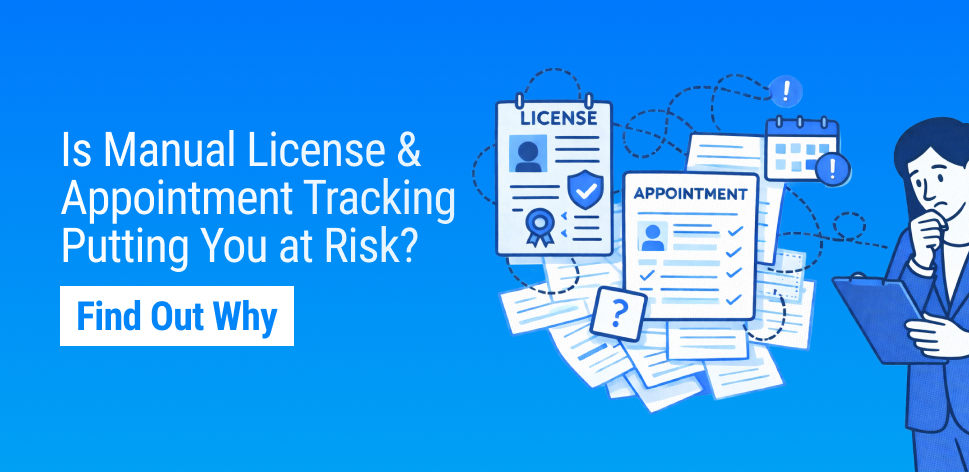
In modern insurance operations, compliance is a critical function that directly impacts business continuity. Insurance agencies, carriers, and MGAs in the United States must manage producer licensing, carrier appointments, and regulatory requirements across multiple states.Despite the increasing complexity, many organizations still rely on manual processes such as spreadsheets and emails. This raises a key concern:Is manual license and appointment tracking creating compliance risk?Industry practices show that manual systems are no longer sufficient for handling the scale and speed required in today’s insurance environment.
Table Of Content
Understanding License and Appointment Management
Insurance compliance involves verifying that producers are authorized to sell insurance products. This requires accurate tracking of both licensing and carrier appointments.A producer code is a unique identifier assigned by a carrier to manage a producer’s relationship. Insurance carriers must verify licensing status and appointment approval before allowing transactions.
In multi-state operations, compliance teams must continuously monitor:
- Producer license validity
- Carrier appointment status
- Renewal deadlines
- Regulatory updates
This process requires consistent accuracy and real-time visibility.
Where Manual Systems Create Gaps
Manual tracking systems often lack integration and centralized control. Compliance teams frequently face:
- Data stored across multiple spreadsheets
- Missed license renewal dates
- Delayed updates in appointment records
- Inconsistent compliance data
- Limited transparency across departments
These gaps make it difficult to maintain a reliable compliance process.
Regulatory Impact on Insurance Organizations
The United States insurance industry operates under strict state regulations. Each state has its own licensing and appointment requirements, making compliance management more complex.
Failure to maintain compliance may result in:
- Producers operating without valid licenses
- Missing or inactive carrier appointments
- Regulatory fines and penalties
- Business disruptions
- Increased audit scrutiny
Regulatory guidelines require organizations to maintain accurate and up-to-date compliance records at all times.
How Manual Processes Increase Risk
A typical compliance workflow includes:
- Verifying licenses
- Checking carrier appointments
- Assigning producer codes
- Updating internal records
- Monitoring renewals
- Generating reports
When these processes are handled manually, each step introduces the possibility of delays and human error. In regulated environments, even small errors can lead to significant compliance issues.
Why Insurance Organizations Are Moving to Automation
Many insurance organizations are adopting automation to improve compliance accuracy and operational efficiency.
Modern compliance systems provide:
- Centralized license tracking
- Automated appointment tracking
- Real-time alerts and notifications
- Integration with NIPR
- Streamlined producer management
Agenzee functions as an insurance compliance software platform that supports licensing management, appointment tracking, and insurance automation within a unified system.
Conclusion
Manual license and appointment tracking is no longer aligned with the needs of modern insurance operations. As regulatory requirements continue to evolve, organizations must adopt scalable compliance solutions.Automation helps reduce risk, improve efficiency, and maintain accurate compliance records across agencies, carriers, and MGAs.
👉 Read more: https://agenzee.com/is-manual-license-and-appointment-tracking-putting-your-organization-at-risk/.






No Comment! Be the first one.