


What Are Examples of Workplace Issues?
Workplaces are meant to be spaces where employees collaborate, innovate, and grow. However, like any social environment, they are not immune to conflicts, challenges, and issues. Understanding common...

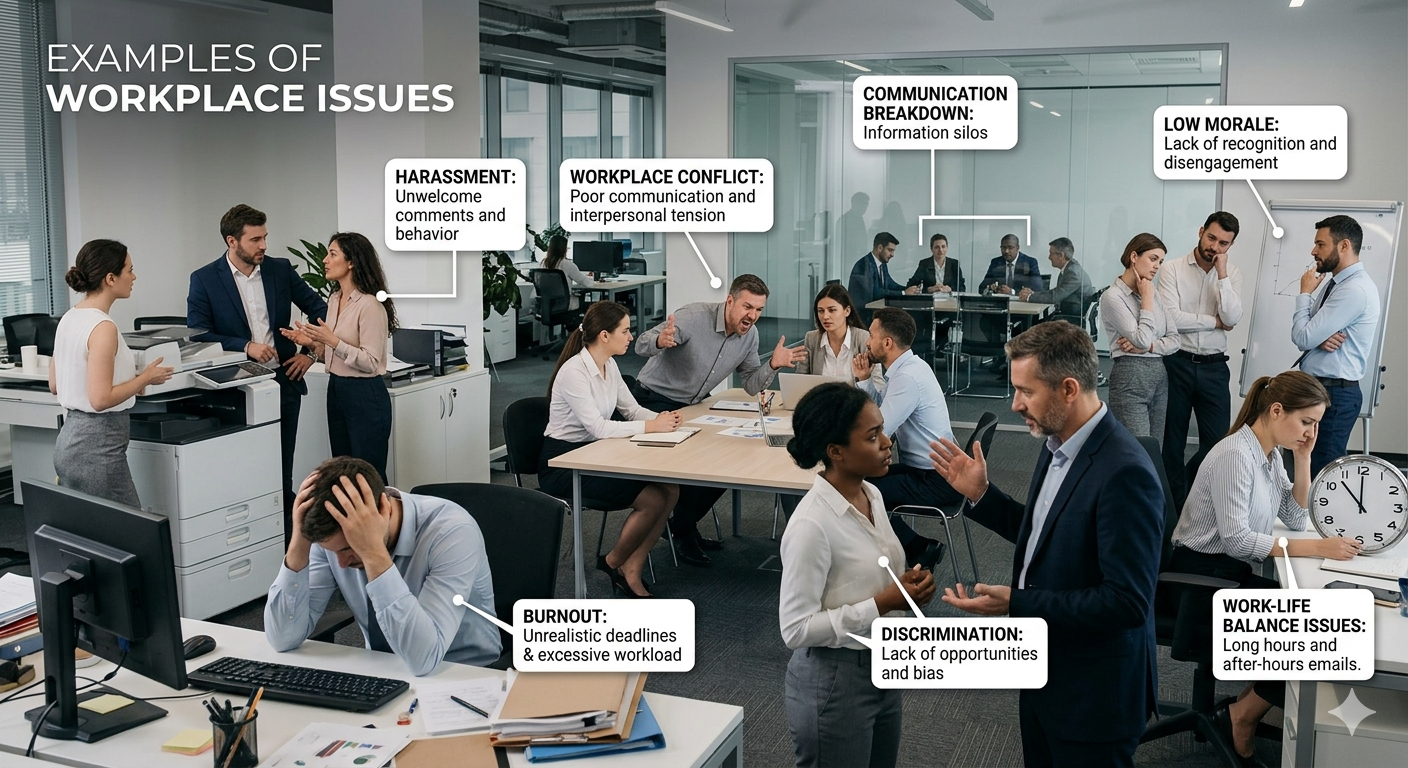
Workplaces are meant to be spaces where employees collaborate, innovate, and grow. However, like any social environment, they are not immune to conflicts, challenges, and issues. Understanding common workplace issues is the first step toward creating a healthier, more productive environment. In this blog, we’ll explore examples of workplace issues, their causes, and ways to address them.
Table Of Content
- 1. Poor Communication
- 2. Workplace Conflicts
- 3. Discrimination and Harassment
- 4. Poor Management Practices
- 5. Workload and Stress
- 6. Lack of Career Development
- 7. Poor Work-Life Balance
- 8. Ineffective Teamwork
- 9. Compensation and Benefits Issues
- 10. Unsafe Work Conditions
- 11. Technology and Resource Challenges
- 12. Organizational Changes
- 13. Remote Work Challenges
- 14. Bias in Promotions
- Conclusion
1. Poor Communication
One of the most prevalent workplace issues is poor communication. Misunderstandings, lack of clarity, or inconsistent messaging can lead to mistakes, frustration, and even conflicts among team members. For instance, employees may not be aware of updates in company policies, deadlines, or project expectations.
How to Handle It: Companies can improve communication by using clear channels, regular meetings, and collaborative tools. Encouraging employees to ask questions and provide feedback ensures everyone is on the same page.
2. Workplace Conflicts
Conflicts between colleagues are natural but can escalate if left unresolved. Conflicts can arise due to differences in work styles, personality clashes, or misunderstandings. When unresolved, they can lower morale, decrease productivity, and even lead to employee turnover.
Solution: Encouraging open dialogue, active listening, and mediation can help resolve disputes. Many organizations also provide training in conflict resolution to equip employees with essential interpersonal skills.
3. Discrimination and Harassment
Discrimination and harassment remain significant workplace issues. Employees may face bias based on race, gender, religion, age, or other factors. Harassment can be overt or subtle but always affects the victim’s well-being and productivity.
Solution: Organizations should enforce strict anti-discrimination policies, provide regular training, and establish confidential reporting channels. A culture of respect and inclusion is critical for reducing such issues.
4. Poor Management Practices
Poor management can lead to disengaged employees, low morale, and high turnover. Examples include micromanagement, lack of recognition, favoritism, or unclear expectations. Employees need supportive leaders who provide guidance and encourage growth.
Tip: Investing in management training programs and feedback systems helps ensure managers lead effectively. For those looking to advance in management, professional management CV help can highlight leadership skills and achievements for career growth.
5. Workload and Stress
Excessive workload is a common workplace problem that can cause burnout. Tight deadlines, long hours, and unrealistic expectations often leave employees feeling overwhelmed and exhausted. Stress not only affects performance but can also impact mental and physical health.
Solution: Employers should monitor workloads, promote time management, and encourage breaks. Wellness programs and flexible work arrangements can also help employees manage stress.
6. Lack of Career Development
When employees feel there is no room for growth or advancement, motivation declines. Lack of training opportunities, unclear career paths, and limited mentorship contribute to disengagement.
Solution: Offering workshops, mentorship programs, and skills development opportunities keeps employees motivated. Job seekers can also seek CV writing support to showcase skills and experience effectively when exploring new career paths.
7. Poor Work-Life Balance
Maintaining a healthy work-life balance is essential, but some workplaces fail to support it. Excessive overtime, inflexible schedules, and expectations to remain available after hours can lead to burnout and dissatisfaction.
Solution: Employers should promote flexible working hours, remote options, and a culture that values personal time. Employees should communicate their boundaries clearly to ensure sustainable work habits.
8. Ineffective Teamwork
Teamwork is vital for productivity, but it can be hampered by lack of cooperation, unclear roles, or unbalanced workloads. Ineffective teamwork can slow project progress and create tension among team members.
Solution: Encourage team-building exercises, set clear goals, and define responsibilities. Platforms that facilitate collaboration and feedback can also improve team dynamics.
9. Compensation and Benefits Issues
Employees often face issues related to pay, bonuses, and benefits. Inadequate compensation, delayed raises, or unclear policies about perks can lead to dissatisfaction and attrition.
Solution: Transparent salary structures, regular reviews, and fair benefits packages help maintain employee trust. Ensuring employees understand what they are entitled to prevents frustration and confusion.
10. Unsafe Work Conditions
Workplace safety is non-negotiable. Unsafe equipment, lack of proper training, or stressful environments can cause accidents and health issues. Employees need reassurance that their well-being is a priority.
Solution: Regular safety audits, training, and adherence to health standards protect employees and reduce liability. A strong safety culture fosters confidence and productivity.
11. Technology and Resource Challenges
Inadequate tools, outdated systems, or lack of resources can hinder productivity. Employees may struggle to meet expectations if they don’t have access to proper software, equipment, or support.
Solution: Regularly update tools and provide training for new technology. Ensuring employees have what they need enhances efficiency and reduces frustration.
12. Organizational Changes
Mergers, restructuring, or leadership changes can create uncertainty and anxiety among employees. Lack of clarity during transitions can affect morale and performance.
Solution: Transparent communication, clear timelines, and employee involvement in change initiatives ease transitions and build trust.
13. Remote Work Challenges
With the rise of remote work, issues like isolation, miscommunication, and lack of accountability have become more common. Employees working remotely may feel disconnected from the team and struggle to manage boundaries.
Solution: Regular check-ins, virtual team-building activities, and clear performance expectations help maintain engagement. Tools for collaboration and project management are essential for remote teams.
14. Bias in Promotions
Employees often feel overlooked for promotions or recognition due to favoritism or unconscious bias. This can create resentment and demotivation among staff.
Solution: Use fair evaluation metrics, regular performance reviews, and transparent promotion criteria. Employees in Ireland seeking career advancement can also benefit from professional CV Ireland services to highlight their achievements effectively.
Conclusion
Workplace issues are diverse, ranging from poor communication and conflicts to stress, discrimination, and lack of growth opportunities. Recognizing these challenges is crucial for both employers and employees to create a productive and positive work environment.
Addressing these issues proactively with clear communication, supportive management, fair policies, and professional development opportunities ensures employees remain motivated, engaged, and satisfied. For individuals navigating career challenges, professional assistance in CV writing, management guidance, and skill presentation can make a significant difference in achieving career goals.
By understanding the common workplace issues and applying practical solutions, organizations and employees alike can foster a healthier, more productive, and harmonious work environment.






No Comment! Be the first one.