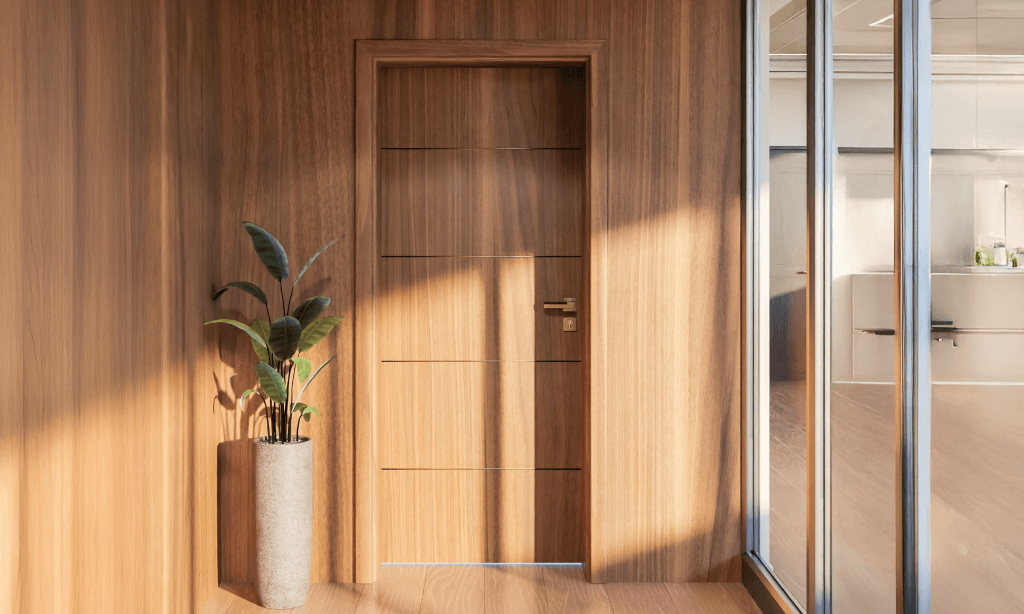
Urban living has changed the way architects design spaces in the housing industry. Traffic, construction activity, and rising population density have increased noise levels across residential and commercial environments. As a result, architects now treat sound control as a practical requirement rather than a design preference. Doors play a critical role in controlling how noise enters and moves within a space. A well-designed door maintains privacy, improves comfort, and supports a controlled indoor environment.
Growing Need for Noise Control in Modern Architecture
Modern architecture focuses on spaces that support both functionality and comfort. Constant exposure to noise affects sleep, concentration, and overall well-being. In high-rise buildings and compact housing layouts, sound travels easily between rooms and from the surrounding environment.
Architects and developers now prioritise noise control during the planning stage. They select materials and design elements that reduce unwanted sound. Doors and windows act as primary barriers against external noise, so their performance directly affects building quality. In urban housing projects, effective noise control improves occupant satisfaction, supports long-term usability, and helps maintain a healthier indoor environment.
How A Soundproof Door Addresses Noise Challenges
A Soundproof Door controls how noise enters and spreads within a space. It goes beyond basic separation, creating a stable and comfortable indoor environment.
- Reduces external noise such as traffic and construction
- Improves privacy between rooms
- Supports quieter indoor environments for work and rest
- Helps maintain focus in study and home office areas
By limiting sound movement, a door improves usability and supports everyday comfort. This becomes important in shared living environments where multiple activities occur simultaneously. It also helps reduce distractions in spaces that require sustained attention and quiet.
Core Features That Enable Sound Insulation
Design and fit determine how effectively a door controls sound. Specific features prevent noise from passing through gaps or weak points.
- Tight sealing using gaskets reduces sound leakage
- Precision overlap between frame and panel prevents gaps
- Use of thicker and denser materials blocks noise
- Accurate manufacturing ensures proper fitting of components
When these features work together, the door delivers consistent sound control. Proper installation further strengthens performance by maintaining sealing over time. Even small gaps can reduce effectiveness, so precise fitting remains essential for reliable results.
Importance of Material Choice in Soundproofing
Material choice directly affects sound control performance. Aluminium doors provide structural strength and stability, which support effective sealing over time. Unlike weaker materials, aluminium retains its shape across varying environmental conditions and prevents gaps from forming.
The durability of aluminium supports long-term performance. Consistent sealing and structural integrity maintain sound insulation without frequent adjustments. Aluminium doors suit various housing applications, including sliding systems and Folding Door Design, where flexibility and sound control must work together. Strong material performance also ensures that repeated use does not affect alignment or sealing quality.
Role of Manufacturing Precision in Soundproof Performance
Manufacturing quality determines how well a door performs. Factory-controlled processes ensure accuracy in dimensions and fitting, which reduces gaps during installation. Pre-engineered doors include components that fit precisely, simplifying installation and improving sealing.
Reduced dependency on manual adjustments ensures consistent performance across projects. Reliable manufacturing delivers uniform sound insulation across multiple units, even in large-scale housing developments. This level of precision maintains performance consistency across different locations and usage conditions.
Must Read: Why Aluminium Window Design Is Ideal for Long-Term Durability
Performance Standards That Define an Effective Soundproof Door
Standard testing methods measure the performance of a soundproof door. These tests evaluate how effectively the door controls noise and air movement.
- Air-tightness performance limits sound and air leakage
- Sound insulation testing measures noise reduction levels
- Compliance with JIS and ASTM standards ensures reliability
These indicators confirm performance through tested results. Verified standards help architects and homeowners make informed decisions when selecting products. Testing also ensures that the door performs reliably under varying environmental and usage conditions.
Conclusion
Sound control plays an essential role in modern architecture within the housing industry. Doors directly manage noise, improve privacy, and enhance indoor comfort. Design, material, and manufacturing accuracy determine soundproofing effectiveness. A well-built door delivers long-term performance and supports a stable and comfortable living environment.


Leave a Comment