I spent the better part of the last decade watching businesses try to “automate” their way out of chaos. We’ve all seen it: a labyrinth of Zapier triggers and rigid IF-THEN rules that break the moment a customer does something unexpected. For a long time, we thought this was the peak of efficiency.
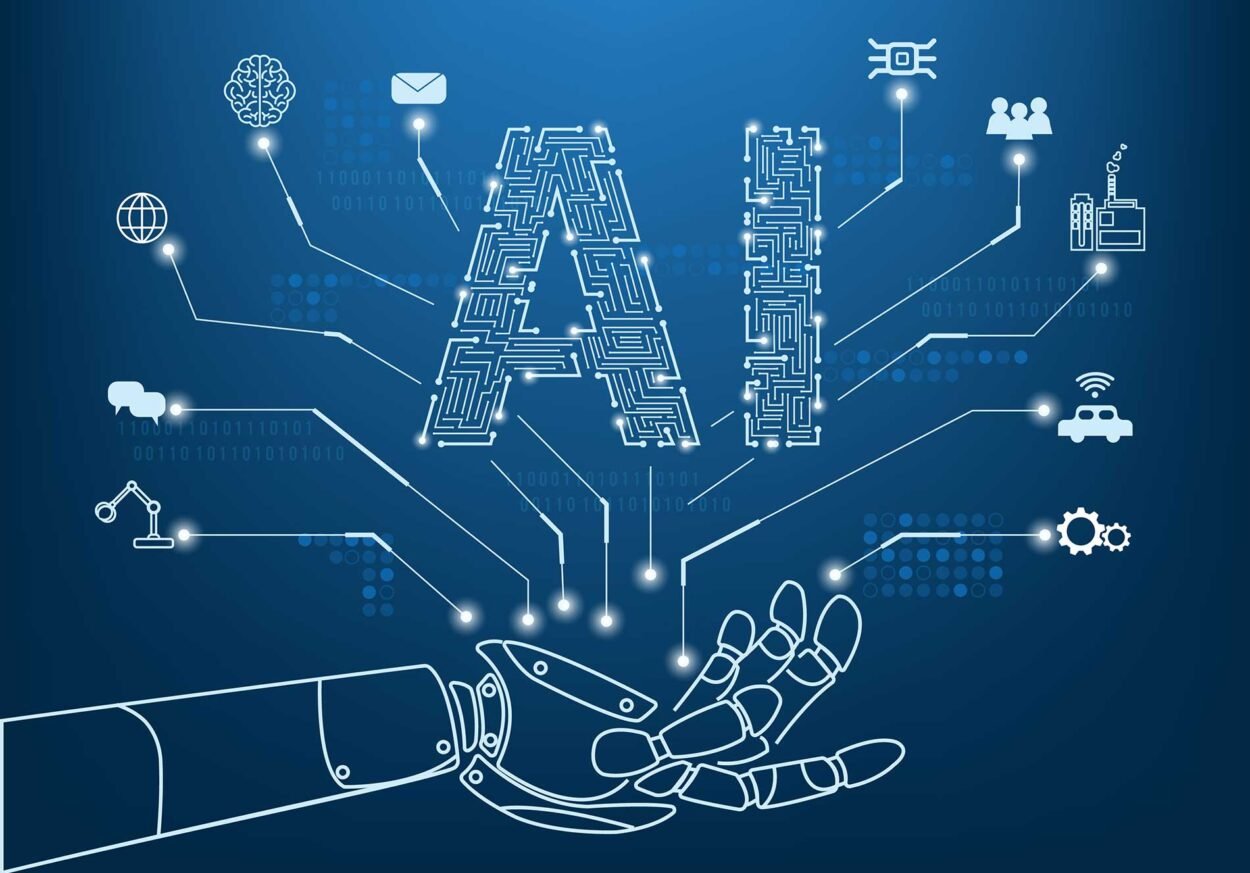
But in 2026, the landscape has fundamentally shifted. We aren’t just automating tasks anymore; we are orchestrating intelligence. The era of the “Passive Workflow” is being replaced by AI agentic workflows, and for the modern strategist, this is the most significant leap since the invention of the CRM.
From Rigid Triggers to Autonomous Agents
The traditional approach to automation was linear. You built a track, and the software followed it. If a lead came in from a website, the system sent an email. Simple, but brittle. If that lead responded with a complex question about a specific edge-case feature, the “automation” stopped, and a human had to intervene.
AI agentic workflows change the game by giving the workflow a brain. Instead of a set of rules, you give an AI agent a goal.
As Andrew Ng, a global leader in AI education, recently emphasized, the shift toward agentic systems is powerful because agents can “iteratively improve their own output.” They don’t just execute; they plan, reflect, and adjust. In a marketing context, this means an agent doesn’t just send an email—it monitors the response, researches the prospect’s latest LinkedIn post, and decides whether the next best action is a personalized video or a direct calendar invite.
Mastering the Funnel with Full Funnel Marketing Solutions
One of the biggest pain points for growing firms has always been “The Hand-Off”—that messy transition where a lead moves from Marketing to Sales. Historically, this is where data dies and leads go cold.
By implementing full funnel marketing solutions powered by agentic AI, we finally close that gap. In 2026, an agentic system manages the entire journey:
- Top of Funnel (Awareness): Agents autonomously optimize ad spend in real-time based on high-intent signals, not just clicks.
- Middle of Funnel (Nurture): They conduct “context-aware” conversations, remembering a customer’s preference from a chat session three months ago.
- Bottom of Funnel (Conversion): They identify the exact moment a lead is ready to buy and trigger the closing sequence.
This isn’t just a better funnel; it’s a self-healing one. If a campaign isn’t performing, the agent doesn’t just wait for a weekly report. It analyzes the friction point and suggests a new creative direction immediately.
The New Standard of AI Sales Automation
For a long time, “Sales Automation” was a polite way of saying “spamming people faster.” We’ve all been on the receiving end of those robotic, tone-deaf sequences.
But AI sales automation in 2026 is indistinguishable from a high-performing human assistant. Today’s agents are capable of “intent modeling.” They can sense if a prospect is hesitant or excited based on the nuance of their language.
Ethan Mollick, a Wharton professor and leading voice on AI in the workplace, often points out that AI is shifting from a tool we “use” to a “co-pilot” we collaborate with. In sales, this means the AI handles the 90% of administrative “grunt work”—prospect research, CRM entry, and initial outreach—leaving the human rep to do what they do best: building the final bridge of trust and closing the deal.
A Traditional Automation vs. An Agentic Workflow
| Feature | Legacy Automation (2020-2024) | AI Agentic Workflows (2026) |
| Logic | Rigid IF/THEN rules | Goal-oriented reasoning |
| Adaptability | Breaks on exceptions | Navigates around obstacles |
| Context | Single-session only | Persistent, cross-platform memory |
| Output | Static templates | Dynamic, generative responses |
| Goal | Speed of execution | Quality of outcome |
Why Business Force One is the Spotlight of this Revolution
While most platforms are still trying to “bolt on” AI to their old systems, Business Force One was built for the agentic era. We realized early on that for an AI agent to be truly effective, it needs a unified “Central Nervous System.”
Our ConnectAIve Intelligence™ framework ensures that your agents aren’t working in silos. Your marketing agent knows exactly what your sales agent promised, and your support agent knows the client’s entire history in real-time. This level of synchronization is why we are the spotlight for enterprises that want to move beyond “faster” and toward “smarter.”
The Strategic Bottom Line
The transition to AI agentic workflows is not just a technical upgrade; it is a management shift. We are moving from being “Task Managers” to being “Goal Architects.”
In 2026, your competitive advantage isn’t found in how many people you hire or how much you spend on ads. It’s found in how effectively you orchestrate your digital workforce. Those who embrace full funnel marketing solutions and autonomous AI sales automation today will be the ones defining the markets of tomorrow.
The question is no longer “Can AI do this?” but “What goals will you give your agents to achieve?”
About the Author: This article was prepared by the strategy team at Business Force One. We are the architects of the modern business operating system, helping scaling teams consolidate their technology and automate their growth through advanced AI agentic workflows and ConnectAIve Intelligence™. Our mission is to empower entrepreneurs by replacing fragmented tools with a unified, high-performance digital infrastructure.


Leave a Comment