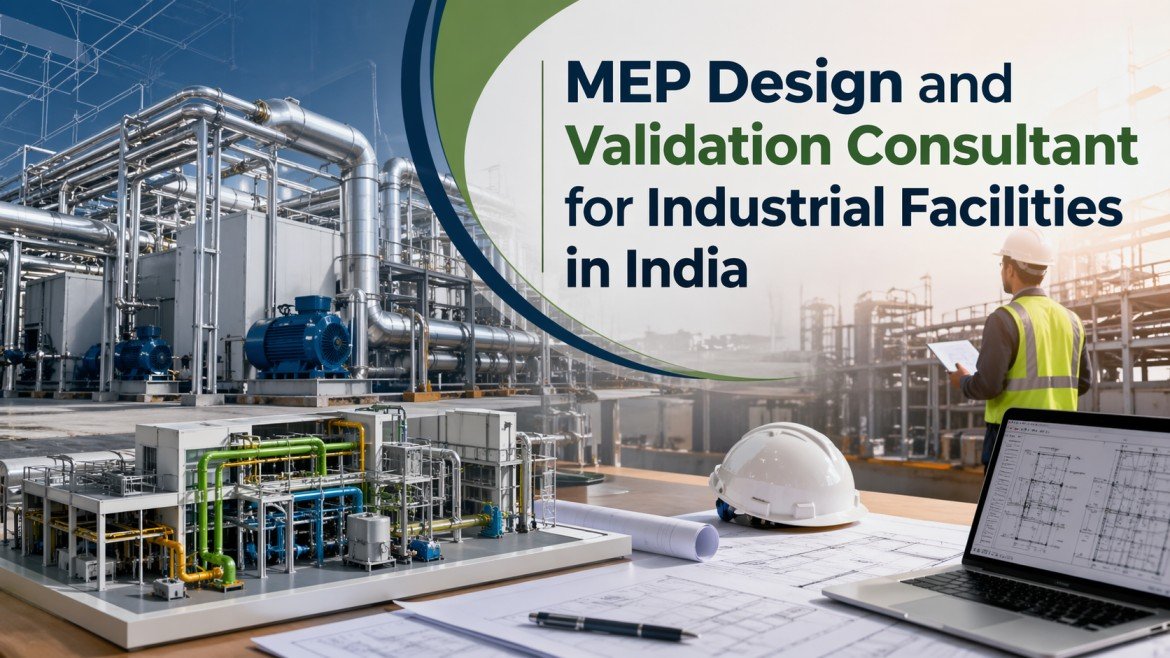
Industrial facilities require more than strong civil structures and production machinery. For a manufacturing plant to operate smoothly, it also needs properly designed mechanical, electrical, and plumbing systems. Poor MEP planning can lead to frequent equipment failures, utility breakdowns, higher energy bills, unsafe working conditions, and delays in plant approvals.
This is why companies setting up factories in India often hire experienced MEP design consultants and civil and structural engineering consultants during the early stages of the project. A professional MEP consultant helps ensure that all utility systems are designed, coordinated, and validated before construction and plant operations begin.
Consult Our Engineering Experts: https://www.imarcengineering.com/services/civil-structural-mep-design-and-validation
What Is MEP Design for Industrial Facilities?
MEP stands for Mechanical, Electrical, and Plumbing systems. These systems are critical for the daily functioning of any industrial facility.
Mechanical systems include HVAC, ventilation, exhaust systems, compressed air, and cooling systems. Electrical systems include power distribution, lighting, cable routing, backup power, transformers, and earthing systems. Plumbing systems include water supply, drainage, firefighting, sewage, and utility pipelines.
For industrial plants, MEP engineering design services are much more complex than commercial buildings because factories often require:
- High electrical loads
- Continuous utility supply
- Specialized ventilation systems
- Process cooling and compressed air systems
- Fire safety systems
- Wastewater treatment and drainage
- Utility connections for production equipment
Without proper planning, these systems may clash with structural elements, process lines, or machinery layouts, leading to costly redesign and delays during construction.
Why MEP Design Validation Is Important
Many industrial projects face problems because the initial designs are not reviewed properly. Common issues include:
- HVAC ducts conflicting with structural beams
- Cable trays blocking access to equipment
- Inadequate electrical load capacity
- Poor drainage planning
- Insufficient firefighting systems
- Water pipelines interfering with machinery placement
- Utility rooms being too small for maintenance access
MEP validation helps identify these issues before construction begins. By validating the design early, businesses can avoid project delays, reduce change orders, improve safety, and lower long-term operating costs. BIM coordination, clash detection, and simulation tools are commonly used to identify conflicts between civil, structural, and MEP systems.
Step-by-Step Process for MEP Design and Validation
1. Site Assessment and Facility Planning
The first step is understanding the plant’s production requirements, utility demand, land area, environmental conditions, and future expansion plans. civil and structural engineering design services begin with site grading, drainage planning, road access, and foundation design.
2. Utility Load Calculation
MEP consultants calculate electrical load, HVAC demand, water requirement, compressed air demand, steam requirement, and wastewater generation. These calculations are essential for sizing transformers, generators, chillers, pumps, pipelines, and utility rooms.
3. Mechanical System Design
Mechanical design includes HVAC systems, ventilation, dust extraction, process cooling, exhaust systems, and cleanroom design if required. For industries such as pharmaceuticals, food processing, and chemicals, temperature and humidity control are critical for product quality and compliance.
4. Electrical System Design
Electrical planning covers incoming power supply, internal distribution, lighting, emergency backup systems, control panels, and earthing. A well-designed electrical system ensures uninterrupted production and reduces the risk of equipment damage or downtime.
5. Plumbing and Firefighting Design
Plumbing design includes process water, domestic water, drainage, rainwater harvesting, sewage systems, and fire protection systems. Industrial facilities also require firefighting systems such as sprinklers, hydrants, fire pumps, and emergency water storage tanks.
6. BIM Coordination and Clash Detection
One of the biggest advantages of modern MEP engineering design services is BIM-based coordination. Building Information Modeling helps combine architectural, structural, and MEP drawings into a single 3D model. This makes it easier to identify clashes before construction begins.
7. Design Validation and Compliance Review
After the design is complete, consultants validate the entire system against Indian codes, international standards, safety requirements, and client needs. This includes checking compliance with NBC, ISO, ASHRAE, fire safety regulations, pollution control requirements, and energy efficiency standards.
Common Pain Points for Industrial Projects
Many factory owners in India underestimate the importance of MEP design during the early project stages. They often focus only on machinery and civil construction. However, when utility planning is ignored, it can create major operational problems later.
For example, a plant may not have enough electrical capacity to run all machines at full load. HVAC systems may fail to maintain the required production environment. Fire safety systems may not meet approval requirements. Plumbing layouts may create maintenance issues or flooding risks.
Fixing these issues after construction can be expensive and may require redesign, rework, or even temporary plant shutdowns. This is why businesses should involve MEP design consultants and civil and structural engineering consultants from the beginning of the project.
Conclusion
MEP design and validation play a major role in the success of industrial facilities in India. Proper planning of mechanical, electrical, and plumbing systems helps improve safety, reduce operating costs, avoid construction delays, and ensure smooth plant operations.
Professional MEP engineering design services also help businesses identify hidden issues before construction begins, making the entire project more efficient and cost-effective. For manufacturers setting up a new plant.
Contact
IMARC Engineering
Phone: +91-120-433-0800
Email: sales@imarcengineering.com
India: C-130, Sector 2, Noida, Uttar Pradesh 201301LinkedIn: https://www.linkedin.com/showcase/imarc-engineering/

Leave a Comment