


UK Traffic Signs Explained in Detail: Types, Rules & Meanings
Learning How to read-road signs and their purpose in keeping yourself (the driver) safe, as well as other drivers on-the-road is one of the basics of being a safe and responsible motorist. If you...

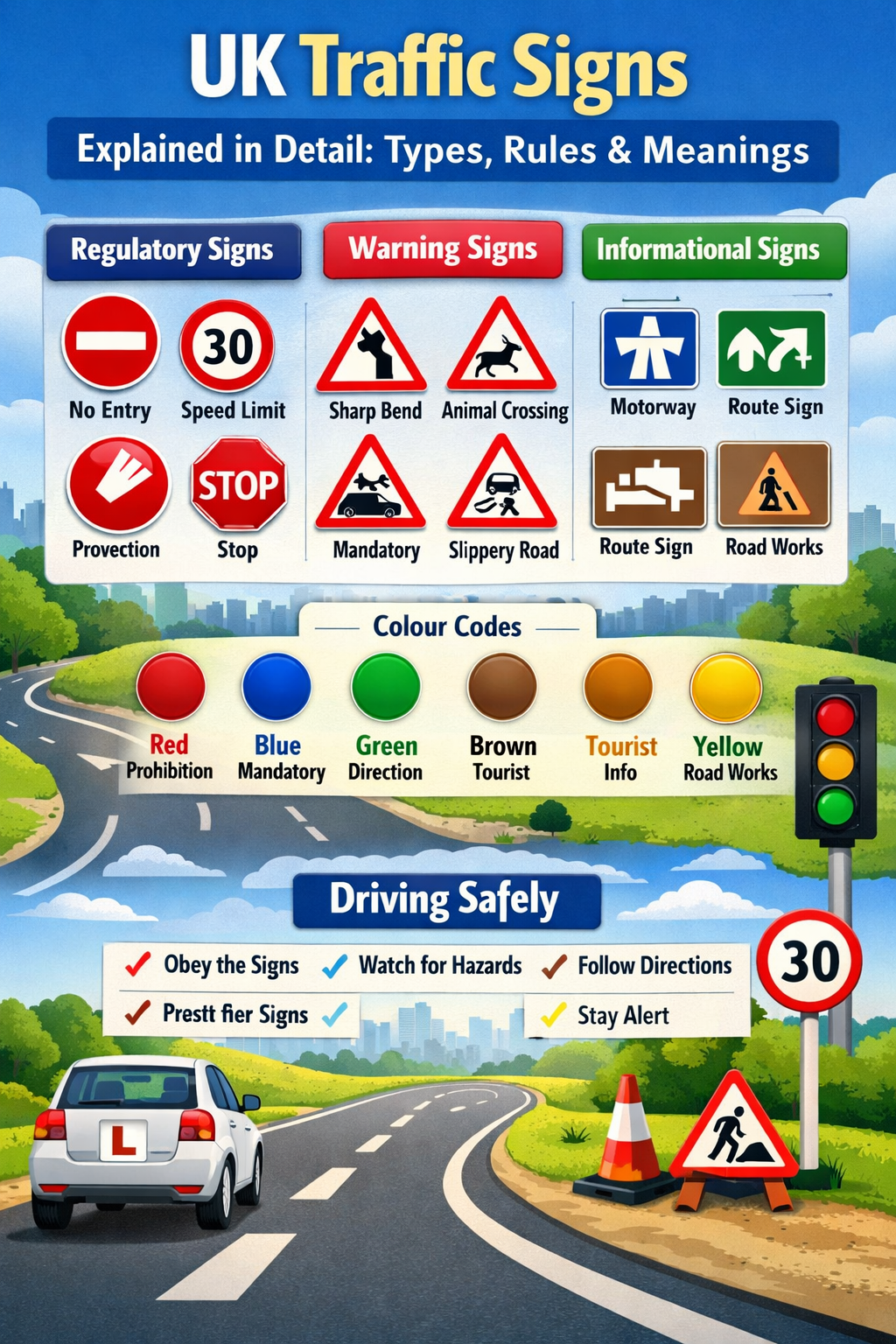
Learning How to read-road signs and their purpose in keeping yourself (the driver) safe, as well as other drivers on-the-road is one of the basics of being a safe and responsible motorist. If you have just received your driver’s license or have been driving for many years understanding how to read UK road signs will assist with making faster decisions when driving; allowing for less chance of getting a ticket; and ensuring that you are following the rules/laws of the road. Road signs provide important messages about certain types of road users; enabling a better flow of traffic and decreased chances for an accident.
Table Of Content
What Are Traffic Signs and Why Are They Important?
Traffic signs are an internationally accepted and recognized form of communication between drivers regardless of the language spoken. They tell the driver how to operate a vehicle, where to go, or where to stop. In the UK there is a standard recognition system so drivers can readily recognize and respond to traffic signs as soon as they see them.
The importance of uk traffic signs comes from the fact that they:
- Increase the level of safety on the road
- Reduce the risk of confusion and accident
- Show drivers the way to travel in parts of the country with which they may not be familiar
- Support and regulate traffic laws
Failure to recognize or respond to traffic signage can result in a fine, points on your driving licence, or serious injury or fatality.
Main Types of UK Traffic Signs
There are three primary categories of road signs in the UK, each serving a specific purpose. Learning these categories makes it easier to understand it in real-world situations.
1. Regulatory Signs
Regulatory signs tell drivers what they must or must not do. These signs are legally enforceable and must be followed at all times.
Common examples include:
- Stop signs
- No entry signs
- Speed limits
- No parking zones
These signs are usually circular. Red circles indicate prohibitions, while blue circles often show mandatory instructions.
2. Warning Signs
Warning signs alert drivers to potential hazards ahead. They give you time to react and adjust your driving accordingly.
Examples include:
- Sharp bends
- Pedestrian crossings
- Slippery roads
- Animal crossings
Most warning signs are triangular with a red border. Recognizing these uk traffic signs early can significantly reduce the risk of accidents.
3. Informational Signs
Informational signs provide useful details about routes, services, and directions. They help drivers navigate efficiently.
Examples include:
- Direction signs
- Motorway signs
- Parking information
- Hospital or petrol station signs
These signs are typically rectangular and use different colours like blue, green, and brown depending on their purpose.
Colour Codes and Their Meanings
Colours play a crucial role in understanding uk traffic signs quickly. Each colour conveys a specific type of information:
- Red: Prohibition or danger
- Blue: Mandatory instructions
- Green: Primary route directions
- Brown: Tourist attractions
- Yellow: Temporary road works
By learning these colour codes, drivers can interpret signs even from a distance.
Rules for Following Traffic Signs
Road rules that maintain safety and are compliant should be followed by all drivers when interacting with traffic signs. These rules help to create predictability and consistency within the driving environment.
- Completely follow all regulatory signs at all times.
- Reduce speed when approaching warning signs.
- Follow the instructions from the informational signs.
- Be aware of temporary signs in situations where road works are taking place.
Consistent application of these rules when using uk traffic signs creates good driving habits and reduce the risks associated with driving on busy roads.
Common Mistakes Drivers Make
Signs can often be misinterpreted by experienced drivers. Common examples of misinterpretation include:
- Not paying attention to changes to the road speed limit
- Confusion with parking restrictions
- Missed temporary road signs
- Misunderstanding similar-looking symbols
To avoid these mistakes you should regularly review and be aware of UK traffic signs. By looking at UK traffic signs you will know what you should do in a given situation.
Tips to Learn Traffic Signs Quickly
When you’re getting ready for a driving exam or just want to improve your knowledge, here are good tips that could help:
- Prepare for symbols as a group instead of individual symbols
- Use visual aids, such as pictures or diagrams
- Do theory exams in advance on paper (or online)
- Look at how the UK traffic signs are displayed when driving, or even when out walking
Regular practice will help you to quickly recognize UK traffic signs, which is important when taking an exam and also when driving on the road.
Conclusion
In the UK, traffic signs are a vital component of the road system that helps keep the driver safe, informed of driving behaviors, and organized on the roads. Gaining an understanding of the types of signs, their meanings and rules will empower you to drive safely and confidently. In addition, by mastering your knowledge of UK traffic signs, you will not only be prepared to pass a test but also help protect yourself and everyone around you while driving.
Taking the opportunity to learn and use this information when driving will improve your awareness as a driver and ultimately create a safer environment for the entire UK Driving Community.







No Comment! Be the first one.