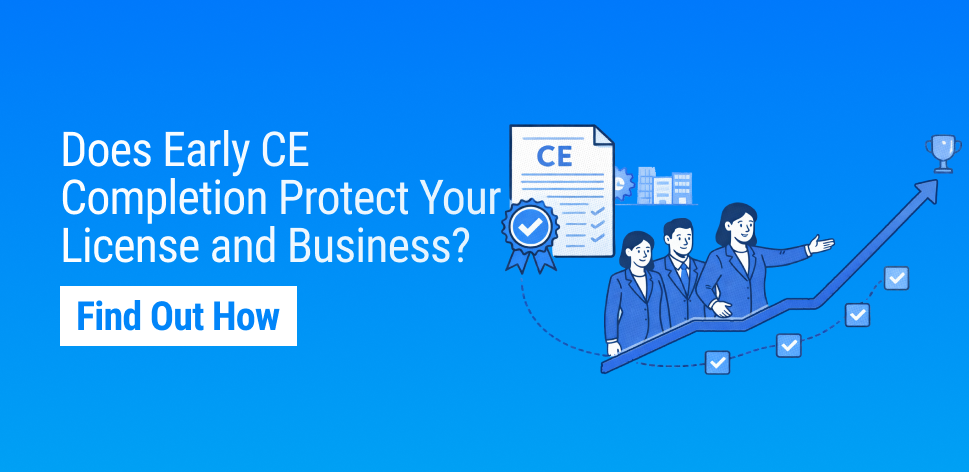
In modern insurance operations, maintaining compliance requires more than meeting deadlines—it requires proactive management of every regulatory requirement. Continuing Education (CE) is one of the most important components of producer licensing, yet its timing often determines whether organizations stay compliant or face disruptions.Across the United States insurance industry, agencies, carriers, and MGAs must comply with state-specific CE requirements. In regulated environments, delayed CE completion can create risks that affect licensing, carrier appointments, and overall business continuity.
Understanding CE in the Insurance Industry
Continuing Education is a mandatory requirement designed to ensure that licensed producers stay informed about industry regulations and policy changes. Each state establishes its own CE requirements, including credit hours and renewal cycles.Insurance compliance means meeting these requirements within the defined timeline. If CE credits are not completed before the renewal deadline, the producer’s license may become inactive.An inactive license prevents producers from conducting business. Insurance carriers must verify licensing before maintaining appointments, making CE completion essential for operational continuity.
Why Late CE Completion Creates Compliance Issues
Compliance teams often face challenges when CE is completed at the last moment. Delayed completion introduces several risks:
- Delays in license renewal approvals
- Temporary inactive licensing status
- Interruptions in carrier appointments
- Increased administrative workload
These issues create inefficiencies across insurance operations. In multi-state environments, managing multiple deadlines further increases the likelihood of compliance gaps.
The Link Between Licensing, Producer Codes, and Appointments
A producer code is a unique identifier assigned by a carrier to track a producer’s activities. This code is directly tied to licensing and appointment status.
When CE completion is delayed:
- License verification may fail
- Carrier appointments can become inactive
- Producer codes may be restricted
Insurance carriers rely on accurate licensing data to maintain active relationships. Any disruption in this process creates compliance risks across the organization.
Multi-State Compliance Challenges
Insurance organizations often operate across multiple states, each with different CE requirements and renewal timelines. Managing these variations manually increases the risk of errors.
Common challenges include:
- Tracking CE requirements across jurisdictions
- Monitoring license expiration dates
- Managing appointment updates
- Maintaining compliance records
Many insurance organizations use centralized systems to manage these tasks. Platforms like Agenzee help streamline license tracking, appointment tracking, and producer management.
Benefits of Completing CE Early
Completing CE requirements early is a widely recommended best practice in the insurance industry. It provides several advantages:
- Maintains continuous license validity
- Ensures uninterrupted carrier appointments
- Reduces last-minute compliance pressure
- Improves audit readiness
- Supports efficient multi-state operations
Early completion allows time to verify records and resolve discrepancies before deadlines.
For more details, refer to this early CE compliance guide:https://agenzee.com/why-early-ce-completion-protects-your-license-and-your-business/
How Automation Strengthens Compliance Management
Modern insurance systems require automation to manage compliance efficiently. A structured workflow typically includes:
- Verifying licensing status
- Tracking CE completion progress
- Monitoring renewal deadlines
- Syncing data with NIPR
- Managing carrier appointments
- Generating compliance reports
Automation reduces manual effort and improves accuracy. Many insurance organizations rely on compliance software to maintain real-time visibility.An insurance automation platform like Agenzee supports license tracking, appointment tracking, and producer code management within a centralized system.
Conclusion
In regulated insurance environments, compliance depends on both timing and accuracy. Early CE completion plays a crucial role in maintaining active licenses, preserving carrier appointments, and reducing operational risk.Insurance agencies, carriers, and MGAs must adopt proactive strategies to manage compliance effectively. By completing CE early and using automation tools, organizations can ensure consistent compliance and operational stability.Stay compliant with a smarter system. Discover how Agenzee helps streamline licensing, CE tracking, and appointment management:https://agenzee.com/


Leave a Comment