


Complete vs 4 Types of Incomplete Spinal Cord Injuries: Key Differences You Should Know
When a person sustains a spinal cord injury, determining whether it is classified as complete or incomplete is crucial, as it directly influences prognosis, rehabilitation potential, and long-term...

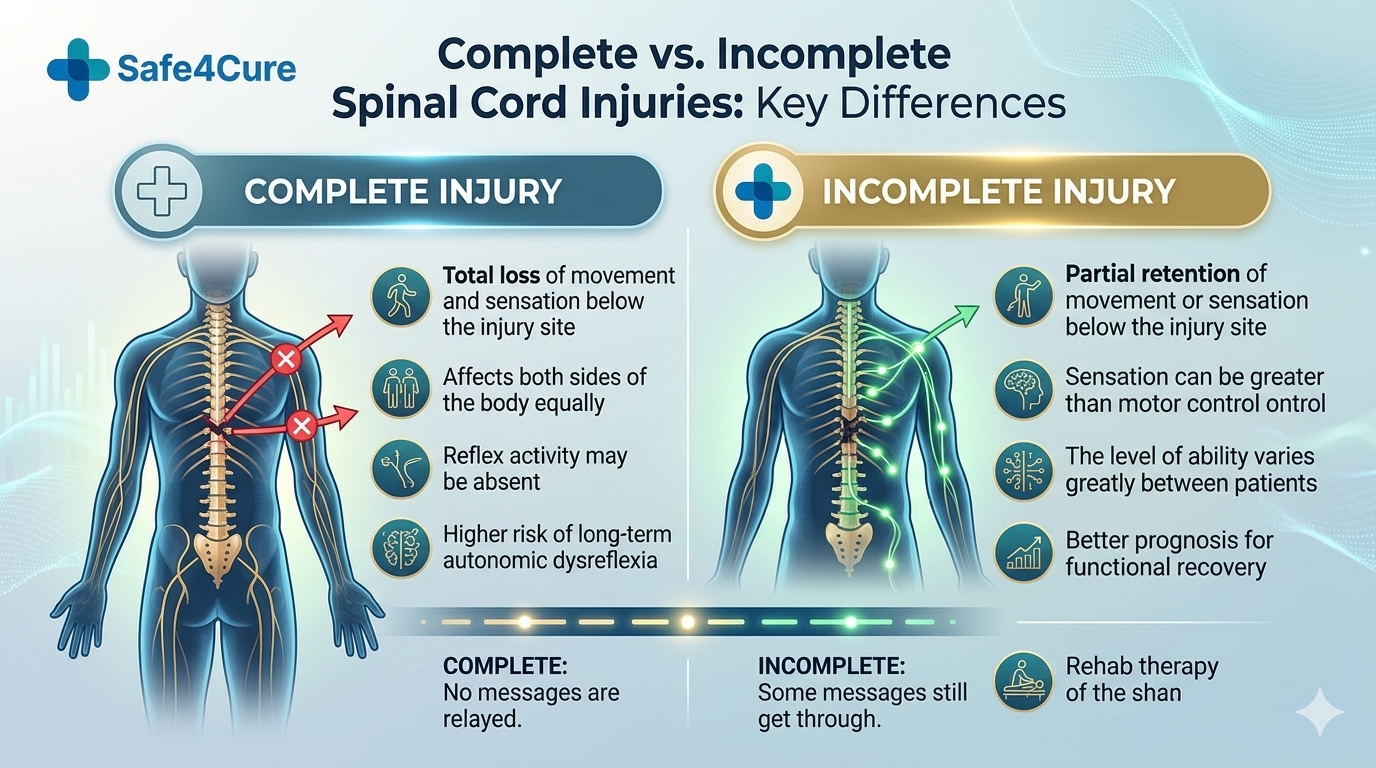
When a person sustains a spinal cord injury, determining whether it is classified as complete or incomplete is crucial, as it directly influences prognosis, rehabilitation potential, and long-term quality of life. A complete spinal cord injury results in a total loss of motor and sensory function below the level of injury, whereas an incomplete injury allows for some preserved function. Treatment plans vary accordingly and often include physical therapy, assistive devices, and medications. Baclofen 25 mg tablets are commonly prescribed to manage muscle spasticity associated with multiple sclerosis, spinal cord injuries, and cerebral palsy, helping improve mobility and comfort in affected individuals.
Table Of Content
- Understanding Spinal Cord Injuries in America
- What is a Complete Spinal Cord Injury?
- Understanding Incomplete Spinal Cord Injuries
- Types of Incomplete Spinal Cord Injury Explained
- Incomplete Spinal Cord Injury Recovery Time: What to Expect
- The Role of Medications in Spinal Cord Injury Management
- Baclofen: The Standard Treatment
- Living with Complete vs Incomplete Spinal Cord Injury
- Rehabilitation and Long-Term Management
- Conclusion
- Frequently Asked Questions (FAQs)
Understanding Spinal Cord Injuries in America
Spinal cord injuries affect approximately 290,000 people living in the United States, with about 17,500 new cases occurring annually. These injuries result from trauma, disease, or degenerative conditions that damage the nerve fibres responsible for transmitting signals between the brain and the rest of the body.
The key to understanding your injury and prognosis lies in determining whether you have a complete or incomplete spinal cord injury, a distinction that makes all the difference in recovery potential and rehabilitation planning.
What is a Complete Spinal Cord Injury?
A complete spinal cord injury means that the nerve pathways have been fully severed or completely damaged at the injury site. In cases of complete spinal cord injury recovery, patients experience total loss of sensory and motor function below the injury level. This means no voluntary movement and no sensation in the areas served by nerves below the damage.
Common characteristics of complete spinal cord injury include:
- Total paralysis below the injury site
- Loss of all sensation and feeling
- Loss of bladder and bowel control
- Sexual dysfunction
- Inability to experience pain or temperature changes below the injury
The prognosis for complete spinal cord injury recovery has improved dramatically with modern rehabilitation techniques, though recovery of lost function remains extremely challenging. Most neurological recovery following a complete spinal cord injury occurs within the first 3 to 6 months after the initial trauma.
Understanding Incomplete Spinal Cord Injuries
An incomplete spinal cord injury indicates that some nerve pathways remain intact and functional across the injury site. This means some signals can still travel between the brain and the body, preserving some sensory sensation or motor function below the injury level. This critical difference makes incomplete spinal cord injuries significantly more promising for recovery.
Key features of incomplete spinal cord injuries are explained:
- Partial paralysis with some remaining motor function
- Preserved sensation in some areas
- Variable recovery patterns depending on which nerve fibres remain intact
- Greater potential for functional recovery through rehabilitation
- Preserved sensation or movement on one side of the body or in specific areas
The distinction between types of incomplete spinal cord injury depends on which nerve pathways survive and their location. This variation is why two patients with “incomplete” injuries can have vastly different symptoms and recovery trajectories.
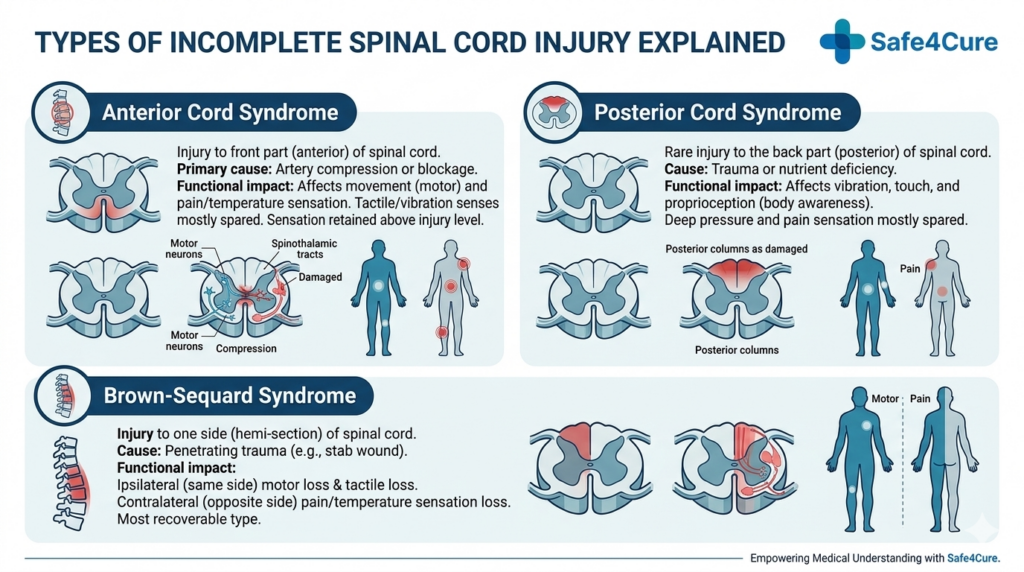
Types of Incomplete Spinal Cord Injury Explained
Medical professionals classify incomplete spinal cord injuries into several syndromes based on the pattern of damage:
Anterior Cord Syndrome: Damage to the front portion of the spinal cord, preserving some sensation in the back. Patients typically retain proprioception (sense of body position) but lose motor function and pain sensation.
Posterior Cord Syndrome: Affects the back of the spinal cord while preserving pain and temperature sensation. This rare syndrome allows patients to maintain some motor control.
Brown-Sequard Syndrome: Involves damage to one side of the spinal cord, resulting in paralysis on one side and loss of temperature sensation on the opposite side. This type often has excellent recovery potential.
Central Cord Syndrome: Damage concentrated in the centre of the spinal cord, typically causing more severe upper extremity weakness than lower extremity weakness. This syndrome frequently occurs in older adults with cervical spine injuries.
Incomplete Spinal Cord Injury Recovery Time: What to Expect
How long does a spinal cord injury take to heal? This question concerns every patient and family member. Recovery timelines vary considerably based on injury severity and type.
General recovery expectations include:
Most significant neurological recovery occurs within the first 3 to 6 months following injury. However, incomplete spinal cord injury recovery time can extend much longer. Many patients experience gradual improvements over 18 to 24 months through consistent rehabilitation, and some continue showing modest gains for years.
Factors affecting recovery speed:
- Age at injury
- Completeness of the injury
- Specific spinal cord segment affected
- Overall health and fitness before injury
- Quality and intensity of rehabilitation therapy
- Presence of other injuries
Can you recover from a spinal cord injury? The answer depends largely on whether the injury is complete or incomplete. While complete spinal cord injury recovery remains extremely limited by current medical technology, incomplete spinal cord injury offers genuine hope for meaningful functional restoration.
The Role of Medications in Spinal Cord Injury Management
Managing symptoms of incomplete spinal cord injury, partial movement and spasticity plays a crucial role in rehabilitation success. In the United States, healthcare providers frequently prescribe muscle relaxants to manage these conditions.
Baclofen: The Standard Treatment
Baclofen is a muscle relaxant commonly prescribed for patients with spinal cord injuries. Understanding the baclofen class name and the baclofen brand name helps patients communicate effectively with healthcare providers.
Baclofen Overview:
- Baclofen brand name: Lioresal is the most common brand name available in the United States
- Baclofen class name: Baclofen is a muscle relaxant and gamma-aminobutyric acid (GABA) agonist
- Baclofen CNS action: Works on the central nervous system (CNS) by enhancing the inhibitory neurotransmitter GABA, reducing nerve signal transmission that causes muscle spasticity
Available Dosages: In the United States, healthcare providers frequently prescribe baclofen to manage spasticity associated with neurological conditions. Treatment typically begins with a baclofen 10 mg tablet as a starter dose, allowing clinicians to gradually adjust the dosage based on patient response and tolerability. Baclofen pill 10 mg treats MS, spinal cord injuries, and cerebral palsy by reducing abnormal muscle stiffness and involuntary spasms. As therapy progresses, the dosage may be increased, with most patients requiring a total daily dose between 40 mg and 80 mg, divided into three administrations to maintain consistent symptom control and improve overall mobility.
Important Considerations:
- Is baclofen a controlled substance? No, baclofen is not classified as a controlled substance in the United States, though intrathecal baclofen (injected directly into the spinal fluid) requires careful monitoring
- Common side effects include drowsiness, dizziness, and weakness
- Requires gradual dose escalation and should never be stopped suddenly
- Works best when combined with physical and occupational therapy
Living with Complete vs Incomplete Spinal Cord Injury
The difference between complete and incomplete spinal cord injury extends beyond medical classification—it profoundly affects daily life, independence, and psychological adjustment.
Living with an incomplete spinal cord injury often provides more functional independence and greater rehabilitation potential. Many patients regain significant mobility and continue employment or modified activities. However, symptoms of incomplete spinal cord injury, such as partial movement, can be unpredictable, and progress plateaus may challenge motivation during recovery.
Living with a complete spinal cord injury requires comprehensive adaptive equipment and personal care assistance. Despite the severity, many individuals with complete injuries adapt successfully, pursue higher education, return to work in modified capacities, and maintain fulfilling relationships.
Rehabilitation and Long-Term Management
Whether your injury is complete or incomplete, comprehensive rehabilitation is essential. Physical therapy, occupational therapy, and psychological counselling address both physical and emotional recovery aspects. Vocational rehabilitation helps patients transition back to employment or explore new career options compatible with their abilities.
Conclusion
The difference between complete and incomplete spinal cord injury fundamentally shapes recovery potential and quality of life. While complete spinal cord injury recovery remains limited, incomplete spinal cord injuries offer genuine hope for functional restoration. With advances in rehabilitation technology, appropriate medications like baclofen for symptom management, and comprehensive therapeutic approaches, patients across the United States are achieving remarkable functional gains.
If you or a loved one faces spinal cord injury, remember that recovery is possible. Modern medicine, dedicated rehabilitation specialists, and continuous innovation provide unprecedented opportunities for meaningful recovery and adaptation. Consult with your healthcare team about your specific injury type, recovery timeline, and appropriate treatment options including medication management strategies.
Frequently Asked Questions (FAQs)
Q: What is the difference between complete and incomplete spinal cord injury regarding recovery?
A: Complete injuries offer minimal recovery potential as the nerve pathways are severed. Incomplete injuries, where some pathways remain intact, show significantly better recovery prospects through rehabilitation.
Q: Can baclofen help with all types of spinal cord injuries?
A: Baclofen helps manage spasticity (muscle stiffness) associated with spinal cord injuries. While effective for symptom management, it doesn’t treat the underlying injury or restore lost function.
Q: How long does recovery from an incomplete spinal cord injury typically take?
A: Major recovery occurs within 3-6 months, but meaningful improvements can continue for 18-24 months or longer with consistent therapy.
Q: Are there alternatives to baclofen for spasticity management?
A: Yes, alternatives include physical therapy, botulinum toxin injections, and other medications. Your healthcare provider can discuss which options suit your specific needs.
Q: What should I know about baclofen dosing?
A: Baclofen pills typically start at 10 mg doses, gradually increasing to maintenance levels. Baclofen 25mg tablets represent common mid-range dosing for many patients requiring spasticity management.






No Comment! Be the first one.