


Understanding IP Ratings and Enclosures in Dry Type Transformers
The modern industries are increasingly adopting dry-type transformers due to their safety, reliability, and low maintenance. Air or gas cooling is a feature of dry type transformers that sets them...

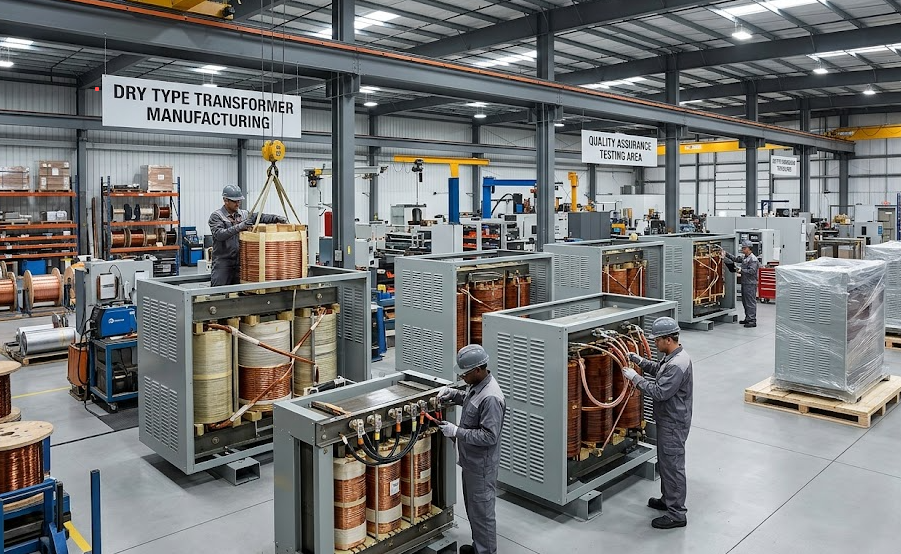
The modern industries are increasingly adopting dry-type transformers due to their safety, reliability, and low maintenance. Air or gas cooling is a feature of dry type transformers that sets them apart from oil-filled ones, thus making them suitable for commercial buildings, manufacturing units, and renewable energy systems. On the contrary, the performance and longevity of these devices are greatly influenced by the level of protection of their enclosures. IP ratings (Ingress Protection ratings) are the key factors here. They indicate the degree to which a transformer is protected against dust, moisture, and other harsh environmental conditions. The top Dry Type Transformers Manufacturers create IP-rated enclosures to provide the highest level of efficiency, safety, and long-term operational reliability in a wide range of applications.
Table Of Content
- What is an IP Rating?
- Why IP Rating Matters in Dry Type Transformers
- Common IP Ratings Used in Dry Type Transformers
- Understanding Enclosures in Dry Type Transformers
- Transformer Enclosures Types
- IP Rating vs Enclosure Type – Key Differences
- Factors Influencing the Choice of IP Rating
- Maintenance & Performance Benefits of Proper IP Ratings
- Comparison: Dry Type Transformers with Different IP Ratings
- How Optimal IP Protection is Ensured
- Conclusion
- FAQs
What is an IP Rating?
IP (Ingress Protection), a rating determined by the International Electrotechnical Commission (IEC) 60529 standards, reveals how much an electrical device or closure can protect itself from the intrusion of solid objects and fluids. When it comes to dry type transformers, IP ratings play a significant role in evaluating the equipment’s exposure to dust, dirt, and moisture, which can cause performance and safety issues. The rating format is “IP” plus two digits that denote each specific level of protection:
- First Digit: Specifies the level of protection from solid particles like dust and debris.
- Second Digit: Shows the level of protection from liquids such as water and moisture.
For instance, an IP54 dry type transformer enclosure ensures limited ingress of dust and full protection against splashes from all sides.
The engineers and Dry Type Transformers Manufacturers will be able to choose the proper enclosure design, guaranteeing reliable performance in various industrial environments through the interpretation of these ratings.
Why IP Rating Matters in Dry Type Transformers
The IP rating is an important factor for dry type transformers in terms of longevity, safety, and efficiency. It shows how good the transformer enclosure is at resisting the ingress of dust, moisture,e and other harmful environmental pollutants that might affect its performance. For the Dry Type Transformers Manufacturers, it is vital to choose the proper IP rating to ensure that the defined working environment is the most favorable one. Low-IP-rated transformers can suffer from the following issues:
- Overheating: Poor design of the enclosure may trap heat inside and thus reduce the cooling efficiency.
- Short-Circuits: An electrical fault due to increased moisture ingress is highly likely.
- Reduced Efficiency: The quality of airflow and insulation is impacted negatively by the heap of dust and dirt.
- Insulation Damage: Hygiene and contamination over time will make the insulation lose its effectiveness.
IP-rated enclosures are necessary in chemical plants, marine areas, and clandestine facilities where the environmental conditions are tough. Proper protection ensures that dry type transformers are working safely, reliably, and require little maintenance in different types of industrial applications.
Common IP Ratings Used in Dry Type Transformers
In the design of dry transformers, different IP ratings are employed with the goal of matching specific environmental and operational needs. The ratings indicate the extent of the enclosure’s protection against dust, moisture, and physical contact. Awareness of these standards grants Dry Type Transformers Manufacturers the ability to come up with the most suitable solutions for various industries. Among the most frequently used IP ratings, we find the following:
- IP00: No protection is provided by this rating against dust or moisture; only basic indoor installations in clean, controlled environments are the places where it can be used.
- IP23: The rating limits protection against solid objects and water spray; it is used in ventilated enclosures where moderate airflow is required for cooling purposes.
- IP54 / IP55: These ratings offer superior protection against dust and water jets, thereby making it suitable for the location of industrial sites and outdoor applications that are vulnerable to harsh weather or contamination.
Understanding Enclosures in Dry Type Transformers
A transformer enclosure, also known as a protective casing, is responsible for providing the necessary protection to a dry-type transformer against environmental elements and mechanical damage. The coop design, along with the construction material, has a direct impact on the transformer’s performance, efficiency, and lifespan. Therefore, Dry Type Transformers Manufacturers pay special attention to selecting and designing enclosures that guarantee reliability and safety in various operational environments. The major roles that an enclosure for a transformer plays are as follows:
- Physical Protection: It prevents the transformer from external impacts and the intrusion of foreign objects.
- Prevention of Dust and Moisture: It significantly reduces the amount of contaminants entering the insulating material and affecting its performance.
- Cooling and Ventilation: It provides the necessary airflow for heat to be removed so that the temperature remains within operating limits.
Transformer Enclosures Types
- Open Type (IP00): Indoor, dust-proof surroundings and unlimited ventilation are the only areas where this type may be used.
- Protected / Ventilated Type (IP23): This type offers partial protection from dust and water, besides allowing airflow for cooling, which is the main benefit.
- Sealed / Non-Ventilated Type (IP54, IP55): The best dust and moisture protection is attained; thus, it is very suitable for outdoor or industrial uses.
IP Rating vs Enclosure Type – Key Differences
In a dry type transformer, the IP rating indicates the level of protection against both solid particles and water. While the enclosure type concerns the physical construction and design of the housing.
- The IP rating is in concord with the IEC 60529 standard. Which states the protection level via a pair of digits (e.g., IP23 or IP54).
- Enclosure type concerns ventilation, sealing, and material design (open, ventilated, or sealed).
- IP rating tells how good the protective capability of the enclosure is, while enclosure type indicates how this capability is attained.
- They together make sure that Dry Type Transformers Manufacturers give reliable and long-lasting solutions for a given environment.
Factors Influencing the Choice of IP Rating
- Installation Location: The IP rating depends on the installation place of the transformer — indoor and outdoor, along with the coastal, desert, or underground areas, each of which has a different protection level.
- Humidity and Dust Levels: High-dust or moisture-environments need IP ratings of IP54 or IP55 at least to avoid contaminating the unit.
Experts in Dry Type Transformers Manufacturers look into these points to suggest the right enclosure and IP rating for safe and reliable performance.
Maintenance & Performance Benefits of Proper IP Ratings
- Correct IP ratings in dry-type transformers ensure that no dust, debris, or moisture enters the enclosure, and thus maintenance is reduced.
- The safety and performance of the transformer are increased, as well as the reliability of the operation under harsh industrial conditions.
- The enclosures with proper IP rating reduce the chances of overheating, burning of insulation, and electrical breakdowns.
- The benefits are that the equipment lasts longer, less downtime is needed, and overall maintenance costs are lower.
- Increased durability, efficiency, and consistent performance are typical of the different environments where Dry Type Transformers Manufacturers are precise with their IP-rated designs.
Comparison: Dry Type Transformers with Different IP Ratings
- IP00 vs IP23: IP00 is appropriate for clean indoor spaces with controlled conditions, whereas IP23 provides partial protection against solid particles and light water spray, thus being ideal for areas that are moderately dusty or ventilated.
- IP23 vs IP54: IP23 has ventilation advantages but little moisture resistance; on the other hand, IP54 gives higher dust and water protection for semi-outdoor installations.
- IP55: Gives the best protection against dust and water jets and is therefore ideally suited for outdoor and industrial uses. They experience tough weather or high dust conditions.
How Optimal IP Protection is Ensured
To get the maximum IP protection in dry-type transformers, one has to be very precise in engineering and very strict in controlling the quality. The leading dry type transformer manufacturers not only follow international standards but also use the most advanced design practices to ensure that their products are reliable no matter the environment. The method that they adopted includes:
- Utilizing top-notch materials for the enclosure that can resist corrosion and impact.
- Carrying out dust and moisture protection verification by IP testing that is rigorous.
- Making custom enclosure designs that fit different sectors of industrial applications.
- Keeping adherence to IEC 60529 and other safety regulations.
- Improving cooling and ventilation systems for both Air Natural and Air Forced models.
Conclusion
The selection of the most appropriate IP rating for dry type transformer manufacturers is essential in terms of performance, safety, and lifespan. The union of suitable enclosure design, top-notch material, and IP compliance assures the manufacturers to produce transformers that bear the different environmental conditions, thus, providing reliable operation, little maintenance, and top-notch protection in all industrial applications.
FAQs
What IP rating would be appropriate for indoor dry type transformers?
Generally, IP00 or IP23 is adequate for clean, controlled environments.
Are IP ratings modifiable?
Yes, top Dry Type Transformers Manufacturers like FerroMag India provide bespoke enclosures in accordance with site requirements.
Does the protection level impact the cooling performance negatively?
Yes, the higher protection may lead to reduced airflow; good cooling system design is very important.
Do IP-rated transformers cost more?
A bit, but they also provide greater safety, require less maintenance, and have a longer life—thus they are cost-effective over time.







No Comment! Be the first one.