




Integration Testing: The Key to Reliable Connected Systems
Modern software rarely works alone. Most applications depend on APIs, databases, payment gateways, CRMs, analytics tools, and third-party platforms to deliver a complete experience. When these...

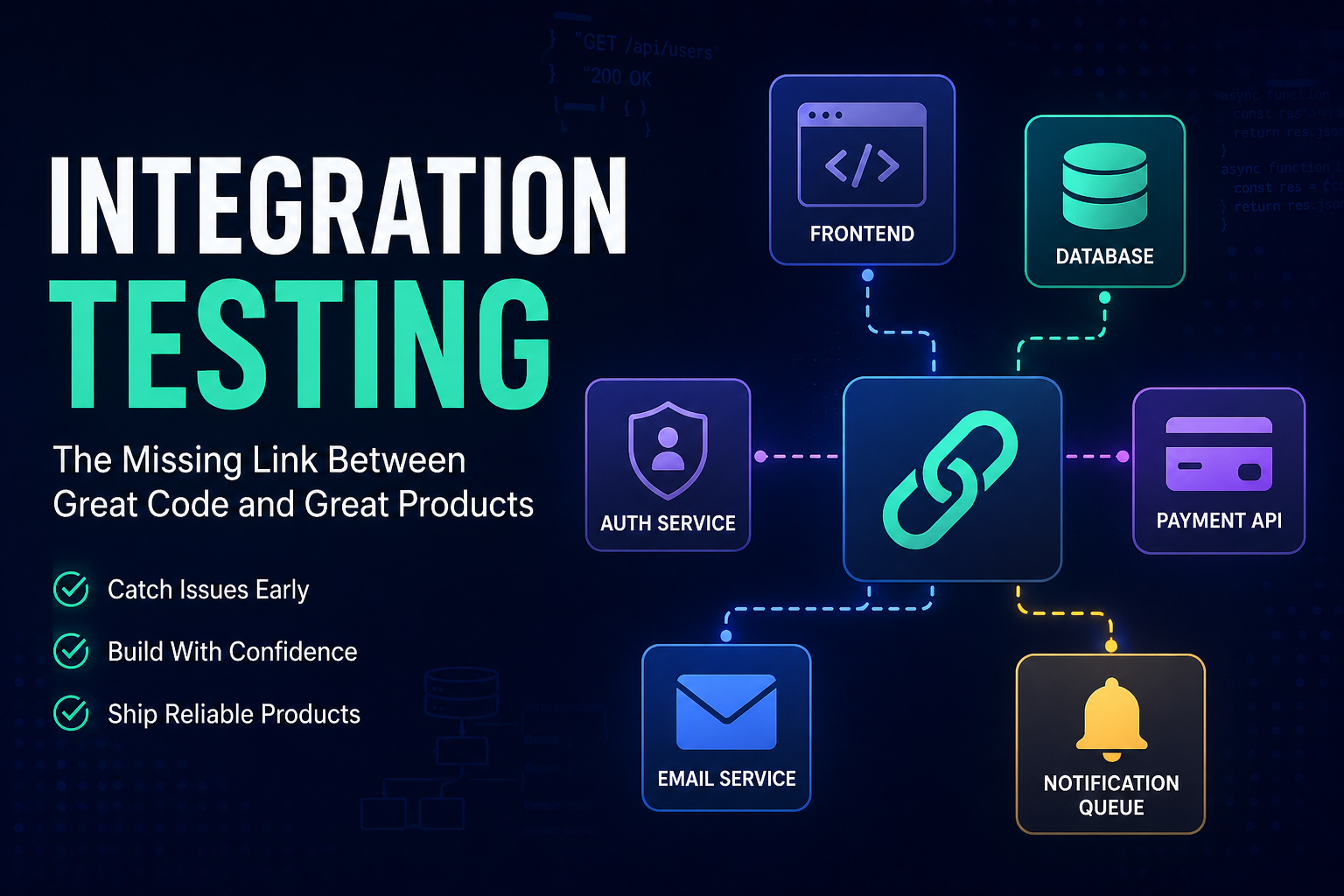
Modern software rarely works alone. Most applications depend on APIs, databases, payment gateways, CRMs, analytics tools, and third-party platforms to deliver a complete experience. When these systems fail to communicate properly, users face broken workflows, missing data, and frustrating errors. That is why integration testing has become one of the most important parts of modern software quality assurance.
Integration testing is the process of validating how different modules, services, or external systems work together. While unit testing checks individual components in isolation, integration testing focuses on the connections between them. It ensures that data moves correctly, APIs respond as expected, and workflows continue smoothly across multiple services.
For example, in an ecommerce platform, a customer order may involve the frontend application, payment processor, inventory database, shipping system, and email notification service. Even if each part works independently, failures in communication between them can break the full user journey. Integration testing helps detect these issues before customers do.
One of the biggest benefits of integration testing is early defect detection. Problems such as authentication failures, incorrect field mapping, timeout errors, duplicate records, and data sync issues often appear only when systems interact. Catching them during development reduces production incidents and support costs.
There are several common approaches to integration testing. Incremental testing validates modules step by step as they are combined. Big bang testing connects everything at once and tests the complete flow. API integration testing focuses specifically on service communication, request handling, and responses. In cloud-native applications, microservice integration testing is especially valuable because many services depend on each other.
To make integration testing successful, teams should use production-like environments, realistic test data, automated test execution, and clear monitoring. Testing only happy paths is not enough. Teams should also validate failures, retries, rate limits, partial outages, and edge cases.
Automation tools make this process faster and more reliable. Modern platforms like Keploy help teams automate API and integration testing by capturing real traffic and generating reusable test cases. This reduces manual effort while increasing confidence in every release.
As software ecosystems continue to grow, integration failures become more expensive and visible. Users expect seamless digital experiences, regardless of how many systems work behind the scenes. Businesses that prioritize integration testing release faster, reduce downtime, and build stronger trust with customers.
In today’s connected world, software quality is no longer just about features working individually—it is about everything working together. That is the real value of integration testing.
Try Keploy.io