



What Happens During Ketamine Infusion Therapy? A Step-by-Step Guide
Ketamine Infusion Therapy has become one of the most discussed treatment options for people with depression that has not improved enough with standard care. For many patients, the interest comes from...

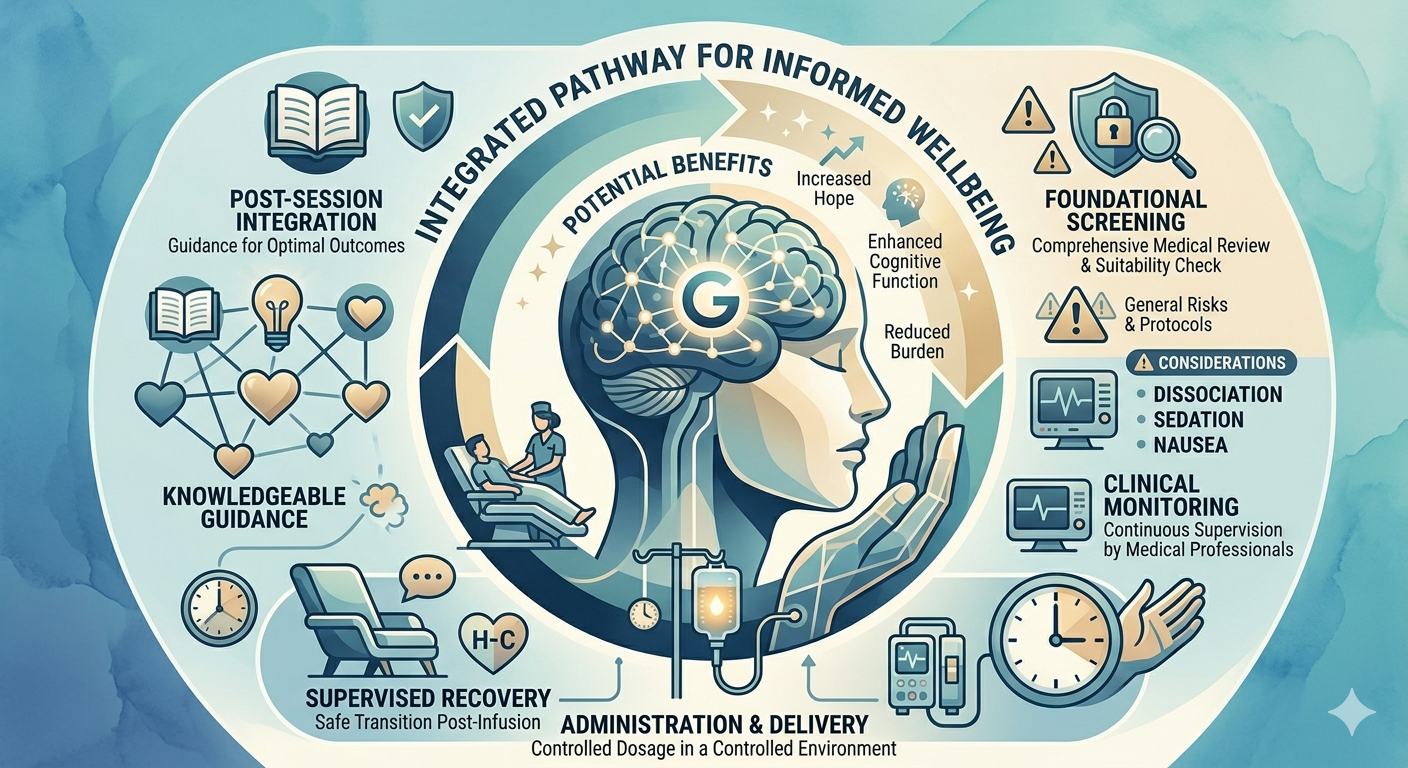
Ketamine Infusion Therapy has become one of the most discussed treatment options for people with depression that has not improved enough with standard care. For many patients, the interest comes from one painful reality: traditional antidepressants can take weeks or months to show results, and some people still do not get meaningful relief after several treatment attempts.
Table Of Content
- The Clinic Starts With a Full Evaluation
- The Care Team Explains the Treatment Plan
- The Patient Prepares Before the Infusion
- The Clinic Checks Vitals Before Treatment
- The IV Is Placed and the Infusion Begins
- The Patient Experiences Temporary Mental and Physical Effects
- The Care Team Monitors the Patient During the Infusion
- The Infusion Ends, But the Appointment Is Not Over
- The Patient Goes Home With Support
- Follow-Up Care Turns the Session Into a Plan
- What Patients May Feel During Ketamine Infusion Therapy
- What Makes a Ketamine Infusion Program Safer?
- How Long Does the Treatment Series Usually Last?
- Final Thoughts
Ketamine has drawn attention because it works through a different brain pathway and may reduce depressive symptoms faster in some people with severe or treatment-resistant depression. The National Institute of Mental Health describes ketamine as a rapid-acting treatment discovery for severe depression, noting that it can reduce symptoms within hours for some people whose symptoms did not improve with other treatments.
Still, patients need clear expectations. Ketamine itself is FDA-approved as an anesthetic, but the FDA states that ketamine is not approved for the treatment of any psychiatric disorder. That means Ketamine Infusion Therapy for depression is generally used off label and should only happen with careful screening, clinical monitoring, and follow-up care.
The Clinic Starts With a Full Evaluation
Ketamine Infusion Therapy should not begin with the IV chair. It should begin with a proper evaluation. A qualified mental health provider reviews the patient’s depression history, previous antidepressant use, therapy history, current medications, medical conditions, blood pressure, heart health, substance use history, and overall safety risk.
This step protects the patient. Ketamine can affect perception, blood pressure, heart rate, breathing, alertness, and coordination. The FDA has warned that ketamine products used without onsite monitoring can create serious risks, including sedation, dissociation, changes in vital signs, respiratory depression, abuse, misuse, psychiatric events, and urinary or bladder symptoms.
A serious clinic uses this evaluation to decide whether ketamine fits the patient’s condition. If the patient has uncontrolled blood pressure, certain heart risks, active substance misuse, unstable psychiatric symptoms, or other safety concerns, the provider may recommend another treatment path.
The Care Team Explains the Treatment Plan
After screening, the care team explains how the infusion process works. This includes the expected number of sessions, session length, possible side effects, monitoring process, transportation rules and follow-up care.
A strong clinic also explains the off-label nature of IV ketamine for depression. Patients should understand that ketamine infusion and Spravato are not the same treatment. Spravato is esketamine nasal spray, a ketamine-related medication that has FDA approval for treatment-resistant depression, while IV ketamine for depression is generally used off label. The National Institute on Drug Abuse notes that esketamine is FDA-approved for treatment-resistant depression.
This explanation matters because patients often hear “ketamine” and assume every treatment has the same approval status, dosing method and safety rules. The details matter.
The Patient Prepares Before the Infusion
Before the session, the clinic usually gives preparation instructions. These may include guidance about food, water, medications, transportation, and what to avoid before treatment. The exact instructions can vary by clinic and patient condition, so patients should follow the care team’s directions closely.
The most important preparation point is transportation. Patients should not drive themselves home after ketamine treatment because the medication can affect alertness, coordination, judgment, and perception. The session should be treated like a real medical appointment, not a quick stop between errands.
Patients should also arrive with realistic expectations. Some people feel symptom improvement quickly. Others need several sessions before patterns become clear. Some do not respond enough to continue. The treatment should be measured through real changes in mood, sleep, function, safety, and daily stability.
The Clinic Checks Vitals Before Treatment
When the patient arrives, the care team usually checks vital signs before starting the infusion. This may include blood pressure, pulse, oxygen level, and general readiness for treatment.
This step is not routine box-checking. Ketamine can cause temporary changes in blood pressure and heart rate, and some patients may need closer monitoring because of cardiovascular history or medication use. Clinical discussions of IV ketamine for depression have identified common side effects such as anxiety, blurred vision, dizziness, headache, nausea, and vomiting.
The goal is simple: start treatment only when the patient is stable enough to proceed.
The IV Is Placed and the Infusion Begins
During Ketamine Infusion Therapy, ketamine is delivered through an IV at a controlled dose. The patient usually sits or reclines in a calm treatment room while the medication enters the bloodstream gradually.
The care team remains nearby and monitors the patient throughout the session. Some clinics may use music, dim lighting, an eye mask, or a quiet environment to reduce stress. The exact setup depends on the provider’s protocol.
Patients may begin to feel the effects during the infusion. Some describe the experience as dreamlike, distant, calm, reflective, or emotionally open. Others may feel detached from their body, disconnected from their surroundings, dizzy, anxious, nauseated, or tired.
The Patient Experiences Temporary Mental and Physical Effects
Ketamine can create a temporary shift in perception. Some patients feel a sense of distance from their usual thoughts. Others feel floating sensations, emotional release, or changes in body awareness. These effects are part of why the treatment must happen in a supervised setting.
Dissociation is one of the better-known effects. It may feel like separation from the body, surroundings, thoughts, or emotions. For some patients, this feels peaceful. For others, it feels uncomfortable. A trained care team can help the patient stay calm and safe during the experience.
The key point is that the session experience is not the goal by itself. The goal is symptom improvement after treatment. A responsible provider tracks whether the patient’s depression, function, sleep and safety actually improve over time.
The Care Team Monitors the Patient During the Infusion
Monitoring continues throughout the infusion. The care team may check blood pressure, pulse, oxygen level, comfort level, sedation level, and emotional state. If the patient becomes distressed or shows concerning changes in vital signs, the team can respond.
This is where supervised care earns its value. The FDA has specifically warned that home use of compounded ketamine products creates added risk because onsite monitoring by a healthcare provider is not available.
Ketamine should not feel like a casual wellness shortcut. The safest model uses screening, controlled dosing, clinical observation, and clear aftercare.
The Infusion Ends, But the Appointment Is Not Over
When the infusion ends, the medication’s effects do not disappear immediately. The patient may still feel tired, foggy, lightheaded, emotional or mentally distant for a period of time. The care team usually continues monitoring until the patient is stable enough to leave.
This recovery window matters. Patients should not rush out of the clinic, return to work, make major decisions, drink alcohol, drive, or operate equipment right after treatment. The body and mind need time to settle.
A good clinic gives clear discharge instructions. Patients should know what is normal after treatment, what symptoms need attention and when to contact the provider.
The Patient Goes Home With Support
After the session, the patient should leave with a trusted driver or arranged transportation. The rest of the day should stay low-pressure. Many patients benefit from rest, hydration, light food, journaling and avoiding stressful obligations.
Some people feel calm or lighter after treatment. Others feel tired or emotionally sensitive. Some notice mood changes quickly, while others need multiple sessions before they can judge whether the treatment is helping.
This is why symptom tracking matters. Patients should note changes in mood, sleep, anxiety, motivation, appetite, daily function, and side effects. These details help the care team decide whether to continue, adjust or stop treatment.
Follow-Up Care Turns the Session Into a Plan
Ketamine Infusion Therapy works best when it sits inside a broader depression treatment plan. Depression affects habits, relationships, work, sleep, stress response, and emotional regulation. One infusion cannot rebuild all of that alone.
Follow-up care may include therapy, medication review, symptom tracking, sleep support, lifestyle planning, and regular clinical check-ins. The American Psychiatric Association consensus statement on ketamine for mood disorders emphasized the importance of careful patient selection, safety review, and monitoring because psychiatric use of ketamine has expanded without FDA approval for those indications.
Strong follow-up helps patients use any improvement instead of losing momentum. Ketamine may open a window. Ongoing care helps turn that window into progress.
What Patients May Feel During Ketamine Infusion Therapy
Patients do not all experience ketamine the same way. The session can feel mild for one person and intense for another. Common experiences may include:
- A dreamlike state
The patient may feel mentally distant, reflective, or less connected to ordinary thoughts. - Dissociation
The patient may feel separated from their body, surroundings, or emotions. - Emotional release
Some patients feel sadness, relief, calm, or unexpected emotional movement. - Physical lightness or heaviness
The body may feel relaxed, floating, heavy, or slightly uncoordinated. - Dizziness or nausea
Some patients feel lightheaded or queasy during or after treatment. - Tiredness after the session
Fatigue is common, which is why rest after treatment matters. - Temporary confusion or fogginess
Some patients need time before they feel fully alert again.
These effects are one reason clinical supervision matters. The experience may be meaningful, but safety must stay at the center.
What Makes a Ketamine Infusion Program Safer?
A strong ketamine infusion program does not rely on hype. It relies on structure. Patients should expect a treatment process that includes:
- A detailed intake before approval
The provider reviews depression history, medications, physical health, psychiatric risk, and safety concerns. - Clear explanation of off-label use
The clinic explains that IV ketamine for depression is generally used off label. - Vital sign monitoring
Blood pressure, pulse, oxygen level, and overall stability should be checked. - Controlled dosing
The dose should follow a clinical protocol and patient-specific safety review. - Supervised recovery time
Patients should not leave until the care team believes they are stable. - Safe transportation planning
The patient should not drive after treatment. - Outcome tracking
The provider should measure mood, function, safety, and symptom changes over time. - Follow-up support
Therapy, check-ins, and care plan adjustments help support longer-term recovery.
This structure separates responsible treatment from risky marketing. In mental health care, guardrails are not optional. They are the whole point.
How Long Does the Treatment Series Usually Last?
Treatment schedules can vary by clinic, patient response and provider judgment. Some patients receive a series of infusions over several weeks, followed by reassessment. Others may need a different plan based on response, side effects, cost, and clinical need.
Patients should not assume that more sessions automatically mean better results. A serious provider should evaluate whether treatment is helping and whether the benefit justifies continuing. If symptoms do not improve enough, the care team should discuss other options.
Ketamine treatment should be guided by outcomes, not by a sales package.
Final Thoughts
Ketamine Infusion Therapy is a structured clinical treatment process, not a casual appointment. It starts with screening, moves through monitored IV dosing, continues with recovery observation and depends on follow-up care after the session ends.
For some people with treatment-resistant depression, ketamine may offer faster symptom relief and a new clinical path when standard options have not worked well enough. But the treatment also carries real risks, and ketamine is not FDA-approved for psychiatric disorders.
The safest approach is clear: choose careful screening, supervised treatment, honest expectations and ongoing mental health support. Ketamine may help create movement, but strong clinical care helps turn that movement into real recovery.






No Comment! Be the first one.