


Understanding GE’s Power Supply Bus Monitoring Board in Control Systems
Introduction In modern turbine control systems, maintaining a stable and reliable power supply is essential for safe and efficient operation. Even minor power fluctuations can disrupt control logic,...

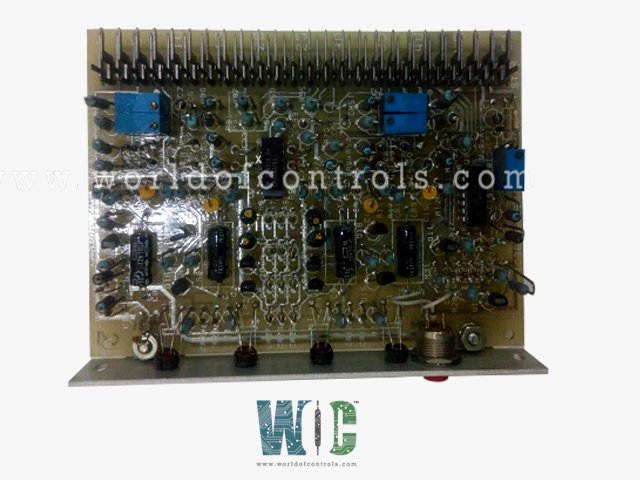
Introduction
In modern turbine control systems, maintaining a stable and reliable power supply is essential for safe and efficient operation. Even minor power fluctuations can disrupt control logic, leading to performance issues or unexpected shutdowns. To address this, General Electric (GE) integrates power supply bus monitoring boards into its control architectures. These boards play a critical role in supervising electrical health and ensuring uninterrupted system performance in turbine applications.
Table Of Content
- Introduction
- What Is a Power Supply Bus Monitoring Board?
- Role in GE Turbine Control Systems
- Board Functionality in Turbine Applications
- Key Functions and Features
- 1. Voltage Supervision
- 2. Fault Detection
- 3. Signal Communication
- 4. System Protection
- Importance in the Turbine Industry
- Maintenance and Operational Considerations
- Conclusion
What Is a Power Supply Bus Monitoring Board?
A power supply bus monitoring board is an electronic module designed to oversee the condition of power distribution within a control system. In turbine environments, multiple subsystems—such as sensors, controllers, and actuators—depend on consistent voltage levels.
The monitoring board continuously tracks:
- Voltage levels across the power bus
- Stability and continuity of supply
- Sudden drops, spikes, or irregularities
When abnormalities occur, the board generates alerts or initiates protective responses, helping prevent equipment damage and operational interruptions.
Role in GE Turbine Control Systems
In GE turbine control systems, particularly legacy platforms like the Speedtronic series, power supply monitoring boards are essential for maintaining operational reliability. These systems are widely used in gas and steam turbines for power generation, where precision and safety are paramount.
Within this environment, the monitoring board ensures that:
- Control circuits receive stable and regulated power
- Electrical faults are quickly detected and isolated
- Backup systems can be activated when needed
By acting as a safeguard, it enhances both system resilience and safety.
Board Functionality in Turbine Applications
GE’s bus monitoring boards are specifically designed to operate in demanding industrial conditions. In turbine control panels, they monitor multiple power supply lines simultaneously and provide real-time feedback to the control system.
These boards are engineered to:
- Detect undervoltage and overvoltage conditions
- Monitor multiple input channels
- Interface with control logic for rapid response
- Support redundancy strategies in critical systems
Their rugged design ensures reliable operation even in high-temperature and vibration-prone environments typical of turbine installations.
Key Functions and Features
1. Voltage Supervision
The board continuously checks voltage levels against predefined thresholds. If values fall outside acceptable ranges, it triggers alarms or corrective actions.
2. Fault Detection
It identifies issues such as power loss, fluctuations, or instability, enabling operators to take timely action.
3. Signal Communication
The board communicates system status to the main controller, ensuring real-time monitoring and decision-making.
4. System Protection
By detecting faults early, it prevents cascading failures that could impact turbine performance or safety.
Importance in the Turbine Industry
Reliability is a top priority in the turbine industry, where unplanned downtime can result in significant financial losses and safety concerns. Power supply bus monitoring boards play a vital role in ensuring continuous operation.
They contribute to:
- Reduced downtime through early fault detection
- Improved safety by preventing electrical failures
- Better maintenance planning with accurate diagnostics
- Longer equipment lifespan through stable operation
For facilities operating GE turbine systems, these boards remain a key component in maintaining overall system integrity.
Maintenance and Operational Considerations
To ensure optimal performance, regular maintenance of monitoring boards is essential. Best practices include:
- Periodic inspection for physical damage or wear
- Verification of voltage readings and calibration
- Prompt replacement of faulty components
- Ensuring compatibility when upgrading or sourcing parts
In older turbine systems, obtaining reliable replacement boards or refurbished units is often necessary to sustain performance.
Customers experiencing technical issues should contact the Sales Engineer via ‘Contact Us’. The WOC technical team will assess and classify the problem as Major or Minor, and provide necessary support.
Conclusion
Power supply bus monitoring boards are fundamental to the stability and safety of turbine control systems. In GE applications, they provide continuous oversight of electrical conditions, enabling quick fault detection and response. By understanding their function and importance, engineers and operators can ensure more efficient, reliable, and secure turbine operations.






No Comment! Be the first one.