


Banarasi Silk Dupatta: A Complete Guide to India’s Timeless Weave
A Banarasi silk dupatta is more than a fashion accessory. It is a reflection of India’s rich textile heritage, intricate craftsmanship, and centuries-old weaving traditions. Woven in the historic...

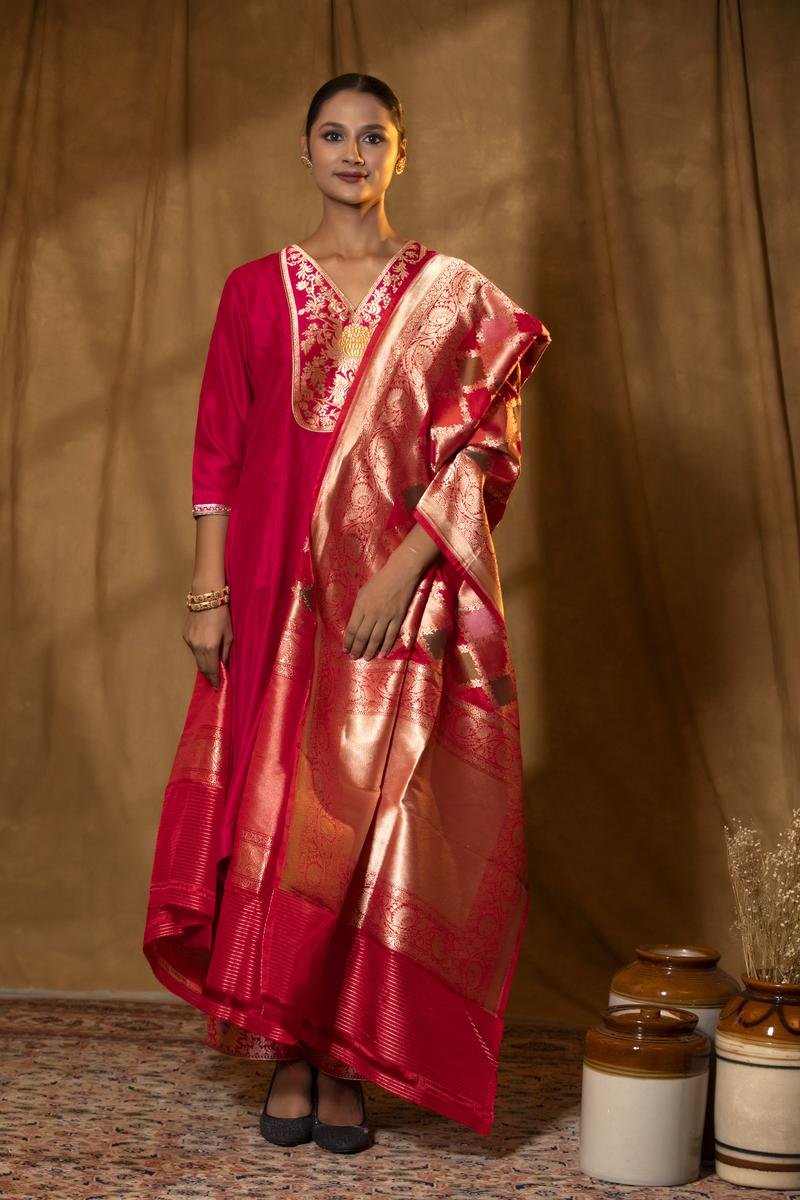
A Banarasi silk dupatta is more than a fashion accessory. It is a reflection of India’s rich textile heritage, intricate craftsmanship, and centuries-old weaving traditions. Woven in the historic city of Varanasi, these dupattas carry the elegance of pure silk and the artistry of detailed zari work that has made Banarasi textiles famous around the world.
Table Of Content
- The Heritage Behind Banarasi Weaving
- What Makes a Banarasi Dupatta Unique
- Rich Silk Fabric
- Intricate Zari Work
- Detailed Handloom Craftsmanship
- Timeless Appeal
- Types of Banarasi Silk Dupattas
- Katan Silk Banarasi Dupatta
- Organza Banarasi Dupatta
- Georgette Banarasi Dupatta
- Tissue Banarasi Dupatta
- Popular Motifs in Banarasi Dupattas
- Floral Jaal Patterns
- Paisley Designs
- Butidar Weaving
- Meenakari Work
- How to Style a Banarasi Silk Dupatta
- Pair with Solid Kurtas
- Style with Lehenga Sets
- Fusion Fashion Styling
- Use as a Statement Piece
- How to Identify an Authentic Banarasi Dupatta
- Examine the Reverse Side
- Check the Silk Texture
- Observe the Detailing
- Buy from Trusted Brands
- Caring for a Banarasi Dupatta
- Why Banarasi Dupattas Remain Timeless
- Conclusion
Whether styled with ethnic wear, fusion outfits, or bridal ensembles, a banarasi dupatta adds sophistication and cultural depth to every look. From festive celebrations to wedding occasions, this iconic textile continues to remain relevant across generations.
This guide explores everything you need to know about Banarasi dupattas, including their history, weaving techniques, types, styling ideas, fabric details, and tips for choosing the right piece.
The Heritage Behind Banarasi Weaving
Banarasi weaving traces its roots back several centuries and flourished under royal patronage during the Mughal era. Skilled artisans in Varanasi combined Persian-inspired motifs with Indian textile traditions to create fabrics known for their luxurious texture and ornamental detailing.
Traditionally, Banarasi weaving was associated with sarees worn during weddings and ceremonial occasions. Over time, the artistry expanded into dupattas, lehengas, and fabrics for modern fashion.
A Banarasi silk dupatta represents this enduring craftsmanship. Each piece is created using techniques passed down through generations of weavers who continue to preserve the authenticity of the handloom tradition.
What Makes a Banarasi Dupatta Unique
Several features distinguish a banarasi dupatta from ordinary silk accessories.
Rich Silk Fabric
Banarasi dupattas are commonly woven using silk yarns that create a smooth, luxurious texture. Depending on the weaving style, the fabric may feel lightweight and fluid or structured and regal.
Intricate Zari Work
One of the defining elements of Banarasi weaving is zari embroidery woven directly into the fabric. Gold and silver zari threads are used to create floral vines, paisleys, geometric patterns, and Mughal-inspired motifs.
Detailed Handloom Craftsmanship
Authentic Banarasi weaving involves labor-intensive processes carried out on handlooms. Even a single dupatta can take several days to complete depending on the complexity of the design.
Timeless Appeal
Unlike fast-changing fashion trends, Banarasi textiles have remained timeless. A well-crafted banarasi dupatta can be worn for years and even passed down as part of family heirlooms.
Types of Banarasi Silk Dupattas
Banarasi dupattas are available in multiple weaving styles and fabric variations. Understanding these types helps in selecting the right piece for different occasions.
Katan Silk Banarasi Dupatta
Katan silk is made from pure silk threads tightly woven together to create a durable and luxurious fabric. These dupattas are known for their rich texture and traditional elegance.
They work beautifully for weddings, festive gatherings, and formal ethnic styling.
Organza Banarasi Dupatta
Organza Banarasi dupattas are lightweight and sheer with delicate zari detailing. They create a graceful drape and are popular for contemporary ethnic looks.
These dupattas pair well with minimal kurtas, lehengas, and pastel festive outfits.
Georgette Banarasi Dupatta
Georgette Banarasi dupattas combine softness with detailed weaving. Their fluid texture makes them easy to style for long hours during celebrations and wedding functions.
Tissue Banarasi Dupatta
Tissue Banarasi fabrics feature a luminous metallic sheen created through zari weaving techniques. These dupattas are ideal for grand occasions and bridal wear.
Popular Motifs in Banarasi Dupattas
The beauty of a banarasi dupatta lies in its intricate motifs and symbolic artistry.
Floral Jaal Patterns
Inspired by Mughal gardens, floral jaal work covers the fabric with interconnected vines and blossoms.
Paisley Designs
Paisleys are among the most recognizable motifs in Banarasi weaving. They symbolize elegance and continuity in Indian textile art.
Butidar Weaving
Small motifs repeated across the fabric create the classic butidar style. These delicate patterns offer a balanced and refined appearance.
Meenakari Work
Some Banarasi dupattas feature colourful thread detailing combined with zari work. This style is known as meenakari weaving and adds vibrancy to traditional designs.
How to Style a Banarasi Silk Dupatta
A Banarasi silk dupatta is extremely versatile and can elevate both traditional and modern outfits.
Pair with Solid Kurtas
A richly woven dupatta instantly transforms a simple kurta set into a festive ensemble. Solid shades allow the intricate weaving to stand out.
Style with Lehenga Sets
Banarasi dupattas work beautifully as bridal or festive drapes with lehengas. They add depth, texture, and cultural richness to the outfit.
Fusion Fashion Styling
Modern fashion embraces Banarasi textiles in contemporary ways. A Banarasi dupatta can be layered over dresses, paired with crop tops and skirts, or styled with Indo-Western silhouettes.
Use as a Statement Piece
Even minimal ethnic outfits gain elegance when styled with a detailed Banarasi dupatta. The fabric naturally becomes the focal point of the look.
How to Identify an Authentic Banarasi Dupatta
With machine-made imitations widely available, identifying genuine Banarasi craftsmanship is important.
Examine the Reverse Side
Handwoven Banarasi textiles usually show floating threads and detailed weaving patterns on the reverse side.
Check the Silk Texture
Pure silk feels smooth and luxurious without appearing overly synthetic or stiff.
Observe the Detailing
Authentic zari work has precision and depth. Machine-made patterns often appear flat and repetitive.
Buy from Trusted Brands
Choosing established labels known for traditional craftsmanship ensures better authenticity and quality.
Caring for a Banarasi Dupatta
Proper maintenance preserves the beauty of Banarasi silk for years.
- Store the dupatta in a soft muslin cloth
- Avoid prolonged exposure to sunlight
- Refold periodically to prevent permanent creases
- Prefer dry cleaning for cleaning and maintenance
- Keep away from moisture and perfumes
These simple steps help maintain the fabric texture and zari detailing over time.
Why Banarasi Dupattas Remain Timeless
Fashion trends continue to evolve, but Banarasi textiles remain relevant because they blend heritage with elegance. A banarasi dupatta is versatile enough to suit modern wardrobes while still preserving traditional artistry.
Its enduring appeal comes from the craftsmanship, luxurious fabric, and cultural significance attached to each woven piece. Whether worn during weddings, festivals, family celebrations, or formal occasions, it always carries a sense of sophistication.
Conclusion
A Banarasi silk dupatta is not simply an accessory. It is a celebration of Indian weaving traditions, artistic excellence, and timeless fashion. From intricate zari craftsmanship to luxurious silk textures, every detail reflects the heritage of Varanasi’s legendary handloom culture.
Whether you are building a festive wardrobe, searching for elegant ethnic styling, or investing in handcrafted textiles, a banarasi dupatta remains a meaningful and versatile choice. Brands like Chinaya Banaras continue to keep this weaving tradition alive by bringing authentic Banarasi craftsmanship into contemporary fashion collections.



No Comment! Be the first one.