


Best Bird Food for Wild Birds During Winter and Summer Seasons
Feeding wild birds is a rewarding activity that helps support local bird populations while bringing nature closer to your home. However, birds have different nutritional needs depending on the...

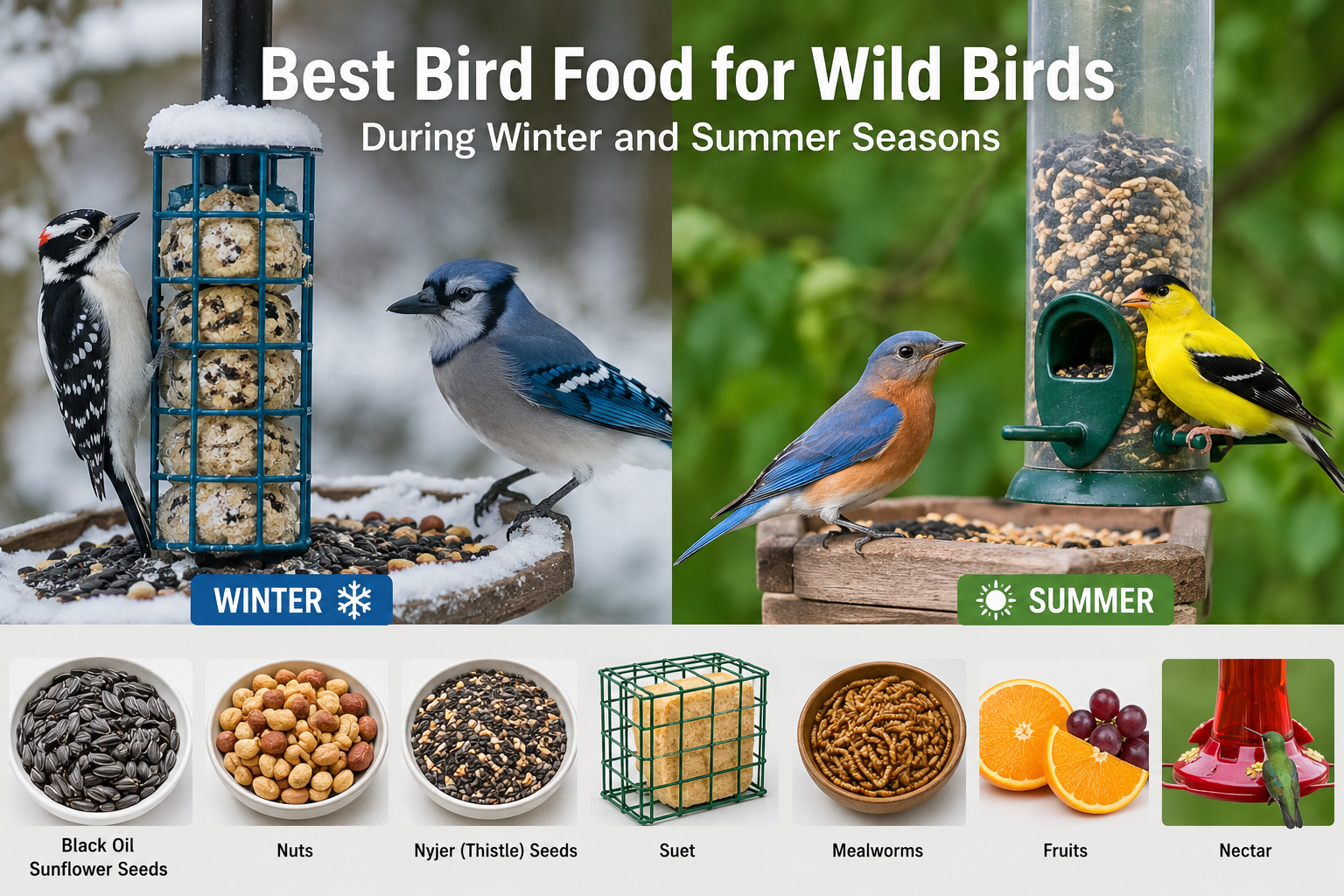
Feeding wild birds is a rewarding activity that helps support local bird populations while bringing nature closer to your home. However, birds have different nutritional needs depending on the season. The type of wild bird food you provide during winter may not be suitable for hot summer months. Understanding seasonal feeding habits is essential for choosing the best bird food for wild birds year-round.
Table Of Content
- Why Seasonal Feeding Matters for Wild Birds
- Best Bird Food for Wild Birds in Winter
- 1. Sunflower Seeds
- Benefits
- 2. Suet Cakes
- Benefits
- 3. Peanuts and Nuts
- Benefits
- 4. Millet and Mixed Seeds
- Benefits
- Best Bird Food for Wild Birds in Summer
- 1. Fresh Fruits
- Recommended Fruits
- 2. Mealworms
- Benefits
- 3. Nectar for Hummingbirds
- Homemade Nectar Recipe
- 4. Fresh Water and Hydrating Foods
- Good Summer Additions
- Foods Wild Birds Should Avoid
- Avoid Feeding
- Choosing the Best Wild Bird Feed
- Look for Natural Ingredients
- Avoid Cheap Fillers
- Common Fillers Include
- Match Food to Bird Species
- Examples
- Importance of Bird Feeders
- Tube Feeders
- Platform Feeders
- Suet Feeders
- Tips for Seasonal Bird Feeding
- Clean Feeders Regularly
- Provide Fresh Water Daily
- Feed Consistently
- Protect Food from Moisture
- Benefits of Feeding Wild Birds
- Benefits Include
- Common Mistakes to Avoid
- Avoid These Mistakes
- Final Thoughts
- FAQs
- 1. What is the best bird food for wild birds in winter?
- 2. What should I feed wild birds during summer?
- 3. Can wild birds eat bread?
- 4. How often should I refill wild bird feeders?
- 5. Why is clean water important for wild birds?
Whether you are an experienced bird enthusiast or a beginner, offering the right wild bird feed can attract a variety of beautiful birds while supporting their health and survival. In this guide, we’ll explore the best seasonal foods for wild birds, feeding tips, and how to create a bird-friendly backyard environment.
Why Seasonal Feeding Matters for Wild Birds
Wild birds face changing environmental conditions throughout the year. Food availability, temperature, breeding cycles, and migration patterns all affect their nutritional needs.
Providing the right wild bird food during different seasons helps birds:
- Maintain energy levels
- Stay hydrated
- Build strong feathers
- Survive harsh weather
- Support nesting and breeding.
Choosing the best bird food for wild birds based on the season ensures birds receive proper nutrition year-round.
Best Bird Food for Wild Birds in Winter
Winter can be challenging for wild birds because natural food sources become limited. Birds require high-energy foods to stay warm and survive cold temperatures.
1. Sunflower Seeds
Sunflower seeds are widely considered one of the best bird foods for wild birds during winter.
Benefits:
- High in healthy fats
- Provide long-lasting energy
- Attract finches, cardinals, and sparrows.
Black oil sunflower seeds are especially popular as winter wild bird feed.
2. Suet Cakes
Suet, made from animal fat, is extremely beneficial during cold weather.
Benefits:
- High-calorie energy source
- Helps birds maintain body heat
- Attracts woodpeckers and nuthatches
Suet is one of the most effective winter wild bird food options.
3. Peanuts and Nuts
Unsalted peanuts and nuts provide protein and healthy fats.
Benefits:
- Boost energy levels
- Support feather health
- Help birds survive freezing temperatures.
Nuts are excellent additions to winter wild bird feed stations.
4. Millet and Mixed Seeds
Mixed seed blends attract a variety of bird species during winter.
Benefits:
- Suitable for many birds
- Easy to digest
- Affordable feeding option
A balanced seed mix is often considered the best bird food for wild birds during colder months.
Best Bird Food for Wild Birds in Summer
During summer, birds focus more on hydration, nesting, and feeding their young. Lighter, nutrient-rich foods work best in warmer weather.
1. Fresh Fruits
Fruits provide hydration and natural sugars.
Recommended Fruits:
- Apples
- Berries
- Bananas
- Grapes
Fresh fruits are refreshing summer wild bird food choices.
2. Mealworms
Mealworms are rich in protein and highly beneficial during nesting season.
Benefits:
- Support baby bird growth.
- Improve energy levels
- Attract bluebirds and robins.
Protein-rich foods are valuable summer wild bird feed options.
3. Nectar for Hummingbirds
Hummingbirds need sugar-rich nectar during summer.
Homemade Nectar Recipe:
- 1 part sugar
- 4 parts water
Avoid artificial coloring when preparing nectar-based wild bird food.
4. Fresh Water and Hydrating Foods
Hydration is essential during hot weather.
Good Summer Additions:
- Watermelon pieces
- Cucumbers
- Bird baths
Providing water alongside the best bird food for wild birds creates a complete feeding environment.
Foods Wild Birds Should Avoid
Not all foods are safe for birds. Some can cause digestive issues or health problems.
Avoid Feeding:
- Bread
- Salty snacks
- Chocolate
- Avocado
- Sugary processed foods
Healthy wild bird feed should focus on natural and nutritious ingredients.
Choosing the Best Wild Bird Feed
When selecting wild bird food, focus on quality and nutritional value.
Look for Natural Ingredients
Choose seed mixes without artificial fillers or excessive dust.
Avoid Cheap Fillers
Some low-quality mixes contain ingredients birds do not eat.
Common Fillers Include:
- Red milo
- Excess cracked corn
Premium wild bird feed provides better nutrition and less waste.
Match Food to Bird Species
Different birds prefer different foods.
Examples:
- Finches prefer nyjer seeds.
- Cardinals enjoy sunflower seeds.
- Hummingbirds need nectar
Understanding bird preferences helps you choose the best bird food for wild birds.
Importance of Bird Feeders
The right feeder improves feeding efficiency and keeps food clean.
Tube Feeders
Best for small seeds like nyjer and sunflower seeds.
Platform Feeders
Suitable for fruits, grains, and mixed seeds.
Suet Feeders
Ideal for high-fat winter foods.
Using the proper feeder helps birds access wild bird food safely.
Tips for Seasonal Bird Feeding
Maintaining healthy feeding habits is essential for attracting birds consistently.
Clean Feeders Regularly
Dirty feeders can spread disease.
Wash feeders weekly and remove spoiled wild bird feed.
Provide Fresh Water Daily
Birds need water for drinking and bathing year-round.
Feed Consistently
Birds remember reliable food sources and may return daily.
Protect Food from Moisture
Wet food can develop mold and become unsafe.
Proper storage keeps wild bird food fresh and nutritious.
Benefits of Feeding Wild Birds
Offering the best bird food for wild birds provides many advantages.
Benefits Include:
- Supports local bird populations
- Encourages biodiversity
- Helps birds survive harsh weather
- Provides educational opportunities
- Creates relaxing backyard environments
Seasonal feeding also allows bird lovers to observe different species throughout the year.
Common Mistakes to Avoid
Bird owners sometimes unintentionally create unhealthy feeding conditions.
Avoid These Mistakes:
- Feeding spoiled food
- Ignoring feeder cleanliness
- Overfeeding low-quality seeds
- Using unsafe foods
- Forgetting water sources
Healthy wild bird feed and proper maintenance keep birds safe and healthy.
Final Thoughts
Providing the best bird food for wild birds during winter and summer helps support their health, energy, and survival year-round. Birds require different nutrients at different times of year, so adjusting your feeding routine is essential.
In winter, high-fat foods like sunflower seeds, suet, and nuts help birds stay warm and energized. During summer, fruits, mealworms, nectar, and fresh water provide hydration and support breeding activity.
By choosing nutritious wild bird food, maintaining clean feeders, and offering reliable water sources, you can create a safe and welcoming environment for wild birds in every season.
FAQs
1. What is the best bird food for wild birds in winter?
Sunflower seeds, suet cakes, nuts, and mixed seeds are considered the best bird food for wild birds during winter.
2. What should I feed wild birds during summer?
Fresh fruits, mealworms, nectar, and hydrating foods are excellent summer wild bird food options.
3. Can wild birds eat bread?
Bread is not recommended because it lacks proper nutrition and may harm birds when fed regularly.
4. How often should I refill wild bird feeders?
You should check feeders daily and refill them as needed to ensure fresh wild bird feed is always available.
5. Why is clean water important for wild birds?
Birds need clean water for drinking, bathing, and cooling down, especially during hot summer weather.







No Comment! Be the first one.