



Civil Engineering College Roadmap: Skills, Internships, and Career Growth
Everything around us has been designed with the help of civil engineers. Every bridge, highway, metro station, smart city, airport, and skyscraper begins with an idea created by an engineer who...

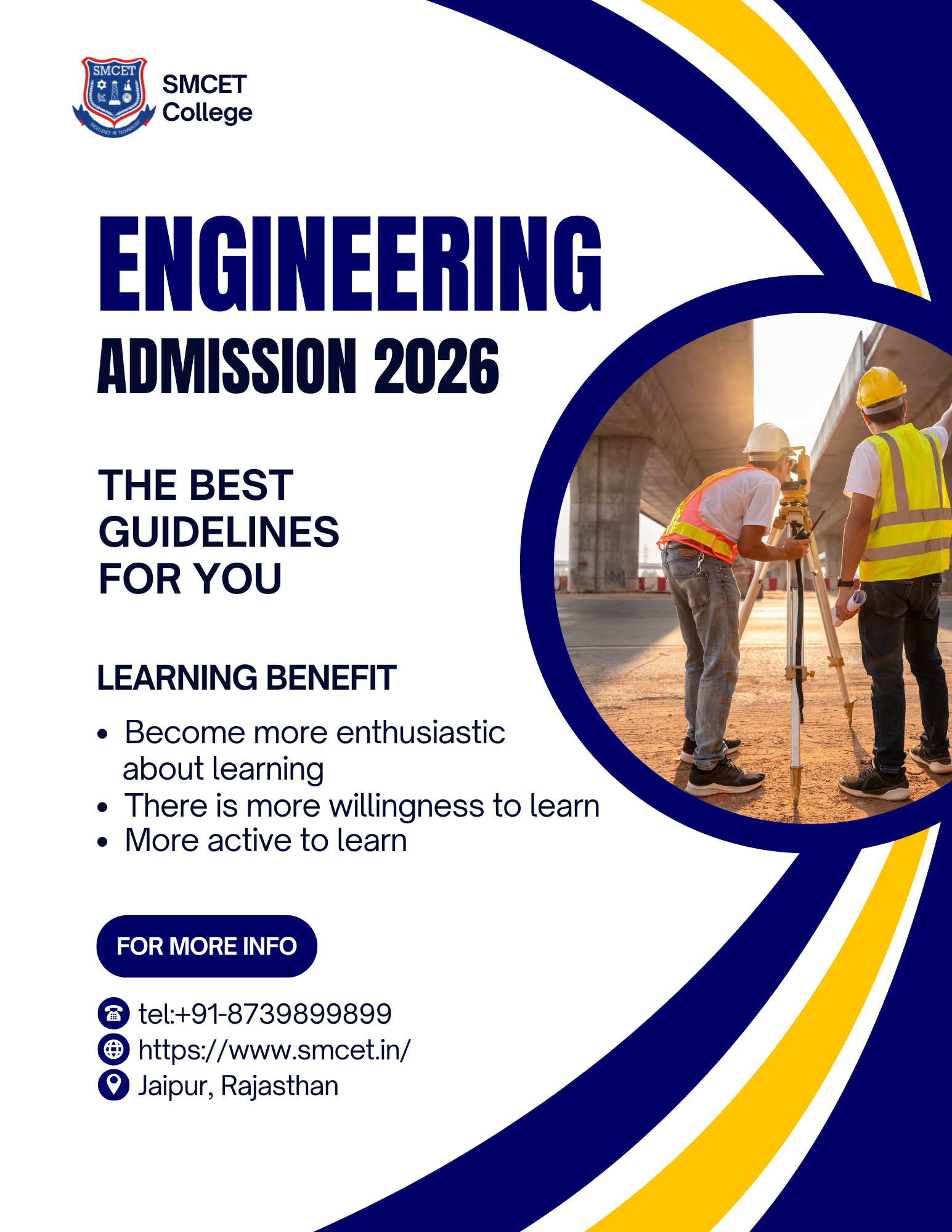
Everything around us has been designed with the help of civil engineers. Every bridge, highway, metro station, smart city, airport, and skyscraper begins with an idea created by an engineer who understands how structures, materials, and people connect. In recent years, the demand for skilled civil engineers has changed significantly. Employers are no longer looking only for students who score high marks in exams. They want engineers who can solve real-world problems, manage projects, use modern technology, and communicate effectively at construction sites.
Table Of Content
- Technical Skills Every Student Must Master
- Non-Technical Skills That Increase Salary Growth
- Private Sector Opportunities
- Government Jobs and Competitive Exams
- Higher Studies and Specializations
- Emerging Technologies Changing the Industry
- Long-Term Career Growth Roadmap
- 1. Which software is most important for civil engineering students?
- 2. Are internships necessary for civil engineering students?
- 3. What is the average starting salary for civil engineers in India?
- 4. Which specialization has the best future in civil engineering?
- 5. Is civil engineering still a good career choice in 2026?
India’s infrastructure sector is growing rapidly because of smart city projects, highways, renewable energy developments, metro rail expansion, and urban construction. According to industry reports, the civil engineering market in India is expected to grow strongly through 2033 due to increasing infrastructure investments and government projects. At the same time, employers are becoming more selective while hiring because they want engineers with practical exposure and strong technical knowledge.
This raises an important question for students: how should civil engineering students prepare during college to build a successful career? That is where a clear roadmap becomes essential. Students who follow the right path during their four years of engineering gain a huge advantage over those who simply attend lectures and wait for placement opportunities. Success in civil engineering is not like winning a lottery; it is more like building a bridge one brick at a time. Every semester matters. Every internship matters. Every software skill matters.
This comprehensive guide explains the complete roadmap for civil engineering students, including technical skills, internships, software tools, certifications, placement preparation, higher studies, government job opportunities, entrepreneurship, and long-term career growth.
Understanding the Modern Civil Engineering Industry
Civil engineering is no longer only about carrying blueprints at dusty construction sites. The industry has transformed into a technology-driven field, with engineers using software modeling, drone surveys, AI-based project management systems, and sustainable construction practices. Modern civil engineers are expected to balance technical knowledge with practical execution. Today, companies need professionals who understand structures, project timelines, budgets, safety standards, and environmental regulations.
India’s infrastructure sector is expanding rapidly through highways, metro systems, renewable energy projects, smart cities, industrial corridors, and urban housing developments. Recent reports show that India’s construction industry supports millions of jobs and continues to grow due to increasing government infrastructure investments. This means there are huge opportunities for students who prepare themselves properly. However, competition is also increasing. Thousands of students graduate every year, but only a smaller percentage become industry-ready professionals.
One of the biggest mistakes students make is believing that a degree alone guarantees success. The reality is different. Companies today focus heavily on practical skills, internships, software expertise, and communication abilities. A student who knows AutoCAD, STAAD Pro, BIM tools, estimation, project management, and site execution will always stand ahead of someone who has only memorized theory. The industry rewards problem-solvers, not just exam toppers.
Another interesting trend is the growing importance of sustainable and smart infrastructure. Green buildings, energy-efficient structures, smart drainage systems, and earthquake-resistant designs are becoming increasingly important. Engineers who understand these modern concepts are expected to enjoy stronger career growth in the coming years. There is no doubt that the Civil Engineering College in Jaipur, at SMCET College, is evolving like a city skyline—constantly expanding and adapting to meet new demands as they arise.
Why Civil Engineering Still Has Strong Career Potential
Many students hear mixed opinions about careers in civil engineering. Some professionals complain about low starting salaries or difficult work environments, while others build highly successful careers with excellent growth opportunities. The truth lies somewhere in between. Civil engineering rewards skill, consistency, and specialization. Students who continuously improve their skills often experience much better career growth than those who remain limited to basic site knowledge.
According to industry reports, specialized skills such as BIM, project management, structural analysis, and sustainable construction can significantly increase salary potential. Fresh graduates in India usually begin with salaries around ₹3–5 LPA, while experienced professionals with niche expertise can earn much higher packages. The difference generally depends on practical skills, technical exposure, and industry experience.
There is also a massive demand for civil engineers in government infrastructure projects. Roads, railways, smart cities, airports, housing schemes, and renewable energy projects all require skilled engineers at every stage. The Engineering, Procurement, and Construction (EPC) sector alone is expected to create millions of jobs by 2030. This is why students who prepare strategically still have enormous opportunities ahead.
Industry Trends Shaping Civil Engineering Careers
The civil engineering industry is being reshaped by technology. Building Information Modeling (BIM), drones, AI-powered construction planning, GIS mapping, and automation are becoming increasingly important. Engineers who ignore technology may struggle in the future, while those who adapt quickly can grow rapidly.
One major trend is digital project management. Construction companies now use advanced software to monitor costs, timelines, materials, and labor efficiency. BIM has become especially valuable because many large projects now require digital models and collaborative planning. Engineers who are skilled in BIM often receive better career opportunities and higher salaries compared to traditional engineers.
Sustainability is another major trend. Governments and private companies are focusing on eco-friendly buildings, renewable energy infrastructure, and resource-efficient construction methods. These developments are creating new opportunities for engineers who specialize in sustainable construction and urban planning.
First Year Roadmap for Civil Engineering Students
The first year of engineering often feels confusing because students study general subjects instead of core civil engineering topics. Many students waste this year because they believe “real engineering” starts later. That mindset can be harmful. The first year forms the foundation of the entire career journey. Think of it like preparing the base before constructing a skyscraper. If the foundation is weak, everything built later becomes unstable.
Students should focus strongly on engineering mathematics, physics, communication skills, and computer basics during this phase. These subjects may seem theoretical, but they directly impact future understanding of surveying, structural analysis, mechanics, and design concepts. A strong understanding of mathematics becomes extremely helpful in advanced civil engineering subjects later.
Communication skills are equally important. Civil engineers constantly interact with contractors, clients, architects, workers, consultants, and government officials. An engineer who cannot communicate effectively often struggles despite having technical knowledge. Students should actively participate in presentations, group discussions, seminars, and technical events during their first year.
This is also the perfect time to explore the industry through YouTube lectures, documentaries, podcasts, and online courses. Students should begin understanding how bridges are built, how skyscrapers resist earthquakes, how metro tunnels are constructed, and how infrastructure projects are managed. The curiosity developed during the first year becomes the fuel for future learning.
Building Strong Engineering Fundamentals
Strong fundamentals separate average engineers from exceptional engineers. Students should avoid studying only for semester exams. Instead, they should focus on understanding concepts deeply. Mechanics, engineering drawing, mathematics, and material science form the backbone of civil engineering.
Engineering drawing deserves special attention because it improves visualization skills. Civil engineers constantly interpret drawings, plans, and layouts. Students who master technical drawing early usually adapt faster to AutoCAD and structural design software later.
Developing Communication and Soft Skills
Many technically strong students lose opportunities because they cannot express their ideas confidently. Soft skills act like the cement that binds technical abilities together. Communication, teamwork, leadership, time management, and problem-solving skills are extremely valuable in civil engineering careers.
Students should join technical clubs, participate in college events, and engage in team projects. These activities build confidence and help students learn how to work effectively with teams under deadlines. Since construction projects always involve teamwork, communication skills become a major career advantage.
Second Year Strategy for Skill Development
The second year is where civil engineering starts becoming more exciting. Students begin studying core subjects like surveying, fluid mechanics, strength of materials, and construction technology. This is also the stage where technical skill development should accelerate.
One of the smartest decisions a second-year student can make is learning industry software early. Companies increasingly prefer candidates who already know practical tools. Waiting until the final year to learn software is like trying to learn swimming after being thrown into deep water.
Students should start with AutoCAD because it forms the foundation for technical drafting and design understanding. After that, they can gradually move toward STAAD Pro, ETABS, Revit, Primavera, and quantity estimation software. Even basic proficiency creates a strong advantage during internships and placements.
Networking is another underrated aspect of the second year. Students should connect with seniors, alumni, professors, and industry professionals on platforms like LinkedIn. Many internship opportunities come through networking rather than online applications.
Learning Technical Software and Digital Tools
The modern civil engineering industry relies heavily on digital tools. Here is a quick overview of important software:
| Software | Purpose | Career Benefit |
| AutoCAD | Drafting and design | Essential for beginners |
| STAAD Pro | Structural analysis | Useful for structural engineering |
| ETABS | Building analysis | Ideal for high-rise projects |
| Revit | BIM modeling | High demand in modern projects |
| Primavera | Project management | Important for planning roles |
| MS Excel | Estimation and calculations | Essential for every engineer |
Students should not just watch tutorials passively. Real learning happens through projects and practical exercises. Designing small building plans, preparing quantity estimates, or creating project schedules helps build confidence.
Importance of Mini Projects and Site Visits
Mini projects give students practical exposure beyond textbooks. Designing a simple residential structure, preparing a cost estimate, or studying local drainage systems teaches far more than memorizing definitions.
Site visits are equally valuable because they expose students to real construction environments. Watching reinforcement work, concrete pouring, surveying equipment, and safety procedures creates a practical understanding that classrooms alone cannot provide.
Third Year Focus on Internships and Industry Exposure
The third year is the turning point in a civil engineering student’s career journey. This is where theory begins connecting with reality. Internships become extremely important because they provide real-world exposure to construction practices, project management, and workplace expectations.
Many students make the mistake of choosing internships only for certificates. That approach rarely helps. The goal should be learning, not collecting paperwork. Even unpaid internships at good construction sites or consultancy firms can provide tremendous long-term value.
Students should actively explore internships in construction companies, design consultancies, government projects, infrastructure firms, or project management organizations. Exposure to different domains helps students discover their true interests. Some may enjoy site execution, while others may prefer structural design, planning, estimation, or project management.
Internships also teach realities that colleges often cannot. Students learn about deadlines, labor management, safety challenges, client expectations, and budget limitations. Construction projects operate like giant moving machines where every delay affects costs and timelines. Understanding this ecosystem early gives students professional maturity.
How to Find the Right Civil Engineering Internship
Finding a quality internship requires strategy and persistence. Students should use LinkedIn, college placement cells, alumni networks, company websites, and direct applications. Sometimes, personally visiting local construction companies can also work surprisingly well.
A strong internship application should include:
- A professional resume
- Basic software knowledge
- Clear communication skills
- Genuine interest in learning
- Relevant mini projects or certifications
Students should avoid waiting passively for college opportunities. Self-initiative often creates better results. The students who actively chase opportunities usually gain the strongest practical exposure.
Skills Students Must Learn During Internships
Internships should focus on skill development rather than observation alone. Students should learn:
- Reading construction drawings
- Site supervision basics
- Quantity estimation
- Material testing
- Billing processes
- Safety standards
- Project scheduling
- Team communication
Asking questions during internships is extremely important. Curious interns often learn far more than silent observers.
Final Year Preparation for Placements and Career Growth
The final year is the launchpad into the professional world. Students who prepared consistently during earlier years usually feel confident at this stage, while others suddenly panic about placements and career direction. The difference often comes down to preparation.
Placement preparation should begin at least six months before recruitment drives. Students must revise core technical subjects thoroughly because interviewers frequently ask practical questions related to structures, materials, surveying, and construction management.
A strong final-year project also matters significantly. Students should choose practical and industry-relevant topics rather than random theoretical projects. Topics related to sustainable construction, BIM, smart infrastructure, earthquake-resistant structures, or water management often create stronger impressions.
Professional branding also becomes important during the final year. LinkedIn profiles, resumes, certifications, project portfolios, and communication skills influence recruitment outcomes heavily. Employers increasingly evaluate the complete profile of candidates rather than only academic marks.
Campus Placement Preparation Strategy
Students should prepare in three major areas:
- Technical knowledge
- Aptitude and reasoning
- HR interview preparation
Mock interviews help tremendously because they improve confidence and communication ability. Students should practice explaining projects, internships, and technical concepts clearly.
Creating a Strong Civil Engineering Resume
A strong civil engineering resume should highlight:
- Technical skills
- Software proficiency
- Internships
- Certifications
- Academic projects
- Leadership roles
- Achievements
Recruiters often spend less than a minute reviewing resumes initially. Clear formatting and relevant content make a huge difference.
Top Skills Required for Civil Engineers in 2026 and Beyond
The future belongs to engineers who combine technical expertise with adaptability. Companies increasingly prefer professionals who can handle both engineering challenges and digital transformation.
Technical Skills Every Student Must Master
Some of the most valuable technical skills include:
- Structural analysis
- Quantity surveying
- Estimation and costing
- BIM modeling
- Project planning
- AutoCAD and Revit
- Material testing
- Site execution
- Sustainable construction
Students who continuously upgrade their technical abilities usually experience stronger career growth.
Non-Technical Skills That Increase Salary Growth
Technical skills may help someone get hired, but non-technical skills often determine promotions and leadership opportunities. Communication, leadership, negotiation, problem-solving, and adaptability are critical in construction environments.
Construction projects involve constant coordination between multiple stakeholders. Engineers who manage teams effectively often move faster into managerial positions.
Career Options After Civil Engineering
Civil engineering offers multiple career paths instead of a single fixed route. Students can enter private companies, government sectors, higher studies, entrepreneurship, or research.
Private Sector Opportunities
Private companies offer opportunities in:
- Construction firms
- Design consultancies
- Infrastructure companies
- Real estate organizations
- Project management firms
- Renewable energy projects
Experienced engineers can eventually move into senior project management roles with excellent salary growth.
Government Jobs and Competitive Exams
Government jobs remain highly attractive because of stability and benefits. Popular exams include:
- GATE
- ESE
- SSC JE
- RRB JE
- State PSC exams
Government engineers contribute to highways, irrigation systems, railways, and urban development projects.
Higher Studies and Specializations
Students interested in advanced expertise can pursue:
- M.Tech
- MBA
- MS abroad
- Specialized certifications
Popular specializations include structural engineering, geotechnical engineering, transportation engineering, environmental engineering, and construction management.
Future Scope and Salary Growth in Civil Engineering
Civil engineering continues evolving rapidly due to urbanization, smart infrastructure, renewable energy expansion, and sustainability demands. Reports suggest that India’s infrastructure sector will continue creating major employment opportunities over the next decade.
Emerging Technologies Changing the Industry
Future-focused engineers should pay attention to:
- AI-based project management
- BIM and digital twins
- Drone surveying
- Smart materials
- Sustainable construction
- Green buildings
- Automation in construction
Technology is not replacing civil engineers. Instead, it is transforming the type of engineers companies need.
Long-Term Career Growth Roadmap
A typical civil engineering career may progress like this:
| Experience Level | Common Roles |
| 0–2 Years | Site Engineer, Trainee Engineer |
| 3–5 Years | Project Engineer, Design Engineer |
| 5–10 Years | Senior Engineer, Planning Engineer |
| 10–15 Years | Project Manager |
| 15+ Years | Consultant, Director, Entrepreneur |
Career growth depends heavily on continuous learning and specialization.
Conclusion
Civil engineering is much more than a degree. It is a long-term professional journey that rewards consistency, adaptability, and practical expertise. Students who treat college as a training ground rather than just an academic requirement usually build stronger careers. The industry today values engineers who can combine technical knowledge with software skills, communication ability, and real-world problem-solving.
The best civil engineering students are not necessarily the ones with perfect grades. They are the students who stay curious, gain practical exposure, build strong networks, and continuously improve themselves. A successful civil engineer grows like a well-designed structure — layer by layer, skill by skill, and project by project.
The future of infrastructure in India and across the world remains extremely promising. Smart cities, renewable energy systems, transportation networks, urban development, and sustainable construction will continue creating opportunities for skilled professionals. Students who follow a clear roadmap during college place themselves in the best position to succeed in this evolving industry.
FAQs
1. Which software is most important for civil engineering students?
AutoCAD is the most essential starting software. Students should later learn STAAD Pro, ETABS, Revit, and Primavera for better career opportunities.
2. Are internships necessary for civil engineering students?
Yes, internships are extremely important because they provide practical exposure, industry understanding, and improve placement opportunities significantly.
3. What is the average starting salary for civil engineers in India?
Fresh graduates usually earn around ₹3–5 LPA depending on skills, college reputation, internships, and company type.
4. Which specialization has the best future in civil engineering?
BIM engineering, structural engineering, project management, sustainable construction, and transportation engineering currently offer strong growth opportunities.
5. Is civil engineering still a good career choice in 2026?
Yes, civil engineering continues to offer strong opportunities because of infrastructure growth, smart city projects, renewable energy expansion, and urban development initiatives.





No Comment! Be the first one.