


Custom Milk Cartons vs Plastic Containers: Which Is Better?
If you’ve spent any time on a production floor or worked closely with dairy brands on their fulfillment strategies, you already know this debate comes up constantly. Brands want to cut costs,...

If you’ve spent any time on a production floor or worked closely with dairy brands on their fulfillment strategies, you already know this debate comes up constantly. Brands want to cut costs, stay compliant, and keep their product fresh all at the same time. And the container choice sits right at the center of that tension.
Table Of Content
Let me break this down from a practical standpoint, not a marketing one.
The Basics of What You’re Actually Choosing Between
Plastic containers typically HDPE or polypropylene have dominated dairy packaging for decades. They’re durable, stackable, and familiar to consumers. But familiarity doesn’t equal superiority.
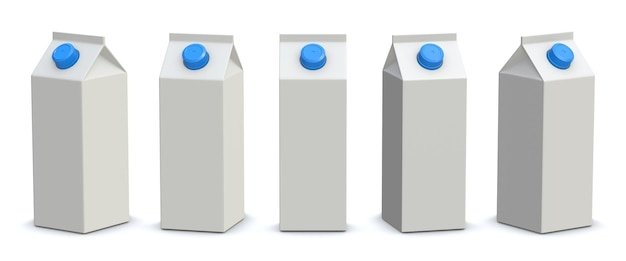
Paperboard-based milk cartons, especially when customized for brand presentation, have made serious gains in both performance and perception. Custom milk cartons today aren’t what they were in 1995. The lamination technology, sealing integrity, and printability have all improved dramatically. I’ve worked with suppliers who produce cartons with moisture barriers that rival what you’d get from a rigid plastic jug and at comparable cost per unit once you factor in volume.
Barrier Protection and Shelf Life
This is where most brands make their first mistake: they assume plastic automatically wins on protection. That’s not always true.
Modern gable-top and brick-style cartons use multi-layer constructions typically polyethylene on both sides with a middle paperboard layer, sometimes adding aluminum foil for UHT products. That layering provides solid oxygen and moisture resistance. For fluid milk with standard refrigerated distribution, the protection is more than adequate.
Plastic, on the other hand, can leach trace compounds over extended storage, particularly with higher-fat dairy products. HDPE is generally stable, but it’s not inert under all temperature conditions. Brands in premium dairy niches are increasingly moving away from plastic for exactly this reason not just optics, but actual product quality concerns.
Where plastic does hold a clear edge is in drop resistance and reusability. A gallon jug survives a lot of handling that would compromise a carton’s seal. For bulk retail formats and high-traffic warehouse environments, that physical durability matters.
What Brands Often Get Wrong
One of the most common mistakes I see is brands choosing packaging based on unit cost alone without accounting for the full logistics picture. A cheaper plastic container that adds dimensional weight to a pallet can cost you more in freight than you saved on the container itself. Cartons are typically more space-efficient, especially in rectangular brick formats, which means better pallet utilization and lower shipping costs per case.
The second mistake? Ignoring the printing surface. If your brand relies on visual identity and its plastic containers should limit you. The label adhesion issues, shrink sleeve costs, and inconsistent print results on curved surfaces are real operational headaches. Custom milk cartons offer a flat, printable surface with excellent color reproduction. For brands selling through premium grocery or DTC channels, that shelf presence is a measurable commercial advantage.
Environmental Compliance and Retailer Pressure
Sustainability requirements from major retailers have shifted the conversation significantly over the last three to four years. I’ve sat in on supplier meetings where retail buyers specifically asked about recyclability certifications before finalizing packaging specs. Plastic is increasingly a harder sell in those rooms.
Paperboard cartons, when produced with FSC-certified materials, carry a stronger recyclability story though I’ll be honest, the actual recycling infrastructure for multi-layer cartons still has gaps in many regions. It’s better than plastic in perception and in policy compliance, but it’s not a perfect solution either. Brands need to be careful about overclaiming here.
Cost Structure Realities
Custom milk cartons generally require higher minimum order quantities to make unit economics work. If you’re a mid-sized regional dairy, that upfront commitment can be a barrier. Plastic molds, while expensive initially, give you lower per-unit costs at mid-range volumes.
That said, if you’re operating at scale say, 50,000 units and above the carton economics become very competitive. Add in the branding value and retailer preference, and the total value proposition shifts.
Which One Actually Wins?
My honest take after years of working through these decisions with brands: there is no universal winner, but custom milk cartons have a stronger case for most modern retail dairy brands, especially those competing in premium or natural grocery segments.
Plastic still makes sense for bulk formats, foodservice supply, and situations where physical durability is the primary concern. But for any brand focused on shelf differentiation, sustainability compliance, and print quality, the carton wins more often than not.
The brands that continue defaulting to plastic out of habit not out of a deliberate strategic choice are the ones leaving both brand equity and logistics efficiency on the table.
Final Words
Packaging decisions in dairy aren’t just operational, they’re commercial and strategic. I’ve seen brands lose shelf placement because custom milk cartons looked dated next to a competitor’s cleaner carton design. I’ve also seen brands switch to cartons without properly testing their seal integrity under distribution stress and end up with leakers in transit.
Do the testing. Run the numbers across the full supply chain, not just the unit cost line. And make sure whoever is making this decision has actually stood on a production floor and watched how these containers perform under real conditions not just in a supplier’s sales deck.





No Comment! Be the first one.