


From Cutting Granite to Finishing Steel: How Flap Disc Wheel and Granite Cutting Blade Work Together
Learn how flap disc wheels and granite cutting blades work together for cleaner cuts, smoother finishes, and longer tool life in real-world workflows.

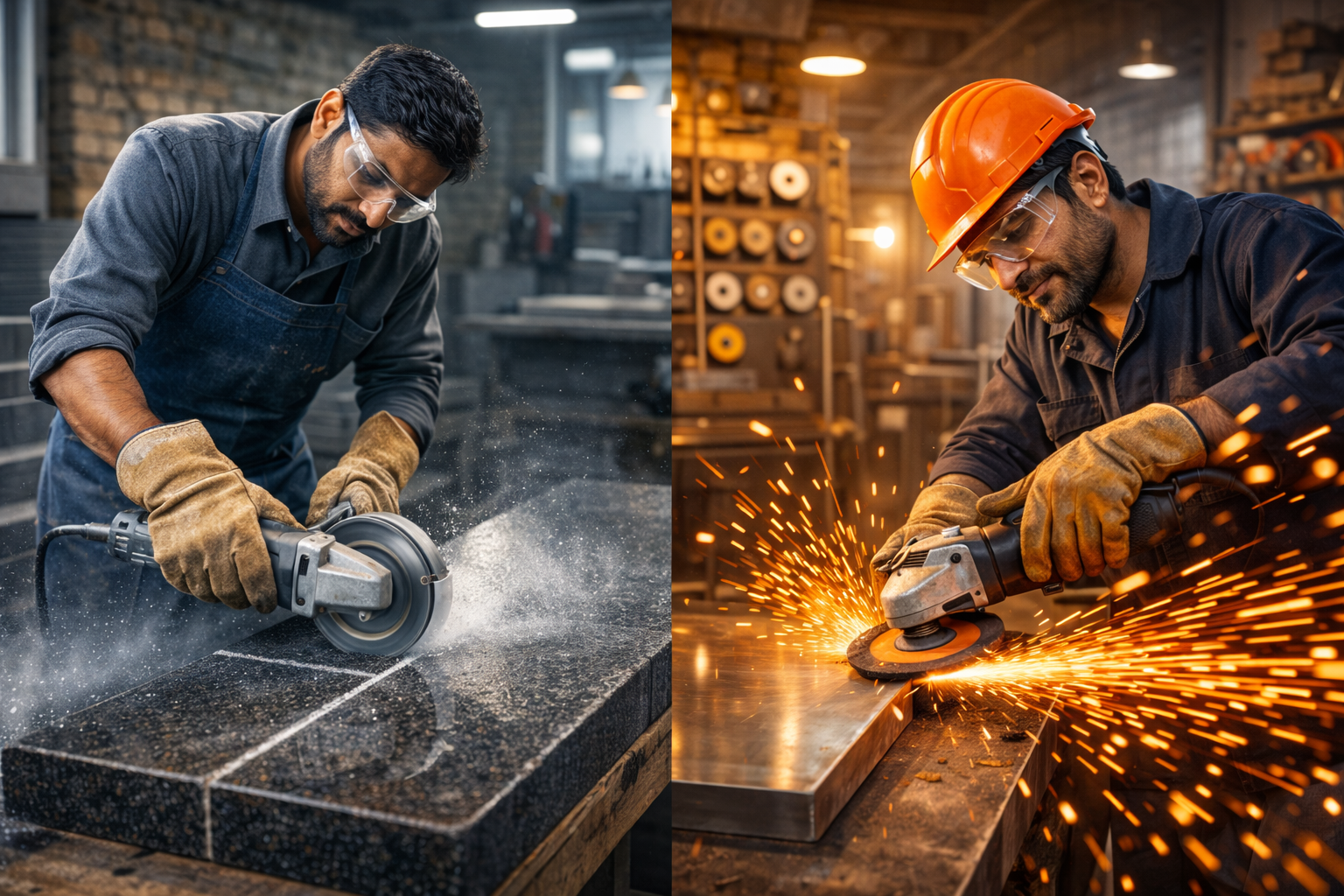
You know that moment when the grinder screams, sparks jump like fireworks, and you realise—too late—you’ve taken a cut a millimetre off? I’ve been there. Dust in your teeth, gloves stiff with grit, and a line that looked straight until the light hits it wrong. It’s a bit like slicing a loaf blindfolded—confidence first, regret second.
Then comes the clean-up. You grab whatever’s nearby, try to smooth the edge, and end up chasing scratches like you’re swatting flies. Not ideal. Not efficient. And definitely not how pros get that crisp, finished look.
Here’s the thing: it’s rarely about skill alone. More often, it’s about using the wrong tool at the wrong stage. The real shift happens when you stop treating tools as one-size-fits-all and start seeing them as partners in a sequence.
Why This Workflow Exists in the First Place
Every material has a personality. Granite resists like a stubborn mule; steel responds but bites back with heat. Tools evolved to match those quirks—cutting tools for precision separation, finishing tools for control and refinement. It’s not overcomplication; it’s design responding to physics.
Let’s look at 5 clear indicators that combining a granite cutting blade with a flap disc wheel will transform how you work.
Understanding Your Cutting and Grinding Workflow
The “aha” moment? Realising that cutting and finishing are two halves of the same conversation. The granite cutting blade handles the heavy lifting—clean, accurate cuts. The flap disc wheel steps in afterwards, like a good editor, refining edges and smoothing surfaces without tearing the material apart. You don’t rush either step. You sequence them.
5 Signs That This Tool Combination Fits Your Workflow
1. Are your cuts accurate—but rough around the edges?
You line up perfectly, the blade slices clean, but the edge feels like sandpaper. Sound familiar?
That’s exactly where a flap disc wheel shines. It softens edges and removes micro-chips without gouging the surface. Think of it like sanding a piece of wood after sawing—it brings out the finish hidden underneath.
Practical cue: Look for consistent scratch patterns, not deep grooves. If you see tearing, ease off pressure.
2. Do you switch tools mid-task and lose momentum?
Ever stop mid-job, fumble around for the right disc, and lose your rhythm?
A structured cutting and grinding workflow keeps things flowing. Start with the granite cutting blade for precision, then transition smoothly to the flap disc wheel for finishing. It’s like shifting gears in a car—you don’t stay in first forever.
Try this: Set up both tools within arm’s reach before you start. Reduce downtime.
3. Are you working across different materials in one project?
Construction and fabrication tools often face mixed materials—stone, steel, maybe even composite surfaces.
Granite cutting blade applications cover the hard, brittle side. Flap disc finishing techniques handle metals and softer refinements. Together, they act like a Swiss Army knife—versatile without compromise.
Avoid this mistake: Don’t use a cutting blade to “just smooth a bit.” That’s how you ruin both tool and finish.
4. Do your tools wear out faster than expected?
If discs burn out quickly, something’s off.
Using a cutting blade for finishing or vice versa increases friction and heat. It’s like running in boots—possible, but painful and inefficient. When you assign each tool its proper role, you extend lifespan naturally.
Look for: Even wear across the flap disc. Uneven wear signals poor angle or pressure.
5. Are you chasing a professional-grade finish?
You want that edge to look intentional, not accidental.
A flap disc wheel gives you control—blending welds, smoothing transitions, and polishing edges until they feel almost soft. Combined with the precision of a granite cutting blade, you get both accuracy and aesthetics.
Try this: Use lighter passes at the end. Let the tool glide, don’t force it.
That’s where most people slip.
The Elephant in the Room: Misusing Tools (and Paying for It)
Let’s be honest—most frustrations come from pushing one tool to do everything. It’s tempting. You’re in a hurry. You think, “This will do.” It rarely does.
Here’s how to avoid the common pitfalls:
- Match the tool to the task. Cutting blades cut. Flap discs finish. Simple rule, big impact.
- Watch your angles. A flap disc works best at a slight angle, not flat. Too flat, and it skids like a stone on water.
- Control your pressure. Let the abrasive do the work. Pushing harder only builds heat and kills the disc faster.
- Check compatibility. Not all discs suit all grinders. Size and RPM ratings matter more than you think.
- Plan your sequence. Decide your steps before you start. It saves time and frustration later.
When it comes to professional tool usage, brands do play a role—but only if they focus on durability and consistency. Yuri Smart Engineering, for instance, offers a range of abrasives and blades designed for precision and longevity. Their lineup supports both cutting and finishing stages, which helps reduce mismatched tooling issues. Still, always verify specs and compatibility for your setup before committing.
Trends Fade, Workflow Sticks
Shiny new tools come and go. Every year brings a “revolutionary” disc or blade. Some deliver. Many don’t.
What lasts is a solid process.
When you pair a granite cutting blade with a flap disc wheel in a deliberate sequence, you build a workflow that feels almost rhythmic—cut, refine, finish. Like breathing in and out. It becomes second nature.
And the results show. Cleaner lines. Smoother edges. Less wasted time. If you want to elevate your work, don’t just upgrade your tools. Upgrade how you use them. Start with your next cut—then finish it properly with a flap disc wheel. You’ll feel the difference before you even see it.





No Comment! Be the first one.