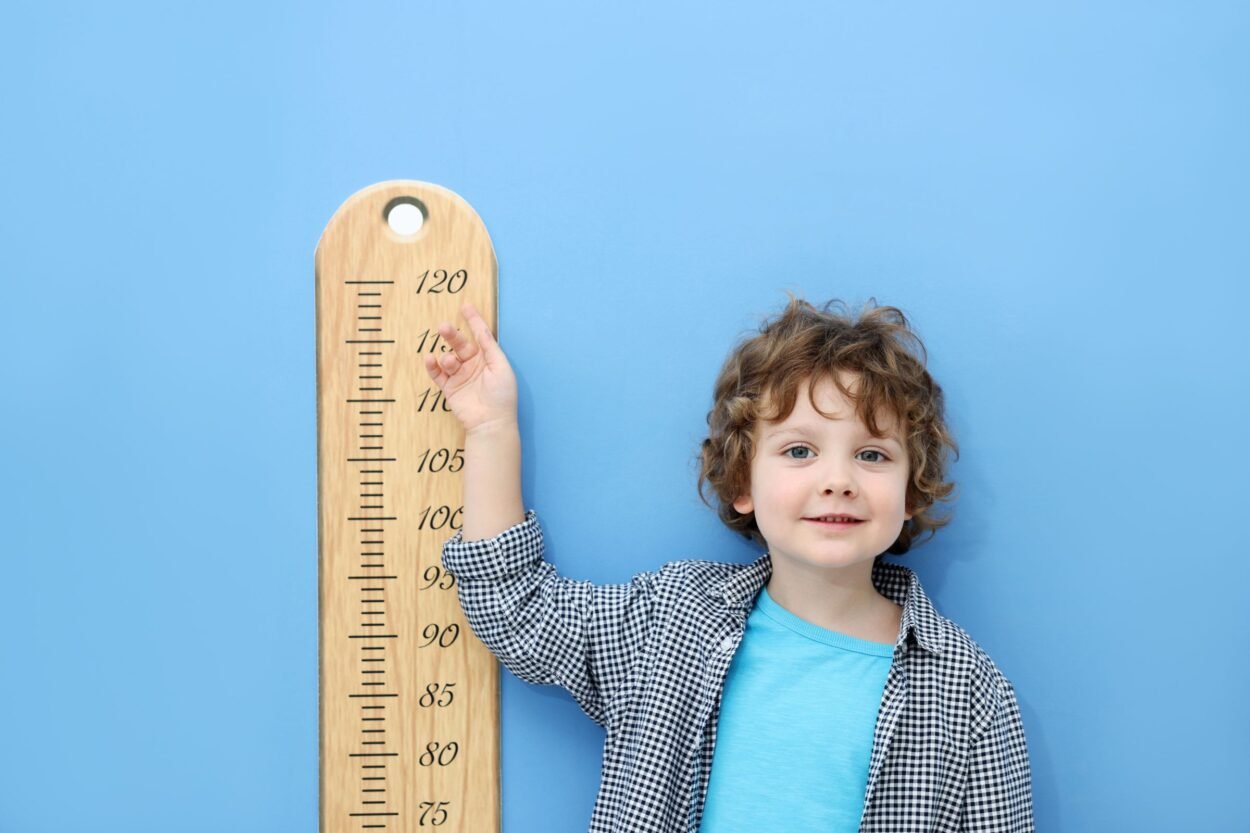
Monitoring children’s growth is a key part of assessing overall health and development. Growth patterns can indicate whether a child is receiving adequate nutrition, developing appropriately, or may require medical attention. One commonly used reference tool is the height-weight chart. While simple and widely available, its use in children requires careful interpretation. Unlike adults, children grow at varying rates depending on age, gender, genetics, and developmental stage. Understanding these nuances ensures charts are used responsibly and without unnecessary concern.
What a height and weight chart indicates for children
A height weight chart compares a child’s height and weight against standard reference values based on age and gender. These reference values are derived from large population studies and are intended to show typical growth ranges rather than fixed targets.
For children, the chart acts as a screening tool rather than a diagnostic measure. It helps identify growth patterns over time instead of determining health status from a single reading.
Why children need age-specific interpretation
Children experience rapid physical changes, especially during infancy, early childhood, and adolescence. Growth does not occur at a steady pace. Periods of rapid height increase may be followed by weight gain, or vice versa.
Using adult-style interpretations of a height weight chart for children can be misleading. What appears below or above average at one stage may normalise naturally as development progresses. Age- and gender-specific charts are therefore essential for accurate assessment.
Importance of tracking growth trends
One of the most important considerations when using height weight charts is focusing on trends rather than individual measurements. A single reading provides limited insight, whereas repeated measurements over time show whether growth is consistent.
Sudden changes, such as a sharp drop or rise across growth curves, may indicate nutritional issues, hormonal imbalance, or underlying health concerns that require professional evaluation.
Understanding percentiles in children’s charts
Children’s height and weight charts typically use percentile curves. Percentiles indicate how a child’s measurements compare with those of others of the same age and gender.
For example, a child in the 40th percentile is lighter or shorter than 60 per cent of peers, but this does not automatically indicate a problem. Consistency within a percentile range is usually more important than the percentile itself.
Avoiding unnecessary worry and pressure
Parents often worry when children do not fall within mid-range percentiles. However, healthy children can naturally sit at higher or lower percentiles due to genetics.
Overemphasis on chart numbers may lead to unnecessary anxiety or pressure around eating habits. Height weight charts should guide awareness, not drive restrictive feeding or comparisons.
Difference between height weight charts and BMI tools
Height weight charts focus on raw measurements relative to age and gender, while BMI tools assess weight relative to height. For children, BMI interpretation differs significantly from adults.
Adult tools such as a BMI calculator women are not suitable for children’s growth assessment. Children require BMI-for-age charts that factor in developmental stages. Using adult BMI tools for children can result in incorrect conclusions.
Nutrition and growth interpretation
While height weight charts often raise questions about nutrition, chart readings alone cannot determine dietary adequacy. A child’s appetite, energy levels, immunity, and developmental milestones must also be considered.
Growth spurts and temporary plateaus are normal. Short-term changes do not always indicate nutritional deficiency or excess.
Physical activity and body composition
Active children may develop higher muscle mass, influencing weight readings. In such cases, weight may appear higher on a chart without indicating unhealthy fat accumulation.
Height weight charts do not differentiate between muscle and fat, which limits their ability to assess body composition accurately.
Genetic and cultural influences
Genetics play a strong role in determining height and body structure. Children often follow growth patterns similar to parents or close relatives.
Population-based charts may not fully reflect individual genetic differences. Family growth history provides valuable context when interpreting chart results.
When chart patterns require attention
Certain patterns may warrant medical evaluation, such as consistent decline across percentiles, failure to gain weight over extended periods, or delayed height growth.
Healthcare professionals assess these patterns alongside medical history, dietary intake, and physical examination before drawing conclusions.
Role of healthcare professionals
Paediatricians are trained to interpret height weight charts holistically. They consider growth patterns, development milestones, and overall health rather than relying on numbers alone.
Parents should seek professional guidance instead of self-diagnosing based on chart readings.
Responsible use at home and schools
Height weight charts are commonly used in schools and health screenings. While useful for awareness, results should be communicated sensitively to avoid stigma.
Children should not be made self-conscious about growth differences, as this can affect confidence and long-term relationship with food and physical activity.
Best practices for accurate growth tracking
Measurements should be taken consistently using proper equipment and recorded at regular intervals. Comparing results over time provides more meaningful insights than frequent short-term checks.
Charts should complement, not replace, professional health assessment.
Conclusion
The height weight chart is a valuable tool for monitoring children’s growth when used correctly and in context. Its real strength lies in identifying long-term growth trends rather than focusing on isolated measurements. Understanding age-specific interpretation, avoiding adult tools such as a BMI calculator for women, and considering genetic, nutritional, and lifestyle factors ensures accurate assessment. With professional guidance, height weight charts support healthy growth monitoring without unnecessary worry, helping caregivers focus on overall well-being rather than numbers alone.



Leave a Comment