


How Pressure-Reducing Valve Systems Protect Industrial Equipment
Having stable pressure levels is crucial to the safety, effectiveness, and longevity of industrial equipment. Many industries in the UAE (such as oil & gas, manufacturing, water treatment and...

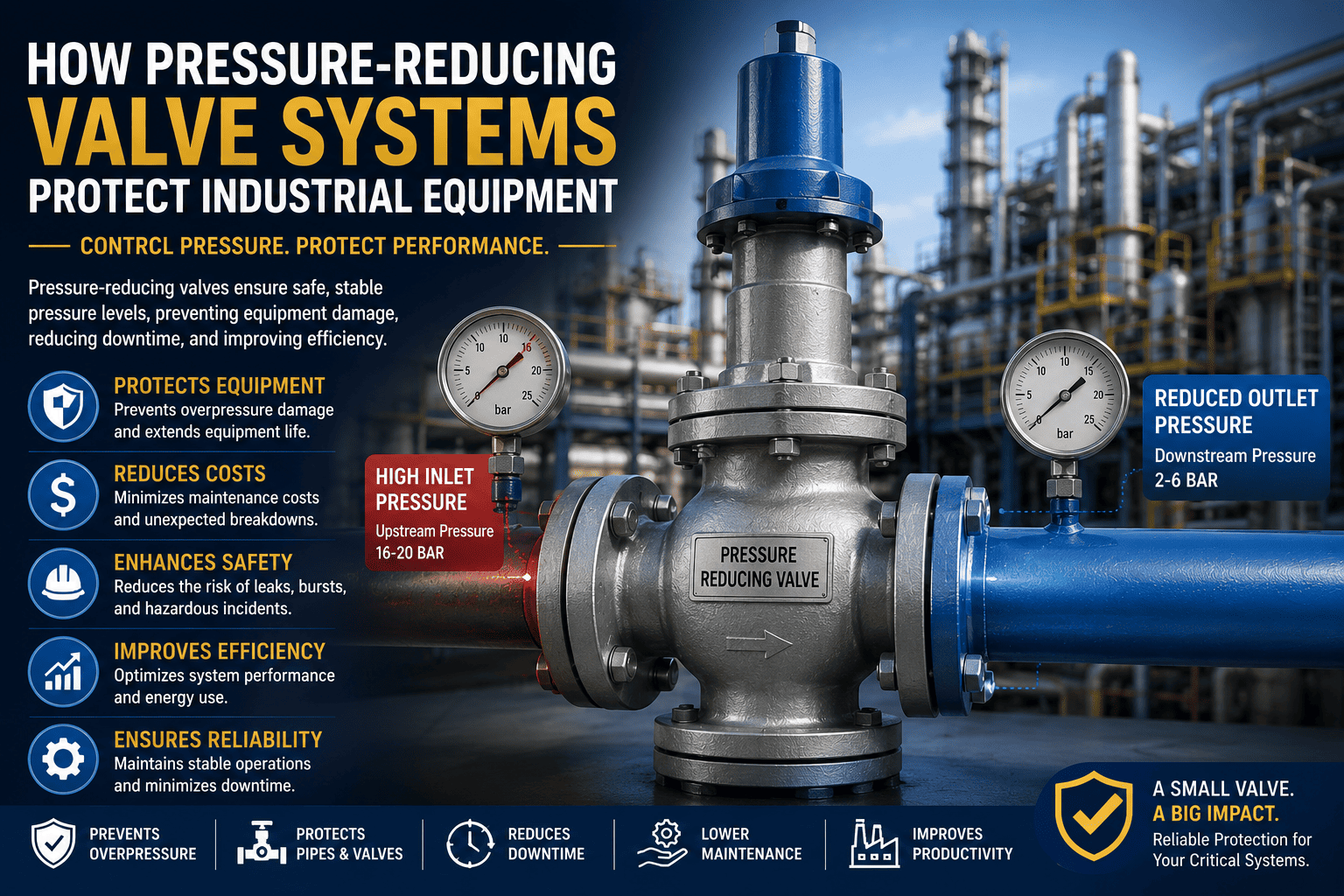
Having stable pressure levels is crucial to the safety, effectiveness, and longevity of industrial equipment. Many industries in the UAE (such as oil & gas, manufacturing, water treatment and HVAC) rely on pressure control systems to keep their operations working smoothly. One of the most important elements to help fulfil this task is the use of pressure-reducing valves.
Without proper regulation of an automated industrial system’s pressure range, it can lead to damaged equipment, leaking through piping connections, ruptured pipes and expensive downtime. Fluctuating pressures within the industrial equipment will also reduce its operational efficiency and create high-risk hazards to workers who operate the industrial process at elevated pressures.
This article discusses how pressure-reducing valve systems help protect your industrial equipment, why these systems are necessary for the operation of today’s industrial facilities, and how investing in quality pressure management solutions will benefit industrial operations across the UAE.
Pressure-Reducing Valve Definition
A pressure-reducing valve is a mechanical device that reduces incoming pressure to a controlled amount and a manageable range before it reaches downstream equipment. The valve will automatically maintain system pressure at a constant rate, which helps to maintain constant flow and avoid damage due to pressure variations.
Some examples of where pressure-reducing valves are typically used include:
- Oil & gas facilities
- Manufacturing plants
- Water treatment facilities
- Steam systems
- HVAC systems
- Chemical process industries
Pressure-reducing valves provide system stability, which improves safety and performance within an industrial system.
Why Is Pressure Control Important For Industrial Applications?
Industrial equipment is often designed to operate within specific pressure ranges; therefore, the use of excessive pressure can put excessive strain on pipelines, pumps, valves, boilers, compressors, and other equipment and can cause premature failure or catastrophic failure.
According to research done in the industrial maintenance field, pressure-related failure events are one of the primary causes of unplanned downtime in manufacturing processes. Pressure inconsistencies can also result in long-term cumulative damage to equipment from other sources.
Given the high-level demand placed on industry within the United Arab Emirates and typically high-temperature operational conditions, maintaining proper pressure levels is critical for achieving and sustaining reliability within the industrial environment.
1. Prevents Equipment Damage
The main role of a pressure-reducing valve is to save the industrial equipment from becoming damaged due to high-pressure exposure.
If pressure gets too high within a system, all of the components are susceptible to cracking, leaking, or failing altogether, including pumps, seals, and pipelines. The pressure-reducing valve automatically controls the pressure as it enters the system, ensuring that all machinery within the facility is operating within safe pressure limits.
For example: In a steam-powered manufacturing facility, controlled pressure will keep boilers and new piping from overheating and over-stressing themselves with too much pressure.
Providing protection to the equipment allows for the maximum usable life of the equipment and significantly reduces the risk of sudden breakdowns.
2. Reduces costs associated with maintenance.
Frequent repairs on equipment raise operational costs and create problems with production. Upper limit pressure (over-pressurisation) also accelerates the wear of the mechanical components and costs of maintenance and replacement parts.
Using a pressure-reducing valve helps to prevent the excessive wear on the components by regulating the pressure level throughout the entire system.
Many industrial facilities have reported a decrease in their maintenance costs as a result of upgrading their pressure control system. By lowering the amount of strain placed on the equipment, the industries’ businesses have less need for emergency repairs and have decreased long-term operational costs.
For UAE industries that have efficiency and cost management as a top priority, stable pressure regulation will provide significant financial benefit.
3. Improving Safety in the Workplace
If an industrial system experiences unregulated pressure builds, it becomes very dangerous. Which can lead to:
- Pipeline ruptures.
- Boiler explosions.
- Steam leaks.
- Chemical spills.
- Overheated equipment.
Not only do these incidents cause significant equipment damage, but they are also hazardous to the employees in the plant.
Pressure-reducing valve systems maintain stable operating conditions and reduce the possibility of a fast increase in pressure, thereby improving the safety of the workplace. Oil and gas industries have a lot of high-pressure equipment, so it is important that they implement this as part of their safety management system.
Modern safety regulations for the United Arab Emirates (UAE) encourage all industries to implement reliable pressure control systems to improve operation safety standards as well.
4. Improving Energy Efficiency
Energy consumption can be impacted by pressure control, as systems will use more energy than needed when the system runs at a higher pressure than required. A properly installed pressure-reducing valve will optimise overall system efficiency by managing the operating pressure for each system. Operating properly may reduce energy consumption and improve overall efficiencies. Small improvements in pressure control can translate into significant energy savings over time in large industrial facilities. As industries in the UAE continue to focus on sustainability and energy-efficiency initiatives, pressure-management technologies will continue to gain value in the marketplace.
5. Helps Maintain Consistent Performance of Production Equipment
To achieve consistent quality and operational efficiency in manufacturing and processing operations requires that the pressure stay constant.
In manufacturing and processing operations, fluctuations in system pressure can impact the precision of equipment measurements and final product quality and uniformity, as well as the stability of the manufacturing or processing operation. Use of a pressure-reducing valve allows for the reliable and consistent operation of all system-operated components by ensuring that steady delivery of pressure is provided to all points in the manufacturing and processing and their support operations throughout their lifecycle.
In food and beverage manufacturing/processing facilities, consistent operational pressure is critical to ensure that products are manufactured/processed to the intended specifications; additionally, it protects sensitive equipment from damage due to sudden increases or decreases in pressurised working environments.
Continually reliable and precise control of flow and pressure systems can assist industrial processes to minimise disruption, thus allowing for efficient completion of production targets.
6. Lengthens Service Life of Pipelines and Valves
Both pipelines and valves will always be subjected to the stresses of operational demands. High-pressure environments will cause the likelihood of leaks, corrosion, and structural damage to occur more often due to the increased amount of stress placed upon the system as a whole.
By using pressure-reducing valves, downstream pressure is reduced, thereby reducing strain applied on all infrastructure involved in the transportation of fluids/gas via pipelines.
By reducing the amount of stress placed upon the components of an industrial system, longer lengths of service are achieved with reduced frequency of product replacement, thereby improving the long-term reliability of the industrial system.
Particularly for large-scale industrial infrastructure projects in the United Arab Emirates, extending the service life of both pipes and valves will generate tremendous savings on project budgets over time.
The Growing Demand for Pressure-Reducing Valve Systems in the UAE
As the industrial and infrastructure sectors expand in the UAE, the need for innovative pressure-reducing valve (PRV) technology also continues to grow at a very fast rate.
Industry continues to invest in automation, energy efficiency and a safer working environment. New pressure-reducing valve technology incorporates the following:
- Intelligent pressure monitoring.
- Corrosion-resistant materials
- Automated adjustment of pressure.
- Increased durability for use in harsh environments.
These advancements can also help companies improve operational efficiency while also complying with stringent industrial safety standards.
Determining the Appropriate pressure-reducing valve
The type of PRV required will depend on a variety of key factors, including:
- Operating pressure range
- Flow rate capacity
- Operating temperature range
- Fluid or gas type
- Industry-specific criteria
By working closely with an experienced industrial valve supplier, you can ensure your application will have the best valve solution.
Conclusion
In conclusion, a pressure-reducing valve has many functions beyond controlling the flow of fluid; it provides a safeguard between all industrial equipment, improves the overall efficiency of industrial processes, and ensures a safe workplace. By preventing costly failures of equipment, eliminating the need for frequent maintenance, and providing energy savings through lower operational costs, pressure-reducing valves are vital to the operation of many industrial plants located throughout the UAE.
With the continued growth and modernisation of industry across the UAE, it is becoming more critical than ever to invest in high-quality pressure management systems for long-term success.
Do you need a reliable source for pressure-reducing valve solutions for your facility? Work with an established and reputable supplier of industrial valves in the UAE to discover advanced methods of controlling your facility’s pressure according to your specific requirements.



No Comment! Be the first one.