


How to Build High-Converting Email Personalization Workflows
Email personalization has moved far beyond adding a first name to the subject line. Today, it is about creating intelligent workflows that adapt to user behavior, preferences, and intent. Businesses...

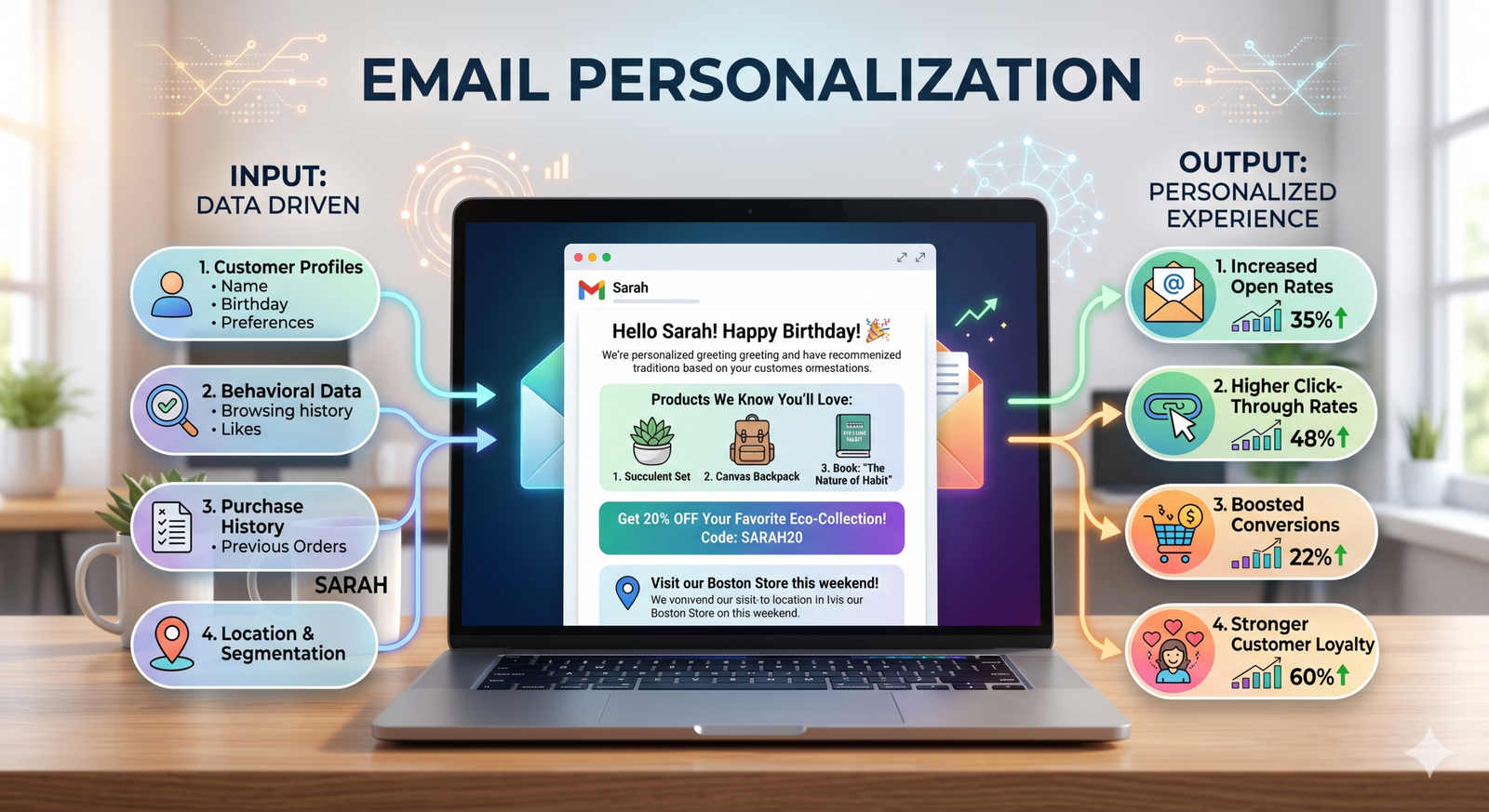
Email personalization has moved far beyond adding a first name to the subject line. Today, it is about creating intelligent workflows that adapt to user behavior, preferences, and intent. Businesses that succeed with email personalization are not just sending campaigns, they are designing systems that guide customers toward conversion.
Table Of Content
- What is an Email Personalization Workflow?
- Why Workflows Are More Effective Than One-Off Campaigns
- Key Components of a High-Converting Workflow
- Clear Trigger Points
- Segmentation and Targeting
- Dynamic Content
- Timing and Frequency
- Conditional Logic
- High-Converting Workflow Types
- Welcome and Onboarding Workflow
- Cart Abandonment Workflow
- Browse Abandonment Workflow
- Post-Purchase Workflow
- Re-Engagement Workflow
- Best Practices for Building Effective Workflows
- Start with Customer Journey Mapping
- Focus on High-Intent Actions
- Use Real-Time Data
- Keep Content Relevant
- Test and Optimize Continuously
- Common Mistakes to Avoid
- Overcomplicating Workflows
- Ignoring Data Quality
- Sending Too Many Emails
- Lack of Optimization
- Measuring Workflow Performance
- The Role of AI in Workflow Optimization
- Scaling Email Personalization Workflows
- The Future of Email Personalization Workflows
- Conclusion
A high-converting email personalization workflow is a structured sequence of automated, data-driven interactions that respond to user actions in real time. When done right, these workflows increase engagement, improve customer experience, and drive measurable revenue growth.
What is an Email Personalization Workflow?
An email personalization workflow is a series of automated emails that are triggered and customized based on user behavior and data. Instead of sending one-off campaigns, workflows create continuous engagement throughout the customer journey.
These workflows typically include:
- Trigger-based emails
- Behavior-driven content
- Dynamic personalization elements
- Conditional logic and branching
The goal is to deliver the right message to the right user at the right time.
Why Workflows Are More Effective Than One-Off Campaigns
One-off campaigns rely on static segmentation and predefined schedules. While they can drive short-term engagement, they lack the ability to adapt to individual behavior.
Workflows, on the other hand:
- Respond to real-time actions
- Provide continuous engagement
- Deliver more relevant content
- Scale personalization effectively
For example, instead of sending a single promotional email, a workflow can guide a user from initial interest to purchase and beyond.
Key Components of a High-Converting Workflow
Clear Trigger Points
Every workflow begins with a trigger. This is the action that initiates the sequence.
Common triggers include:
- Account sign-up
- Product view
- Cart abandonment
- Purchase completion
- Inactivity
Choosing the right triggers is critical because they indicate user intent.
Segmentation and Targeting
Segmentation ensures that users receive content relevant to their behavior and preferences.
Instead of broad segments, modern workflows use:
- Behavioral segmentation
- Lifecycle stage segmentation
- Intent-based grouping
This allows for more precise targeting.
Dynamic Content
Dynamic content adapts based on user data. This includes:
- Personalized product recommendations
- Custom messaging
- Location-based offers
- Behavior-driven visuals
Dynamic content increases relevance and engagement.
Timing and Frequency
The timing of emails plays a significant role in performance.
Effective workflows:
- Send emails when users are most likely to engage
- Avoid overwhelming users with too many messages
- Adjust frequency based on behavior
Conditional Logic
Conditional logic allows workflows to adapt based on user actions.
For example:
- If a user clicks a link, they move to a different path
- If a user makes a purchase, the workflow shifts to post-purchase communication
This flexibility ensures that workflows remain relevant.
High-Converting Workflow Types
Welcome and Onboarding Workflow
This workflow introduces new users to the brand and sets expectations.
Key elements include:
- Personalized welcome messages
- Product or category recommendations
- Educational content
A strong onboarding workflow increases engagement from the start.
Cart Abandonment Workflow
One of the highest-performing workflows, it targets users who leave items in their cart.
Effective strategies include:
- Sending reminders quickly
- Including product details
- Offering personalized incentives
Browse Abandonment Workflow
Targets users who view products but do not take further action.
Emails can include:
- Recently viewed products
- Similar recommendations
- Popular items
Post-Purchase Workflow
This workflow focuses on retention and repeat purchases.
Examples include:
- Order confirmations
- Product usage tips
- Cross-sell recommendations
Re-Engagement Workflow
Designed to bring inactive users back.
Strategies include:
- Personalized offers
- Highlighting new products
- Tailored messaging based on past behavior
Best Practices for Building Effective Workflows
Start with Customer Journey Mapping
Understand how users interact with your brand and identify key touchpoints.
Focus on High-Intent Actions
Prioritize workflows triggered by actions that indicate strong intent.
Use Real-Time Data
Incorporate real-time signals to improve relevance and timing.
Keep Content Relevant
Avoid generic messaging and focus on user-specific content.
Test and Optimize Continuously
Experiment with different strategies to improve performance.
Common Mistakes to Avoid
Overcomplicating Workflows
Complex workflows can be difficult to manage and may lead to errors.
Ignoring Data Quality
Inaccurate data reduces the effectiveness of personalization.
Sending Too Many Emails
Excessive communication can lead to unsubscribes.
Lack of Optimization
Failing to test and refine workflows limits performance.
Measuring Workflow Performance
To ensure that workflows are effective, track key metrics such as:
- Conversion rate
- Revenue per workflow
- Engagement rates
- Customer retention
These metrics provide insights into what is working and where improvements are needed.
The Role of AI in Workflow Optimization
Artificial intelligence enhances email personalization workflows by enabling:
- Predictive triggers
- Automated segmentation
- Dynamic content optimization
- Send-time optimization
AI allows workflows to become more intelligent and adaptive.
Scaling Email Personalization Workflows
As businesses grow, scaling workflows becomes essential.
Key strategies include:
- Using automation to handle large volumes
- Standardizing templates
- Leveraging AI for efficiency
- Integrating data across systems
This ensures that personalization remains effective at scale.
The Future of Email Personalization Workflows
Email workflows are becoming more advanced with the integration of real-time data and AI.
Future trends include:
- Fully dynamic workflows that adapt in real time
- Cross-channel integration
- More personalized and interactive content
- Advanced predictive capabilities
These developments will further enhance the effectiveness of email personalization.
Conclusion
Building high-converting email personalization workflows requires a combination of strategy, data, and technology. By focusing on user behavior, real-time signals, and dynamic content, businesses can create workflows that drive engagement and conversions.
In a competitive digital environment, workflows provide a scalable way to deliver personalized experiences. Businesses that invest in well-designed workflows will be better positioned to improve customer experience, increase revenue, and achieve long-term success.





No Comment! Be the first one.