The Kingdom of Morocco exists as a vibrant intersection of ancient history, diverse geography, and deep seated cultural traditions. For decades, classic Morocco tours have served as the quintessential method for travelers to explore the multifaceted beauty of this North African gem. As we move into 2026, the demand for these immersive experiences has only intensified, fueled by a global desire for authentic travel that bridges the gap between luxury and heritage. A classic journey through Morocco is not merely a vacation; it is a sensory expedition that takes you from the winding, spice scented alleys of medieval medinas to the silent, star dappled expanse of the Sahara Desert. This article provides a professional and analytical deep dive into how you can structure an itinerary that captures the true essence of the Maghreb while ensuring a seamless and high quality travel experience.
The Strategic Importance of Classic Morocco Tours in Modern Travel
In the current landscape of international tourism, Morocco has positioned itself as a premier destination for those seeking a blend of adventure and cultural sophistication. The concept of classic Morocco tours revolves around a carefully curated loop that typically connects the four imperial cities with the natural wonders of the Atlas Mountains and the desert dunes. This strategic route is designed to maximize the traveler’s exposure to the country’s history without the exhaustion of inefficient transit. By following established paths that have been refined over generations, travelers can witness the architectural marvels of the Almohad and Marinid dynasties while enjoying the modern comforts of world class hospitality.
Historical Context and Cultural Stewardship
To understand the allure of Morocco, one must first appreciate the historical weight of its urban centers. Each city tells a story of a different era. For instance, the city of Fes is often considered the intellectual and spiritual soul of the country. According to historical documentation available on Wikipedia, the foundation of the Moroccan state dates back over a millennium, with various dynasties leaving behind an indelible mark on the landscape through grand mosques, madrasas, and palaces. Professional tour operators prioritize these sites not just as photo opportunities, but as living classrooms where the history of Islamic art and North African governance comes to life. Cultural stewardship is a recurring theme in 2026, as tours increasingly emphasize the preservation of traditional crafts, such as Zellige tilework and leather tanning, which continue to thrive in the ancient medinas.
The Evolution of the Tourism Market in 2026
The Moroccan tourism sector has undergone a significant transformation, with the government implementing the “2023-2026 Tourism Roadmap” to attract 17.5 million visitors annually. Recent industry insights from Google News indicate that the kingdom is investing heavily in air connectivity and digital infrastructure to make classic Morocco tours more accessible to a global audience. This professional shift means that travelers can now expect higher standards of safety, better road networks, and a wider variety of accommodation options, ranging from boutique riads to eco friendly desert lodges. The analytical takeaway for any traveler is clear; there has never been a more stable or promising time to explore the diverse regions of Morocco.
Navigating the Three Pillars of a Classic Moroccan Itinerary
A successful classic tour is built upon three primary pillars: the imperial cities, the dramatic mountain ranges, and the Saharan dunes. Balancing these elements is essential for a comprehensive understanding of the country.
The Imperial Cities: Urban Masterpieces
Marrakech, Fes, Meknes, and Rabat form the backbone of classic Morocco tours. Marrakech, known as the “Red City,” is often the starting point for many adventures. Its central square, Jemaa el-Fnaa, is a UNESCO Masterpiece of the Oral and Intangible Heritage of Humanity, where storytellers, musicians, and artisans create a daily spectacle. Fes, by contrast, offers a more somber and academic atmosphere with its car free medina, which is the largest in the world. Meknes provides a glimpse into the grand ambitions of Sultan Moulay Ismail, while Rabat, the current capital, offers a more relaxed, coastal vibe with its clean boulevards and the historic Hassan Tower.
The High Atlas Mountains and Berber Heritage
Between the cities and the desert lie the High Atlas Mountains, a rugged barrier that has protected the traditional lifestyle of the Amazigh, or Berber, people for centuries. Professional classic Morocco tours often include a stop in the village of Imlil or the Ouirgane Valley. Here, travelers can engage in “slow travel,” perhaps taking a guided hike to the base of Mount Toubkal or participating in a traditional tea ceremony with a local family. This section of the tour is vital because it provides a counterpoint to the frenetic energy of the cities, offering a breath of fresh mountain air and a deeper look at the indigenous roots of Moroccan identity.
The Sahara Desert: Finding Stillness in the Dunes
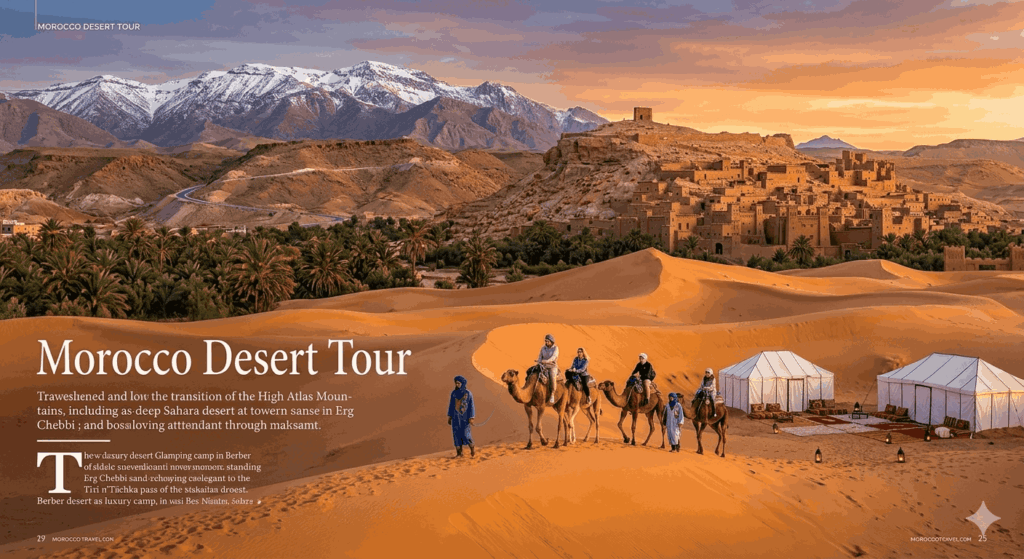
No classic journey is complete without an excursion to the Erg Chebbi dunes near Merzouga or the more remote Erg Chigaga dunes near M’hamid. The transition from the rocky “hamada” desert to the towering orange sand dunes is a cinematic experience. In 2026, the trend in desert travel has shifted toward luxury glamping. High end camps now offer en suite bathrooms, gourmet dining, and solar powered facilities, allowing travelers to enjoy the wilderness without sacrificing comfort. As highlighted in professional travel reviews by Forbes, the expansion of luxury services into remote areas has redefined the desert experience, making it a highlight for even the most discerning global travelers.
Practical Considerations for Selecting Your Tour Provider
When planning classic Morocco tours, the logistics can be complex, and selecting the right partner is crucial for a successful outcome. The environment in Morocco varies from Mediterranean coasts to alpine peaks and arid deserts, requiring specialized knowledge and reliable transportation.
Private vs. Shared Group Experiences
One of the first decisions you must make is whether to join a shared group tour or opt for a private, bespoke experience. Shared tours are excellent for social interaction and budget management; however, private tours offer a level of flexibility that is unmatched. With a private driver and guide, you can choose to spend an extra hour photographing the sunrise over the dunes or skip a commercial stop in favor of a hidden gem recommended by your local expert. Professionalism in the industry is currently measured by the quality of the guides, who must be licensed by the Ministry of Tourism to ensure they provide accurate and ethical information.
Sustainability and Responsible Travel
As global awareness of environmental issues grows, 2026 has seen a surge in “green” classic Morocco tours. Travelers are increasingly looking for operators that minimize plastic waste, support local cooperatives, and respect the delicate ecosystems of the desert and mountains. Analytical travelers should look for tour companies that are transparent about their local partnerships and their efforts to give back to the communities they visit. Choosing a riad that employs local staff and sources food from nearby markets is a simple yet effective way to ensure your travel has a positive impact.
The Optimal Timing for Your Moroccan Adventure
Climate is a major factor in the success of classic Morocco tours. Because the country spans several geographical zones, the “best” time to visit depends on your specific interests. Spring, from March to May, is widely considered the gold standard for Moroccan travel. During this time, the landscape is lush and green, the mountain passes are clear of snow, and the desert heat is manageable. Autumn, from September to November, is another excellent window, offering warm days and cool evenings. While winter can be beautiful for seeing the snow capped Atlas, the desert nights can drop below freezing, requiring specialized gear. Summer is best reserved for coastal cities like Essaouira or Tangier, as the interior temperatures can frequently exceed 40°C.
Conclusion: Embracing the Magic of the Maghreb
In conclusion, classic Morocco tours remain the most effective and enchanting way to discover a country that is as complex as a Fes mosaic. By carefully balancing the urban intensity of the imperial cities with the natural majesty of the Atlas and the Sahara, you can create an itinerary that resonates on a personal and intellectual level. Whether you are drawn by the call of the muezzin, the intricate patterns of Islamic architecture, or the silent promise of the desert stars, Morocco in 2026 stands ready to exceed your expectations. The key to a successful journey lies in professional planning, a commitment to cultural curiosity, and an openness to the unexpected moments of beauty that define this kingdom.

Sign up