




“Inside the Mind of a Warden: Leadership Lessons from America’s Toughest Institutions
Introduction Behind the high walls, steel doors, and razor wire of America’s prisons lies a world most people never see, but one that demands some of the most complex leadership skills imaginable....

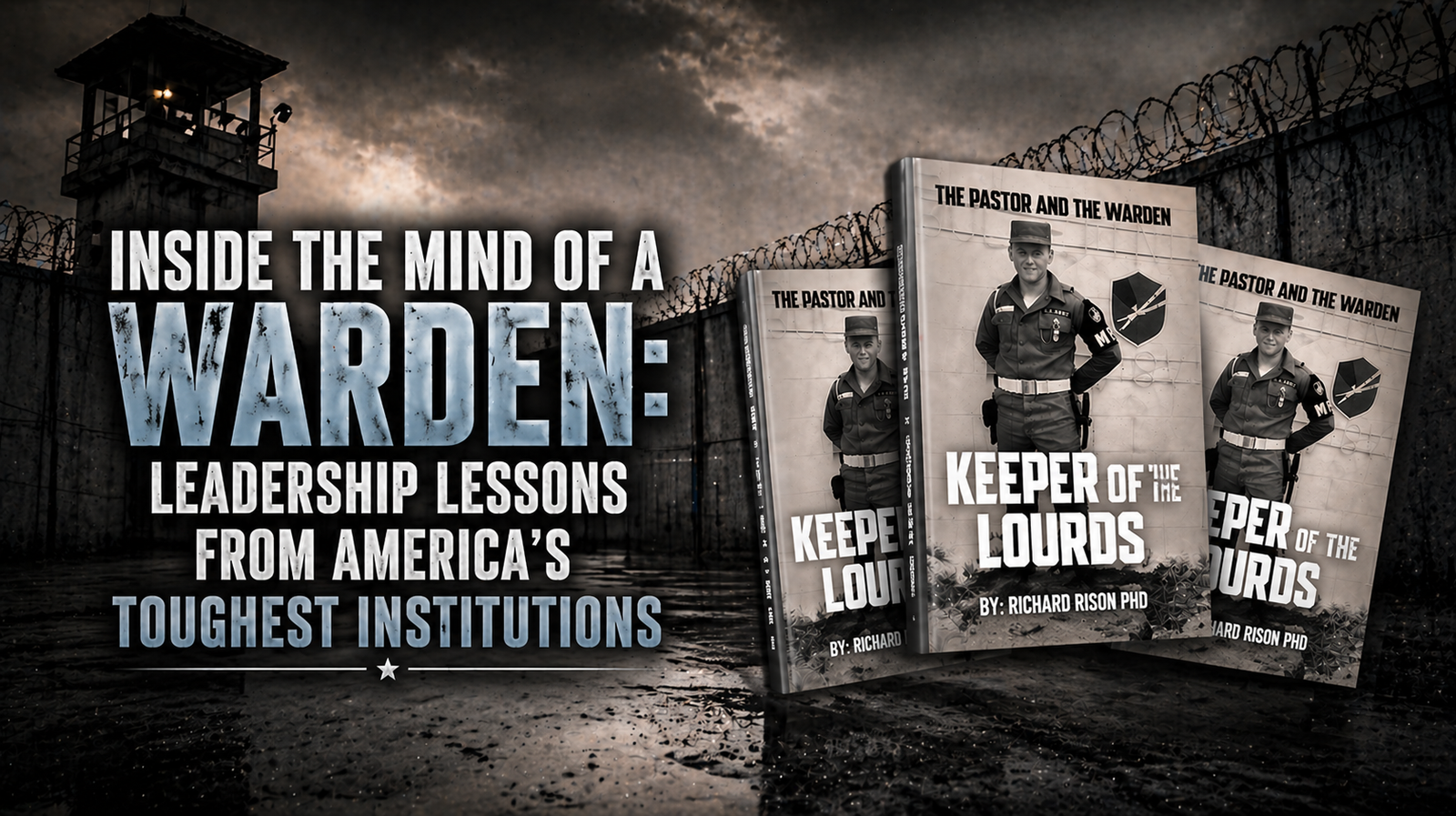
Introduction
Behind the high walls, steel doors, and razor wire of America’s prisons lies a world most people never see, but one that demands some of the most complex leadership skills imaginable. Popular culture often reduces prisons to scenes of violence and control, but the reality is far more intricate. At the center of this ecosystem stands the warden: part strategist, part psychologist, part crisis manager, and part institutional leader.
Top Content
- Introduction
- Early Struggles and Unconventional Beginnings
- Military Influence: Discipline and Resilience
- Transition into Leadership
- The Unit Management Model
- The Power of Classification
- Structure as a Preventive Tool
- Why Communication Matters More Than Force
- Building Trust in a Distrustful Environment
- The Cost of Poor Communication
- Navigating Crisis and Unpredictability
- Balancing Security with Humanity
- External Pressures and Accountability
- Leadership in High-Stakes Environments
- Decision-Making Under Risk
- Building Systems That Sustain Growth
- Conclusion
A warden does not simply “run a prison.” They orchestrate a volatile environment where tension is constant, stakes are high, and mistakes can be deadly. Every decision impacts not only the safety of staff and inmates but also the broader public system tied to law, politics, and rehabilitation.
The truth is, prison leadership offers a masterclass in managing high-risk environments. From handling unpredictable human behavior to building systems that prevent chaos, wardens develop a mindset that extends far beyond correctional facilities. Their experiences offer powerful, real-world lessons for leaders in business, government, and any institution where pressure is relentless and outcomes matter.
Section 1: The Making of a Warden
Early Struggles and Unconventional Beginnings
Few wardens begin their careers with a clear path to leadership. Many start at the ground level as correctional officers working long shifts in difficult conditions. These early experiences are formative. They expose future leaders to the raw realities of prison life: tension, unpredictability, and the importance of vigilance.
Amazon: Keeper of Lourds: The Pastor and the Warden
Unlike traditional corporate leadership tracks, the path to becoming a warden is often shaped by experience rather than theory. Individuals learn by doing, navigating confrontations, observing behavior patterns, and understanding institutional dynamics firsthand. This bottom-up progression builds credibility. When a warden gives an order, it carries weight because they’ve lived the role of those they lead.
Military Influence: Discipline and Resilience
A significant number of wardens come from military backgrounds. The transition makes sense. Military service instills discipline, chain-of-command thinking, and the ability to operate under pressure, all of which are critical in a correctional setting.
More importantly, it develops resilience. In both military and prison environments, leaders must make decisions quickly, often with incomplete information. They must remain calm in the face of danger and maintain authority without losing composure.
This blend of discipline and adaptability becomes a defining trait. A warden learns not just to react, but to anticipate and read situations before they escalate.
Transition into Leadership
Leadership in corrections isn’t granted overnight. It evolves through years of observation, mentorship, and incremental responsibility. As individuals rise through the ranks, they shift from reactive roles to strategic ones.
They begin to see the prison not just as a collection of individuals, but as a system, one that requires coordination, balance, and foresight. This transition marks the true making of a warden: when operational experience meets strategic thinking.
Section 2: Managing Chaos with Structure
The Unit Management Model
One of the most effective frameworks used in modern prisons is the Unit Management Model. Rather than treating the prison as one massive, uncontrollable population, it is divided into smaller, manageable units.
Each unit operates like a micro-community, with dedicated staff responsible for specific groups of inmates. This localized approach creates accountability, improves supervision, and allows for more personalized management.
From a leadership perspective, this is a lesson in scalability. Large, complex systems become manageable when broken down into smaller, structured components.
The Power of Classification
Not all inmates are the same, and treating them as such is a recipe for disaster. Effective wardens rely heavily on classification systems that categorize inmates based on behavior, risk level, and needs.
This classification determines housing, privileges, and supervision levels. It reduces friction by separating incompatible groups and ensures resources are allocated appropriately.
In broader terms, this reflects a key leadership principle: understanding your people. Whether in a prison or a corporation, success depends on recognizing differences in behavior, capability, and motivation, and organizing accordingly.
Structure as a Preventive Tool
Contrary to popular belief, control in prisons does not come from force alone. It comes from structure. Clear routines, defined roles, and predictable systems reduce uncertainty—and uncertainty is often the root of conflict.
When people know what to expect, they are less likely to react impulsively. This applies just as much in offices as it does in correctional facilities.
Wardens understand that chaos thrives in ambiguity. Their job is to eliminate that ambiguity through systems that guide behavior and reinforce stability.
Section 3: Communication Over Control
Why Communication Matters More Than Force
Force may resolve immediate threats, but it does not build long-term stability. Experienced wardens know that communication is a far more powerful tool.
By establishing clear expectations and maintaining open lines of dialogue, they reduce misunderstandings and defuse tension before it escalates. Communication humanizes leadership; it shifts the dynamic from adversarial to structured interaction.
In high-stakes environments, the ability to communicate clearly can mean the difference between order and unrest.
Building Trust in a Distrustful Environment
Trust in a prison setting is fragile but essential. Staff must trust leadership to support them. Inmates must trust that rules are applied fairly.
Wardens build this trust through consistency. Policies are enforced evenly. Decisions are explained. Actions align with words.
This consistency creates predictability, and predictability fosters trust, even in environments where suspicion is the norm.
For leaders outside prison walls, the lesson is clear: trust is not built through intention, but through repeated, consistent behavior.
The Cost of Poor Communication
When communication breaks down, consequences are immediate and severe. Misunderstandings can trigger violence, staff morale can collapse, and institutional order can deteriorate.
A single unclear directive can ripple through the system, causing confusion and conflict.
This highlights a universal leadership truth: poor communication is not a minor flaw; it is a critical vulnerability.
Section 4: Leadership Under Pressure
Navigating Crisis and Unpredictability
Prisons are inherently unpredictable. Fights, riots, medical emergencies, and security breaches can occur without warning.
In these moments, the warden becomes the focal point of decision-making. There is no time for hesitation. Actions must be decisive, informed, and immediate.
This ability to operate under pressure is not innate; it is developed through experience. Wardens train themselves to remain composed, to assess situations rapidly, and to act with clarity even in chaos.
Balancing Security with Humanity
One of the most challenging aspects of prison leadership is maintaining a balance between security and humanity. Excessive force can escalate tensions, while excessive leniency can compromise safety.
Effective wardens navigate this balance carefully. They enforce rules firmly, but they also recognize the human element within the system.
This balance is what separates authority from leadership. Authority demands compliance. Leadership earns it.
External Pressures and Accountability
Wardens do not operate in isolation. Their decisions are influenced by legal frameworks, political expectations, and public scrutiny.
Every action can be questioned. Every incident can become a headline.
This external pressure adds another layer of complexity. Leaders must not only manage internal dynamics but also navigate external expectations.
In any high-profile role, the ability to balance internal priorities with external accountability is critical, and wardens operate at this intersection daily.
Section 5: Lessons Beyond Prison Walls
Leadership in High-Stakes Environments
The principles that guide prison leadership are directly applicable to other high-pressure environments. Whether in corporate boardrooms, hospitals, or government agencies, the same challenges exist: managing people, reducing risk, and maintaining order.
Wardens teach us that leadership is not about control; it is about systems, communication, and adaptability.
Decision-Making Under Risk
In prisons, decisions often carry immediate consequences. There is little room for error.
This sharpens a leader’s ability to assess risk, prioritize action, and take responsibility. It also reinforces the importance of preparation, having systems in place before crises occur.
For business leaders, this translates into proactive planning and decisive execution.
Building Systems That Sustain Growth
Perhaps the most valuable lesson is the importance of systems. Wardens do not rely on individual effort alone; they build structures that sustain order.
These systems ensure continuity, reduce dependency on individuals, and create stability even in turbulent conditions.
In any organization, sustainable success comes not from isolated talent, but from well-designed systems that guide behavior and support growth.
Conclusion
Leadership is often romanticized in environments of success and innovation. But its true test lies in the most challenging conditions where stakes are high, resources are limited, and outcomes are uncertain.
Prisons represent one of the toughest leadership environments imaginable. Within them, wardens develop a mindset forged through pressure, refined through experience, and grounded in reality.
They learn that structure prevents chaos, communication builds trust, and resilience sustains leadership. They understand that authority alone is not enough; it must be paired with strategy, empathy, and consistency.
Ultimately, the mind of a warden offers a blueprint for modern leadership. It reminds us that the most effective leaders are not those who avoid difficulty, but those who navigate it with clarity, discipline, and purpose.
In a world increasingly defined by complexity and uncertainty, these lessons are not just relevant; they are essential.