



Media Localization in 2026: Adapting Digital Content for Global Audiences
The modern entertainment industry operates without borders. Films, streaming series, educational videos, gaming content, and digital campaigns now move instantly across international markets. A...

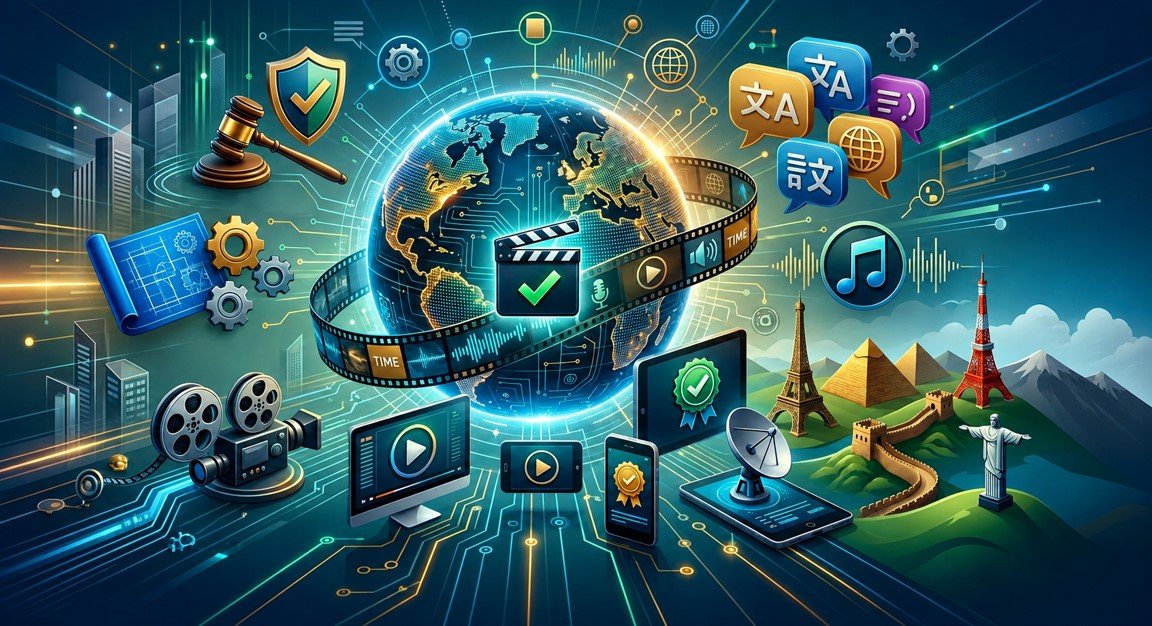
The modern entertainment industry operates without borders. Films, streaming series, educational videos, gaming content, and digital campaigns now move instantly across international markets. A documentary created in Europe can gain viewers in Asia overnight. A social media campaign launched in North America can influence audiences across multiple continents within hours.
Table Of Content
- The Global Shift Toward Multilingual Content
- Why Cultural Adaptation Matters
- Subtitle Production and Viewer Experience
- Dubbing and Performance Localization
- Voice-Over Adaptation for Corporate and Educational Content
- Accessibility and Inclusive Media Design
- The Workflow Behind Multilingual Content Adaptation
- Common Challenges in Global Media Adaptation
- Technology’s Role in Modern Localization
- Social Media and Short-Form Video Adaptation
- Streaming Platforms and Global Audience Expectations
- Best Practices for Effective Localization
- Future Trends in Multilingual Media
- Frequently Asked Questions
- Creating Content for a Global Audience
But global visibility does not automatically create audience connection.
People engage with content when it feels natural in their own language and culture. If subtitles appear awkward, dialogue feels disconnected, or humor loses meaning during translation, the viewing experience becomes less immersive. In highly competitive digital environments, audiences quickly move on when content feels difficult to follow or emotionally distant.
This is why professional localization has become a strategic priority for entertainment brands, streaming platforms, and international media companies. Instead of treating translation as a simple technical step, organizations now focus on building culturally authentic viewing experiences that resonate across languages and regions.
Today, multilingual adaptation is no longer limited to films or television. It shapes nearly every form of digital communication, including online learning, advertising, social media campaigns, corporate training, and gaming ecosystems. Businesses investing in Audiovisual Localization Services are increasingly able to scale content globally while maintaining cultural relevance and audience trust.
The Global Shift Toward Multilingual Content
Streaming services fundamentally changed audience expectations. Viewers now consume international content regularly, regardless of its original language.
This shift created demand for:
- Subtitles
- Dubbing
- Voice-over production
- Cultural adaptation
- Accessibility features
- Region-specific content strategies
Global audiences increasingly expect immediate access to multilingual options when consuming entertainment and educational media.
The growth of international streaming also changed how content is produced. Media companies now consider multilingual distribution during early development rather than after production is complete.
This proactive approach improves:
- Production efficiency
- Localization quality
- International launch speed
- Audience consistency across regions
Why Cultural Adaptation Matters
Language alone does not determine communication quality. Cultural expectations strongly influence how audiences interpret stories, humor, emotional expression, and dialogue pacing.
A direct translation may technically convey meaning while still feeling unnatural or emotionally ineffective.
Cultural adaptation helps preserve:
- Emotional tone
- Character identity
- Humor effectiveness
- Narrative immersion
- Audience relatability
For example, jokes built around local slang or social references often require complete rewriting for international audiences. Without creative adaptation, scenes may lose their intended emotional impact entirely.
This process requires a balance between authenticity and accessibility.
Subtitle Production and Viewer Experience
Subtitles remain one of the most widely used localization formats because they allow audiences to experience original performances while understanding dialogue.
However, effective subtitle production is far more complex than many viewers realize.
Professional subtitle specialists must manage:
- Reading speed
- Character limitations
- Timing synchronization
- Scene pacing
- Cultural nuance
Spoken dialogue usually moves faster than viewers can comfortably read. Translators must therefore condense dialogue without losing emotional meaning or narrative clarity.
Well-produced subtitles feel almost invisible to the audience. Poor subtitles, on the other hand, constantly remind viewers they are reading translated content.
Dubbing and Performance Localization
Dubbing recreates spoken dialogue in another language while attempting to preserve the original emotional experience.
This process involves:
- Script adaptation
- Lip-sync alignment
- Native-speaking actors
- Audio recording
- Sound engineering
Strong dubbing requires more than technical precision. Voice performances must reflect:
- Character personality
- Emotional intensity
- Regional speech patterns
- Natural conversational rhythm
Audiences quickly recognize when dubbed performances sound artificial or emotionally disconnected from on-screen performances.
For major entertainment releases, dubbing quality significantly affects audience acceptance in international markets.
Voice-Over Adaptation for Corporate and Educational Content
Voice-over production is widely used outside traditional entertainment.
Industries relying heavily on voice-over include:
- Corporate training
- E-learning platforms
- Documentaries
- Advertising
- Product demonstrations
Unlike dubbing, voice-over often preserves portions of the original audio underneath translated narration.
This format emphasizes:
- Clarity
- Professional tone
- Technical accuracy
- Consistent pacing
For global organizations, multilingual voice-over supports internal communication consistency while improving accessibility for international teams and customers.
Accessibility and Inclusive Media Design
Modern content distribution increasingly prioritizes accessibility.
Localization teams now commonly support:
- Closed captions
- SDH subtitles
- Audio descriptions
- Multilingual accessibility options
These features improve media access for:
- Deaf viewers
- Hard-of-hearing audiences
- Multilingual households
- International viewers
Accessibility standards are becoming increasingly important for streaming platforms, broadcasters, and educational providers.
The Workflow Behind Multilingual Content Adaptation
Step 1: Content Evaluation
Localization teams analyze:
- Audience demographics
- Distribution goals
- Technical requirements
- Cultural considerations
Step 2: Terminology and Style Planning
Glossaries and style guides ensure consistency across:
- Dialogue
- Brand terminology
- Character names
- Technical vocabulary
Step 3: Translation and Creative Adaptation
Scripts are adapted for natural communication and cultural relevance.
Step 4: Recording and Production
Voice actors and production teams create localized audio assets.
Step 5: Synchronization and Integration
Localized materials are integrated into final media formats.
Step 6: Linguistic Quality Assurance
Final QA reviews validate:
- Timing accuracy
- Translation quality
- Cultural consistency
- Audio synchronization
Common Challenges in Global Media Adaptation
Timing Restrictions
Subtitles must remain readable within strict scene timing limits.
Humor Localization
Comedy frequently depends on cultural familiarity rather than literal wording.
Lip-Sync Constraints
Languages differ significantly in sentence length and structure.
Regional Sensitivity
Certain references or themes may require adjustment for local audiences.
Technical Formatting Requirements
Different platforms use different subtitle and audio specifications.
Technology’s Role in Modern Localization
Technology continues improving multilingual production workflows.
AI-Assisted Translation
AI tools help accelerate:
- Initial translation drafts
- Speech recognition
- Subtitle timing generation
However, human expertise remains essential for:
- Emotional nuance
- Humor adaptation
- Cultural interpretation
Speech-to-Text Systems
Automated transcription tools reduce subtitle preparation time.
Cloud Collaboration Platforms
Remote collaboration systems allow translators, editors, and producers to work together globally in real time.
Social Media and Short-Form Video Adaptation
Localization now extends far beyond traditional entertainment.
Brands increasingly adapt:
- TikTok videos
- YouTube content
- Instagram campaigns
- Product launches
- Influencer collaborations
Short-form content requires highly concise communication while maintaining cultural relevance and emotional clarity.
Streaming Platforms and Global Audience Expectations
Streaming services transformed multilingual entertainment into mainstream viewing behavior.
Audiences now expect:
- Simultaneous international releases
- Professional subtitles
- High-quality dubbing
- Accessible viewing features
These expectations continue raising localization standards across the industry.
Best Practices for Effective Localization
Integrate Localization Early
Early planning improves workflow efficiency and quality consistency.
Focus on Natural Communication
Authenticity matters more than literal translation.
Work with Native Professionals
Native specialists better understand cultural expectations and speech patterns.
Maintain Terminology Consistency
Glossaries improve clarity across multilingual assets.
Conduct Thorough Quality Reviews
Comprehensive QA prevents synchronization and translation errors.
Future Trends in Multilingual Media
The future of multilingual content adaptation will likely include:
- AI-enhanced dubbing
- Synthetic voice technologies
- Personalized subtitle systems
- Real-time translation workflows
- Interactive multilingual viewing experiences
Despite technological advances, human creativity and cultural understanding will remain essential to authentic storytelling.
Frequently Asked Questions
Why is multilingual adaptation important?
It improves accessibility, engagement, and audience retention across international markets.
What is the difference between subtitles and dubbing?
Subtitles display translated text, while dubbing replaces spoken dialogue with localized performances.
Why is cultural adaptation necessary?
Different audiences interpret humor, emotion, and communication differently.
Can AI fully replace localization professionals?
No. Human expertise remains critical for emotional authenticity and cultural nuance.
Which industries rely on multilingual media adaptation?
Entertainment, gaming, education, advertising, streaming, and corporate communication all depend heavily on localization.
Creating Content for a Global Audience
As digital entertainment and communication continue expanding internationally, multilingual adaptation has become essential for audience growth and long-term engagement.
Successful localization allows stories, ideas, and experiences to connect naturally across languages and cultures while preserving the emotional authenticity that makes content memorable.
About the Author
Orion Translations is the trusted language partner for global corporations and media companies. We specialize in professional audiovisual localization services, delivering culturally accurate subtitles, dubbing, voice-over adaptation, and multilingual media solutions for entertainment, streaming, gaming, and corporate content worldwide. By combining linguistic expertise with deep audiovisual industry knowledge, Orion helps brands and creators connect with audiences across languages and cultures. Visit www.oriontranslations.com to learn more about our services.







No Comment! Be the first one.